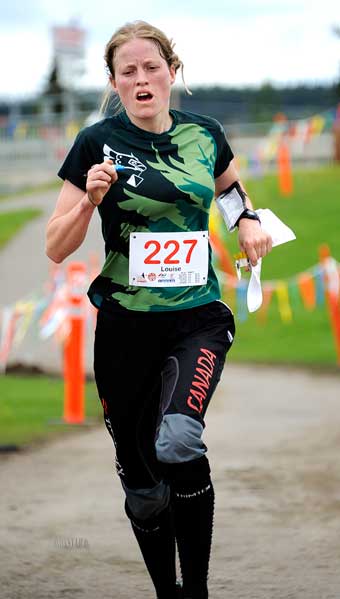
Photo by Star photo by VINCE FEDOROFF
LOOKING UP – Senior national team orienteer Louise Oram finishes the long-distance event at the Western Orienteering Championships held on the Long Lake Southeast map in Whitehorse on Sunday.
Photo by Star photo by VINCE FEDOROFF
LOOKING UP – Senior national team orienteer Louise Oram finishes the long-distance event at the Western Orienteering Championships held on the Long Lake Southeast map in Whitehorse on Sunday.
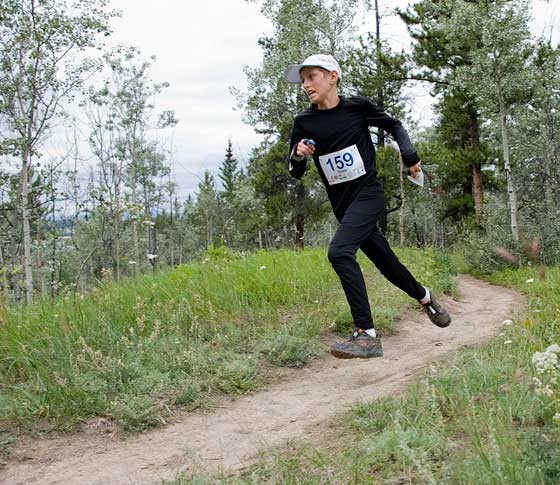
Photo by Star photo by VINCE FEDOROFF
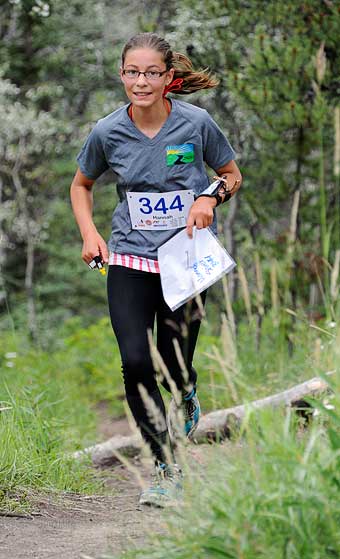
Photo by Star photo by VINCE FEDOROFF
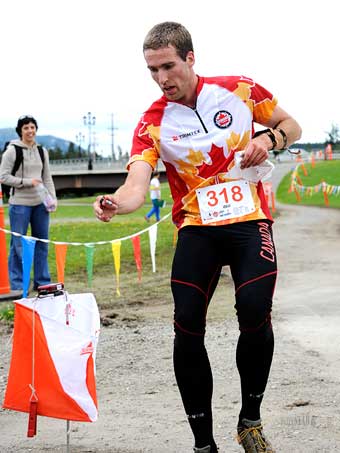
Photo by Star photo by VINCE FEDOROFF
LOOKING UP – Senior national team orienteer Will Critchley finishes the long-distance event at the Western Orienteering Championships held on the Long Lake Southeast map in Whitehorse on Sunday.
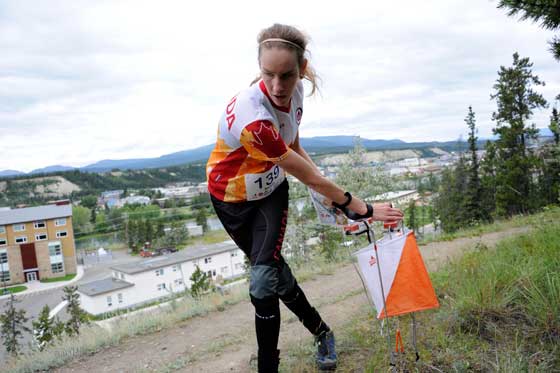
Photo by Star photo by VINCE FEDOROFF
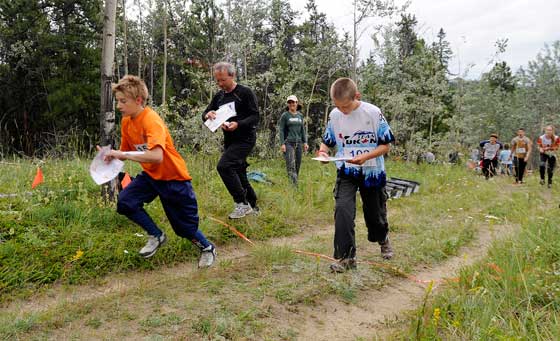
Photo by Star photo by VINCE FEDOROFF
Canada's best orienteers have descended on Whitehorse.
Canada's best orienteers have descended on Whitehorse.
The clear goal of these athletes is to pick up strong results at the Canadian Orienteering Championships (COC) set for maps in and around Whitehorse from July 22-24.
While they're here, the best of the best are also keen to improve their International Orienteering Federation (IOF) world rankings.
But the importance placed on the IOF rankings are up for debate.
National team member Louise Oram said the rankings are important to know where Canadians stack up against the world's top orienteers, mostly from the Scandinavian countries and eastern Europe.
"If we don't get to any ranking events, then we don't get any points and they don't see how well we can do in comparison to other orienteers,” Oram said.
The Western Canadian Orienteering Championships, held in Whitehorse from July 16-18, featured one race that acted as a world-ranking event: Sunday's long-distance starting at Long Lake South East and ending in Rotary Park.
Oram won the women's 21-34 age class on the 9-kilometre course with a time of one hour, 27 minutes and 15 seconds.
Following that event, the Greater Vancouver Orienteering Club member had a world ranking of 91, according to the IOF website, high enough to be Canada's top-ranked female worldwide.
After a shaky start on Saturday's middle-distance, Oram chose to come out of the gate more slowly for the world-ranking event.
"I made one major error (on Sunday). It's called a parallel error, where instead of being on one lake or marsh, I was on the one next to it, one over, a parallel feature. But it was actually not very costly, because I just had to hop over the hill to the next one after I realized. It didn't take me too long to realize, but it was kind of a stupid mistake. I was real angry with myself.”
All said and done, Oram was pleased her only mistake on Sunday was minor since it was a world-ranking event.
Fellow national team member Will Critchley placed lesser importance on the world rankings.
Critchley, who hails from Edmonton, said the Canadian championships are of greater value, though admitted picking up world-ranking points was one of the reasons the country's best are in the city.
"Honestly, the nationals are more important than the world-ranking events. It certainly applies for world rankings, but the world rankings don't necessarily mean a lot,” Critchley said.
"You definitely like to compare to other international orienteers, but they're not here, and when it comes to world championships, world-ranking events don't really apply as much at all. It's whoever crosses the line first.”
Critchley took first in the men's 21-34 age group with a time of 1:30:52 over the 12-km course, after which he was ranked 170 by the IOF.
Critchley, Oram and other top orienteers will get another shot to improve their IOF rankings in the sprint and middle-distance events at the COC next weekend.
Oram said that in the future there may be a more practical application to the rankings.
Currently, the IOF holds qualification races for the World Orienteering Championships, taking the top two finishers from different groups into the finals.
The sport demands that orienteers start separately to avoid following each other, even trekking different – though similar – courses.
The IOF is starting to talk about eliminating the group structure to adopt a ranking structure in the future, Oram explained.
"If they want to get rid of that, they'll start using the rankings, so it's important for Canada to show that we can get some people in the top rankings, because they might start taking people out of that.”
Regardless of the importance of the current world-ranking system, Oram said hosting such an event, along with the Westerns and Canadians, is a major undertaking for Whitehorse.
"There's an extra adviser to the event that has to make sure it's up to snuff. So there's a little bit more effort involved. It's harder for clubs to put it on because it requires more effort, but it's really good to actually use the world-ranking events. (The Yukon has) great training and great terrain. And I've heard the Canadians' stuff is absolutely fantastic, so I'm really looking forward to it.”
In order to encourage thoughtful and responsible discussion, website comments will not be visible until a moderator approves them. Please add comments judiciously and refrain from maligning any individual or institution. Read about our user comment and privacy policies.
Your name and email address are required before your comment is posted. Otherwise, your comment will not be posted.
Be the first to comment