YG to pay extra $200k for Ross River School work
For stabilization work on the Ross River school this year,
By Palak Mangat on April 2, 2019
For stabilization work on the Ross River school this year, the Yukon government put aside $1.4 million – but with only one company that bid $1.6 million, YG will have to fork over $200,000 more than it predicted.
That’s after the bidder, as listed on YG’s tender management system, put forth a bid of just over $1.6 million for the work.
While that work has not been officially awarded yet, Wildstone Construction of Penticton, B.C. was the only bidder – so will likely receive the work. The tender closed March 25.
Oshea Jephson, a Department of Highways and Public Works spokesperson, acknowledged Monday that the work has come in with a price tag “well in excess” ($200,000 over) of what YG had budgeted.
Work is on track to begin this summer and wrap up by the substantial performance date, set at Aug. 13 of this year, he said.
The line item in this year’s budget for the Ross River site is confirmed in the Education department’s budget, which shows that $1.4-million figure.
“As elected officials, we’re entrusted to spend tax dollars as wisely as possible for the greatest possible benefit,” Jephson wrote Monday.
“We’re committed to finding a solution that addresses the challenges with permafrost at Ross River School and provides good value for money,” he added.
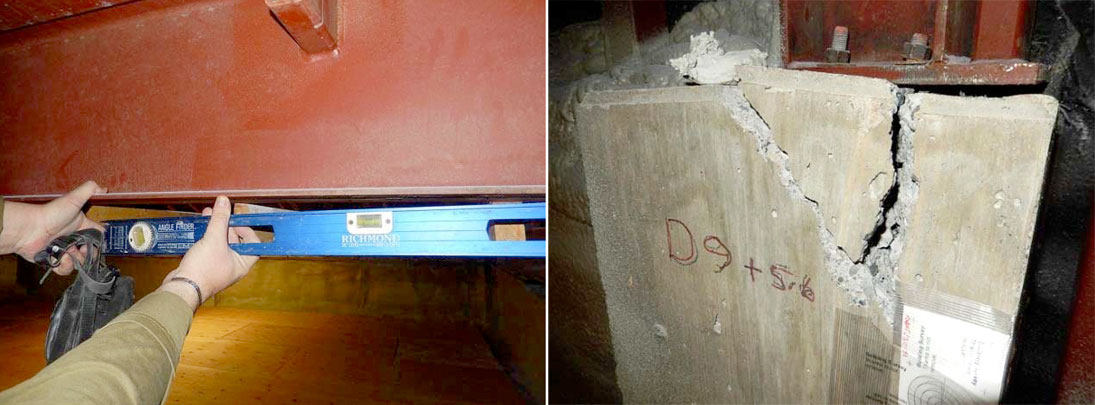
The school has been plagued by thawing permafrost for years, so the concept of warmer temperatures wreaking havoc on its infrastructure and resulting in a shifting foundation is not a foreign concept to governments.
After replacing an older building by opening in 2001, its ground began to shift, and in 2015, it was closed for five months before being re-levelled.
The school cost more than $7 million to build, almost $2 million to re-level after it was shut down and $3 million in various studies and repairs since 2002.
The building has a thermosyphon system which is designed to cool the ground by pulling heat away from the foundation and its nearby soil – but reports show that the crawlspace is still warm.
This year’s work is to cool that crawlspace through “mechanical cooling and insulation,” HPW said in February, with construction to take place this summer.
Meanwhile, as for long-term fixes, the country’s transport minister acknowledged earlier this year that the effects of climate change are hitting the North more dramatically than other areas.
That’s Marc Garneau, who, in speaking to the Star in Whitehorse in February, suggested that means reconsidering where governments set up shop for infrastructure projects.
“Ultimately, what you want to do is build solid houses, and if you can’t get below the permafrost and anchor your home or building on a foundation, then you may want to reconsider where you’re going to build it,” he said.
“Or you may want to develop other technologies that will allow you to build on that kind of a structure – maybe limiting the weight, those kinds of things.”
Premier Sandy Silver was asked about the possibility of an outright replacement to have a newer school built as recently as last month, as part of a more permanent solution.
He said then that such a decision would have to involve the chief and council of the Ross River Dena Council, on whose traditional territory the school rests.
“There’s such a great potential for that community to build and develop on their terms and we will follow their lead,” Silver said.
But until then, “we have an obligation to the kids, to the youth in that community to make sure they’re provided with quality education.
“So we’re going to make sure the school they have now is up to snuff and is safe for those students.”
YG’s five-year capital plan, also tabled in March with the 2019-20 fiscal blueprint, predicts between $10 million and $25 million will be spent on the school into 2024, with spending projected for all of the next five years.
Be the first to comment