Photo by CP
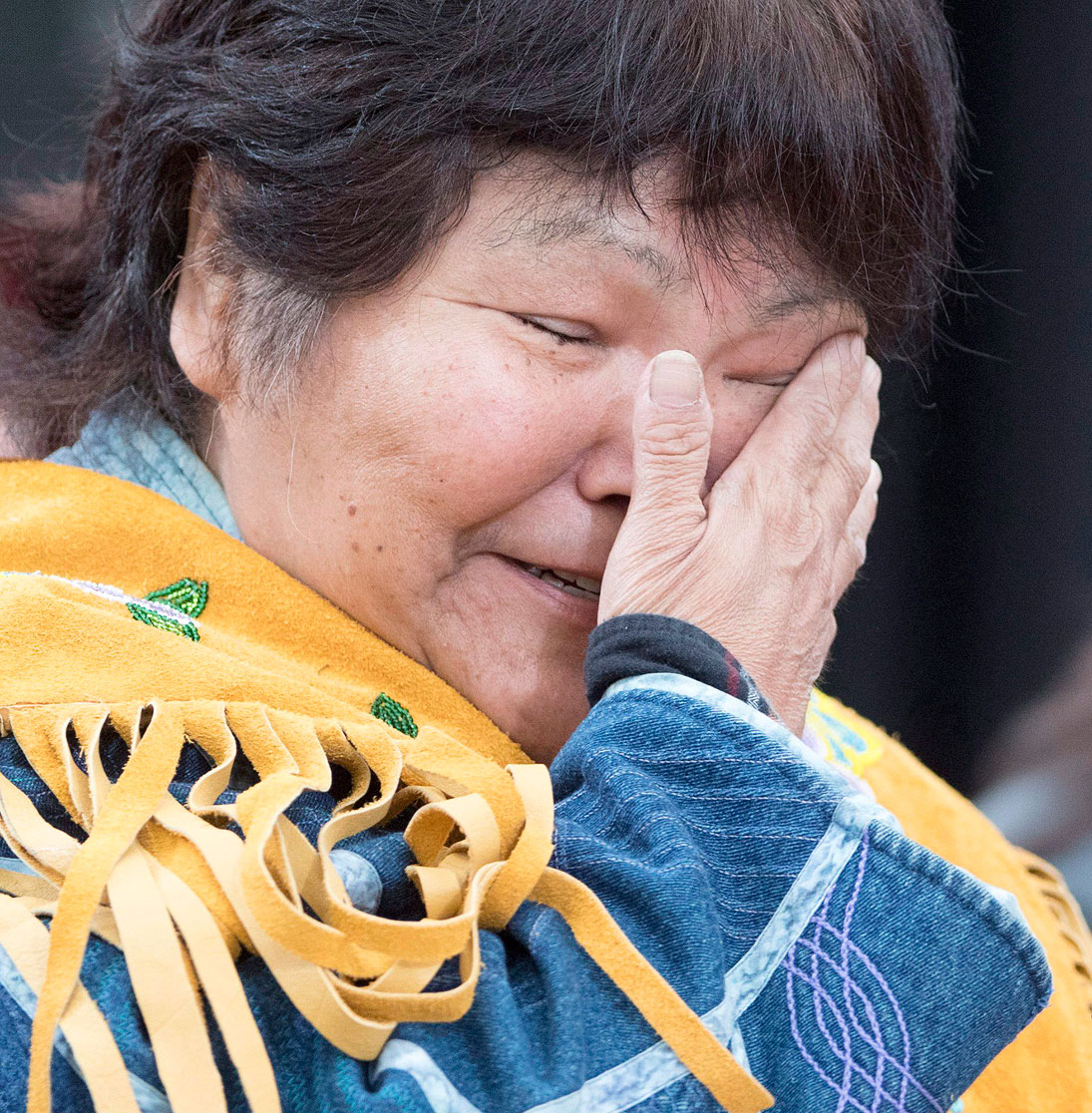
OVERCOME BY EMOTION – Cecilia Gobeil wipes away tears Thursday as she addresses the inquiry about her murdered mother, Tootsie Charlie. Photo by THE CANADIAN PRESS/Jonathan Hayward
Photo by CP
OVERCOME BY EMOTION – Cecilia Gobeil wipes away tears Thursday as she addresses the inquiry about her murdered mother, Tootsie Charlie. Photo by THE CANADIAN PRESS/Jonathan Hayward
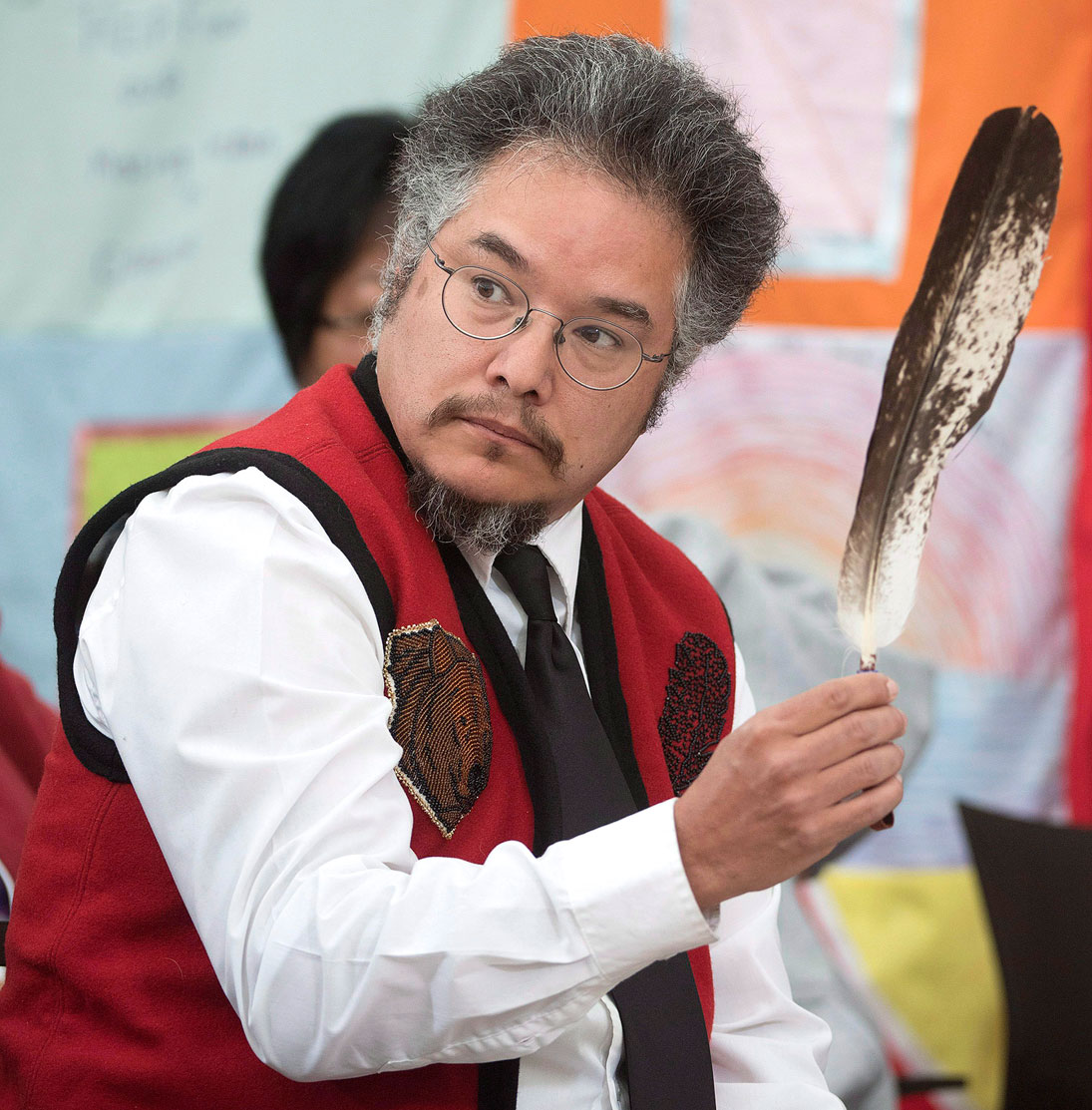
Photo by CP
PREPARING TO SPEAK – Shaun LaDue is sworn in to testify at the inquiry Thursday by holding an eagle feather. Photo by THE CANADIAN PRESS/Jonathan Hayward
Families of missing and murdered indigenous women told a national inquiry on its final day of hearings Thursday that they have little faith in the process, and that their trust must be earned.
Families of missing and murdered indigenous women told a national inquiry on its final day of hearings Thursday that they have little faith in the process, and that their trust must be earned.
The emotional hearings ran for three days – and heard from dozens of family members of girls or women who have disappeared or been killed.
Each story was unique, but the ’60s Scoop, residential schools and police indifference were constant themes.
On Thursday, testimony took a more critical turn at times, with some speakers expressing wariness of the inquiry and urging the commissioners not to let them down (see story, p. 6).
Chief Commissioner Marion Buller has said it’s crucial to the future of the inquiry that the Whitehorse hearings are successful.
Other community meetings won’t be held until the fall, and families from across the country have been critical of delays and poor communication.
Buller choked up as she delivered closing remarks, saying the spirits of missing and murdered women and girls joined the hearings.
“In three days, we’ve heard many stories of loss, we’ve heard anger, we’ve heard pain, but we’ve also heard courage and strength and hope,” she said.
“But perhaps the most moving thing of all that’s happened is the magic of the healing that’s started. You can feel it here.”
In addition to the public hearings, where families of 14 missing or murdered women and girls spoke inside a large white tent decorated with colourful blankets, a number of participants spoke privately with statement-takers.
Shaun LaDue, who uses a capital “D” in his last name unlike his brother, said he felt respected and heard after testifying about their mother, Jane Dick, who was beaten to death. He also spoke about his experience as a transgender man.
“The hearings so far to me seem to be going very good,” LaDue said in an interview.
“The commissioners are listening to us with their heart and their soul, and they’re very responsive to what the Yukon First Nations families have to say.
“I have good hope – a big, strong hope – that when they go across Canada, people will see that they’re working their hardest.”
Joan Jack, a lawyer and sister-in-law of Barbara Jack, who was murdered in the Yukon in the 1970s, has criticized the quasi-judicial format of the inquiry.
She told reporters earlier Thursday that the formal processes, including the swearing-in of witnesses, were making many participants uncomfortable.
But as her family rose to speak Thursday afternoon, they were not asked to swear to tell the truth. Instead, they were dressed in red Tlingit regalia, which means they were “standing in their truth,” she said.
A lawyer approached her family in the morning to say the commissioners understood her concerns, Jack said in an interview.
“I think the commission responded to my public criticisms that using the Canadian legal system and filling it with brown people isn’t sufficient. We have to do it different,” she said.
Inquiry spokeswoman Bernee Bolton said that under Yukon law, there is flexibility in how people are sworn in that reflects cultural diversity.
Jack said she still has concerns about the inquiry, including that the lead legal counsel is not aboriginal.
“I don’t have a lot of faith that this process is going to produce anything,” she told the commissioners.
“That’s why I said to my family, ‘Why should we come?’ I said, ‘Because we’ll heal ourselves. If anything, we can find reconciliation within our family.’”
Jack said all Canadians need to hear the uncomfortable truths revealed during testimony to the inquiry.
While the details are disturbing, she said, the only way to make progress is if everyone suffers together.
By Laura Kane
The Canadian Press
In order to encourage thoughtful and responsible discussion, website comments will not be visible until a moderator approves them. Please add comments judiciously and refrain from maligning any individual or institution. Read about our user comment and privacy policies.
Your name and email address are required before your comment is posted. Otherwise, your comment will not be posted.
Comments (2)
Up 7 Down 3
David Dixon on Jun 5, 2017 at 1:29 pm
I don't regard this inquiry as a PR tour, One overriding theme I obtained from watching several First Nations' persons speak online last Thursday was the fervent desire that in the future the RCMP will investigate murdered and missing indigenous womens' cases much more seriously. Essentially such cases have to be treated with equal importance as those cases where the missing woman is non-indigenous. This inquiry once it ends can only recommend that the RCMP investigate these cases more diligently. To obtain real change that forces the RCMP to change their ways re investigating: the federal government must order the RCMP to change i.e. make it mandatory. This will only happen if many, many, many concerned citizens badger their Federal MPS enough that the governing political party with fear of losing their constituents' votes thus jeopardizing their chances of being elected in the future; will be forced to order the RCMP to change their investigative ways.
David Michael Dixon
Up 23 Down 4
Roger on Jun 4, 2017 at 10:12 am
They ask for a national inquiry, when it happens they aren't happy.
This national commission....is this about finding solutions or just a PR tour? Seems like the latter. .
Why do I feel as if nothing will come from this to actually solve an issue...it will take a completely different attitude and change in a way of thinking to change a way of life.