Violence researcher addresses legal professionals
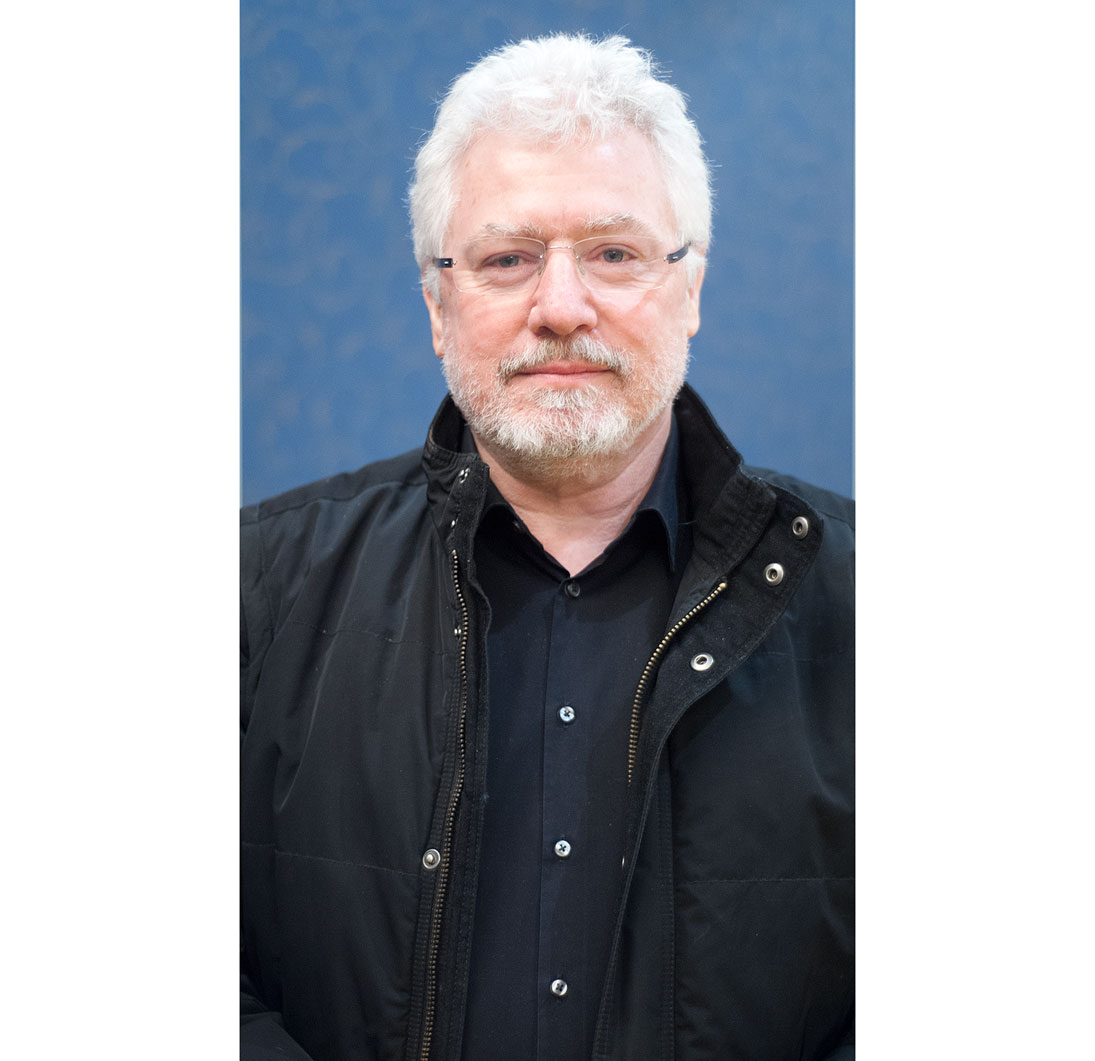
Dr. Allan Wade hears some heart-wrenching stories.
By Rhiannon Russell on March 20, 2015
Dr. Allan Wade hears some heart-wrenching stories.
The Vancouver Island-based researcher and therapist works with victims of violence using an approach he co-developed – one that’s based on the idea that people respond to and resist violence differently.
Wade has been in Whitehorse this past week, speaking to local women’s groups and discussing interpersonal violence and the law with court workers, lawyers and advocates.
As part of his seminar Thursday morning at the Westmark Hotel, Wade shared some of his clients’ stories, to show how distinct reactions to violence can be.
One woman was sexually abused by her father when she was a girl. She’d take over an hour to walk home from school, which was only a block away, when she knew he was there.
When her parents had friends over to drink, she’d lie on her little sister’s covers to protect her. She’d rather their dad hurt her than her sister, she told Wade.
Another woman told him her husband beat her to the ground, then climbed on top of her “to have sex on me.”
She weighed her options: attempt to fight him off and run from the apartment? Or go limp, space out and “go shopping in her mind?” as Wade put it.
In the past, when the woman told others about the abuse, she’d gotten what researchers like Wade call “negative social responses” – she hadn’t gotten help. The couple also had children together.
She decided to lie there and “just get it over with,” Wade recalled. She knew the kids would be safer with him if she was around.
“She is not less strong than a woman who would’ve kicked him in the nuts,” Wade said.
“(People) often have the idea that women should just leave. Unfortunately, that’s just not the best option for some people. When you don’t know the details or what’s been said, it’s easy (for others) to make those kinds of judgments.”
Wade has been visiting the Yukon for years. He worked on Together for Justice, a community safety project in Watson Lake from 2011 to 2013, and held workshops with the RCMP, Liard Aboriginal Women’s Society (LAWS) and other local groups to address violence against women.
“We need to talk about the problem as much as we can in order to make sure that it’s adequately addressed,” he told the Star in an interview Thursday afternoon.
The territories have the highest rates of violence against women in Canada.
In the Yukon, police-reported violent crimes against women are four times the national average.
When violence happens, it’s important social responses to the victim are positive, Wade said.
When people tell someone, be it family members, friends or police, that they’re a victim of violence, the response they get affects their levels of distress and how comfortable they’ll be to disclose in the future.
A victim-blaming attitude – What did you do to make him angry? Why did you share a bed if you didn’t want to have sex? – isn’t helpful.
“I think we need to have a lot more information about the importance of social responses, about how important it is that when people are harmed, other people around them take notice and try to respond in a helpful way,” Wade said.
You don’t want people to think, “If I tell a person of authority, my life gets worse, not better.”
Wade and his colleagues at the Centre for Response-Based Practice also encourage using unilateral language when talking about violence.
Mutualizing language, like “they had sex” when a man rapes a woman, or “an abusive relationship,” when a man hits a woman, suggests the victim is equally responsible for what’s going on. Really though, he said, violence is a unilateral act – one person harming another.
The centre’s research has shown a correlation between the use of mutualizing language in sexual assault cases and shorter sentences.
“We are extremely good at using language to make violence disappear,” Wade said.
He remembers back in the early 1990s, when his co-worker, B.C. psychology professor Dr. Linda Coates, said to him:
“No, if you force your mouth on someone else’s, that’s not a kiss.”
“I had to go, ‘Whoa,’” Wade said Thursday, putting a hand on his chest and taking a step back.
Until the conventional language was challenged, he didn’t realize the problem with using it, he said.
“This isn’t about political correctness. This is about accuracy.”
Wade also met this week with staff at the Women’s Directorate and LAWS.
His two free talks with legal professionals and court workers were organized by the Yukon Women’s Coalition.
Comments (1)
Up 13 Down 1
Groucho d'North on Mar 22, 2015 at 10:37 am
Seems to me that the legal community- lawyers to be exact, are the ones who twist the meanings of words and terms to suit their interests when debating an issue. Followed by counsellors and advocates who also bend and shape words to suit their intended strategic outcomes. Ambiguity is being used to distract from the truth and meaning in communications and to modify definitions. Mr. Webster's dictionary works just fine for most interpretive confirmations in our language, but for some reason when some human characteristics are described - new meanings are introduced to make the plain and simple less than clear. Too much of our world is turning grey when it used to be black and white. I hope the people who are abused find their voices and report these deeds in clear, understandable terms and these crimes are dealt with for what they are.