Photo by Rhiannon Russell
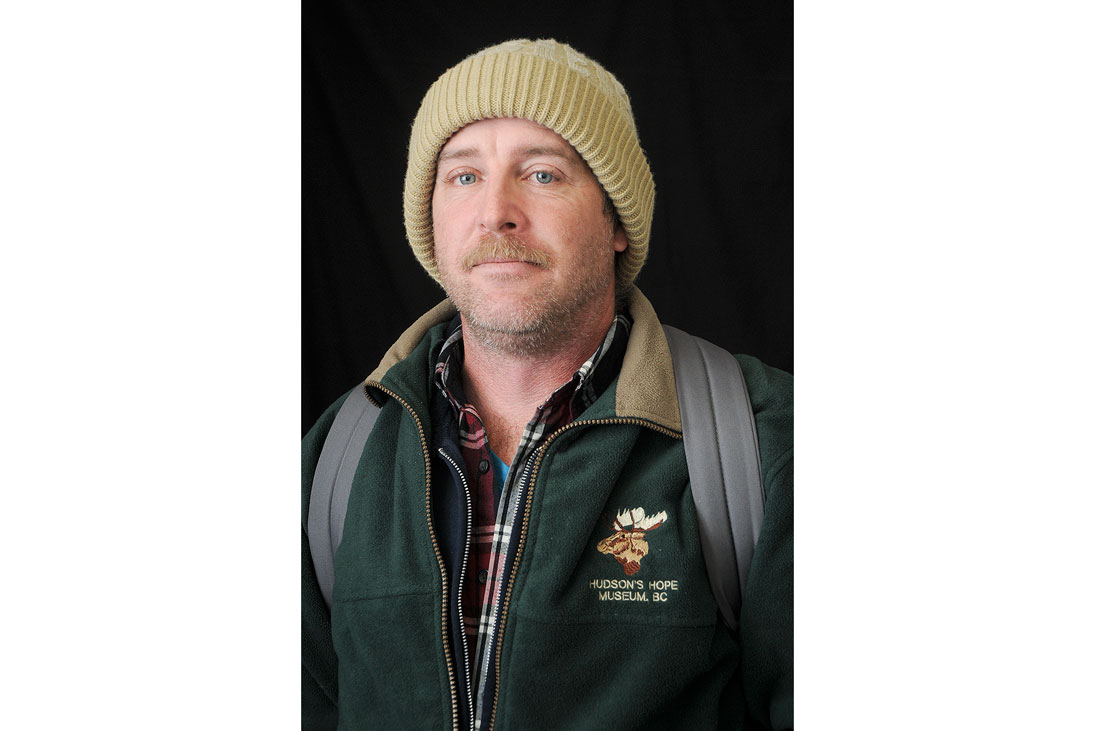
MANY WEAKNESSES EVIDENT – Morgan Forry has lived with mental health issues for 30 years. He sees gaps and inconsistencies in the services offered across Canada.
Photo by Rhiannon Russell
MANY WEAKNESSES EVIDENT – Morgan Forry has lived with mental health issues for 30 years. He sees gaps and inconsistencies in the services offered across Canada.
Morgan Forry has clear blue eyes that crinkle at the corners when he smiles.
Morgan Forry has clear blue eyes that crinkle at the corners when he smiles.
He carries a big backpack around town with him, full of petition sheets and notes about mental health services, and a bull horn.
The Delta, B.C., man is on a cross-country journey to advocate for a federal ministry of mental health and disability.
He envisions something that would provide nationally regulated services, like face-to-face contact with health care professionals after-hours and on weekends, for people with mental health issues and disabilities.
Forry, 42, knows this is lacking in many regions in Canada, particularly in the North.
That’s why he’s focusing his efforts on the Yukon right now, spending the next month here, collecting signatures and holding a town hall meeting tomorrow on mental health and suicide prevention.
Forry has personally felt a void when it comes to after-hours services and mental health workers’ accountability.
Diagnosed with bipolar disorder when he was 12 years old, he’s been on medication since. He has good days and bad days.
In 2009, he had some bad days.
“I have three beautiful kids that I don’t get to see, and at that time, I just was missing my children and I was very sad,” Forry says. “I just couldn’t cope with life. I just wanted to die.”
He cooped himself up in his house, missing a couple of psychiatric appointments.
He says he had no comprehension of life outside his front door.
He couldn’t look at himself in the mirror.
Then he received a letter in the mail from the Fraser Health Authority, the regional health authority in Delta, stating that because he missed appointments, his mental health services – psychiatrist, mental health team, access to provincial “clubhouses” that offer day programs – would be cut off.
“I missed two appointments, but nobody came to my house to make sure I was all right,” Forry says. “I lost all my supports once I lost mental health (coverage).”
But that spurred him to start advocating for change.
He talked to the health authority and met with housing committees.
He gathered up his health records, as proof none of his three workers stopped by his house to check on him when he stopped showing up to appointments.
“I’ve had three (suicide) attempts in my life,” Forry said. “They know that, and as far as they were concerned, I could have been dead.”
Through gathering this information, he realized the gaps in provincial and territorial mental health acts, and even the gaps in outreach and services from region to region within the same province or territory.
He met several other people in B.C. whose services were cut off for the same reason as him.
“They (the health authority) were clearing house,” he says.
The lack of evening and weekend supports was a problem for him, and for others.
He’d work during the day and have nowhere to turn at night, which was often the hardest time for him.
The petition Forry has created advocates for building a “healthier harm reduction solution” that would “ensure that there are after hours and weekend programs, for a safe place to go besides a hospital visit, with Outreach workers providing people policy fact sheets in every community, district and city throughout Canada so people know their rights.”
Forry has gathered about 2,000 signatures so far. He visited the Yukon in the spring, but got sick again so he had to return to B.C. to stabilize on his medication.
He’s also been to Alberta, where the mental-health system is well-built, he said.
He intends to visit communities across the country, holding town hall meetings and advocating for better services.
From 1:15 to 5:45 p.m. Tuesday, Forry will hold a meeting at the Whitehorse Public Library to discuss what’s available here.
Forry organized one such meeting in Delta, and it was so well-received, people had to be turned away because the venue was at capacity.
Members of the Canadian Mental Health Association and a local schizophrenia organization, a Simon Fraser University psychologist and B.C. MP Jinny Sims attended that meeting.
“We brought all that together and everybody combined all their information and now they’re working together,” Forry says.
This unification is needed to improve the assistance available to people with mental health issues, he says.
“There’s no outreach here,” he said of what was available to him in B.C.
“There’s no one who comes to the house to make sure there’s food, supports, phone calls, visitors, that you’re not isolating. There’s none of that up here (in the Yukon) either.”
It’s a gap seen across the country, he says.
Forry suspects part of the reason these services are lacking is because mental health issues are hidden.
“You can walk around with a broken arm, with a cast on it, and everyone can see it,” he says.
“Nobody can see a mental health issue. It’s invisible.”
In order to encourage thoughtful and responsible discussion, website comments will not be visible until a moderator approves them. Please add comments judiciously and refrain from maligning any individual or institution. Read about our user comment and privacy policies.
Your name and email address are required before your comment is posted. Otherwise, your comment will not be posted.
Be the first to comment