Photo by Photo submitted
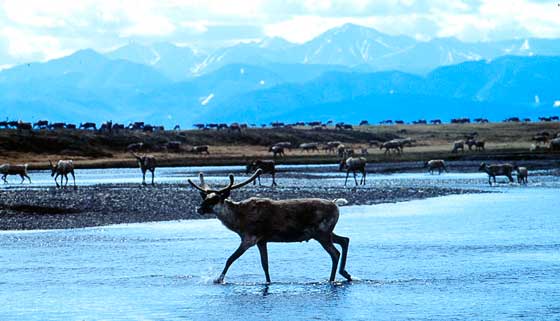
COMMITTED TO CARIBOU – Premier Fentie says the Yukon government remains committed to finalizing a harvest management plan for the Porcupine caribou, despite a recent lawsuit. Photo by Don Russell
Photo by Photo submitted
COMMITTED TO CARIBOU – Premier Fentie says the Yukon government remains committed to finalizing a harvest management plan for the Porcupine caribou, despite a recent lawsuit. Photo by Don Russell
The Yukon government remains committed to finalizing a harvest management plan for the Porcupine caribou herd, says Premier Dennis Fentie.
The Yukon government remains committed to finalizing a harvest management plan for the Porcupine caribou herd, says Premier Dennis Fentie.
Fentie said this morning the legal challenge filed against the government's decision to implement additional hunting restrictions on the herd will not take away from the government's work on the harvest plan.
The Gwich'in Tribal Council and the Inuvialuit Game Council filed a lawsuit in Yukon Supreme Court last Friday.
They argue the Yukon breached several trans-boundary treaty obligations by not properly consulting the first nations before implementing the restrictions.
"That is an option, and that they have chosen to do so, we will allow the courts to deal with the matter,” Fentie told the Star of the decision to file the challenge.
"But at the same time, as agreed to in the resolution a short time ago, the Yukon government will remain committed to get a harvest management plan completed by March 31, 2010.”
He said the government also remains committed to implementing the plan later this year, as agreed to in the harvest management plan resolution signed Jan. 15 in Whitehorse.
The resolution was signed by Fentie, N.W.T. Premier Floyd Roland and several aboriginal leaders from both territories, including those representing the Gwich'in Tribal Council and the Inuvialuit Game Council.
Richard Nerysoo, president of the Gwich'in Tribal Council, said earlier this week the legal challenge has nothing to do with the caribou, and as far as he knew, all parties were still committed to the Jan. 15 resolution.
The Yukon government has legal obligations set out in land claim agreements that it must acknowledge, but failed to honour, he suggested.
Court documents indicate the Gwich'in and Inuvialuit did not feel the herd's status is so dire that emergency measures are required. The Yukon government, however, felt otherwise, and unilaterally decided to impose the new restrictions, documents indicate.
"What the Yukon government will not do is move away from the precautionary approach when it comes to conservation and protection of the herd,” Fentie said.
While all parties agree the herd's population is declining, there is no consensus on just how far it's fallen.
The last accurate aerial survey was conducted in 2001. Either poor weather, changing migration patterns of the herd, or both, have prevented an aerial count since, over the last eight summers.
The herd's population peaked in the late 1980s at more than 180,000 animals but had dropped to 123,000 by 2001.
The court documents indicate the first nations in the N.W.T. feel the herd is somewhere between 110,000 and 112,000. The Yukon government, however, believes the number is closer to 100,000, or fewer, the documents indicate.
Chief Joe Linklater of the Vuntut Gwitchin First Nation of Old Crow, also a signatory to the Jan. 15 resolution, explained recently that agreeing to a population estimate will be a fundamental piece of finalizing a harvest management plan.
Efforts to negotiate a plan began in 2007.
Last fall, Environment Minister Elaine Taylor implemented a bulls-only harvest in the Yukon for all hunters, aboriginal and non-aboriginal.
The proposed harvest management plan also calls for a bulls-only harvest when the herd's population sinks below a certain number.
It is said that one cow caribou and her offspring will account for 23 more caribou in 10 years.
In order to encourage thoughtful and responsible discussion, website comments will not be visible until a moderator approves them. Please add comments judiciously and refrain from maligning any individual or institution. Read about our user comment and privacy policies.
Your name and email address are required before your comment is posted. Otherwise, your comment will not be posted.
Be the first to comment