Support robust for protecting watershed
It appears there is overwhelming support for a large protected area in the Peel River watershed, according to information composed by the Peel planning commission.
By Chuck Tobin on March 17, 2009
It appears there is overwhelming support for a large protected area in the Peel River watershed, according to information composed by the Peel planning commission.
Graphs produced from 168 submissions to the commission show overwhelming support for protection of more than half of the planning region encompassing 68,042 square kilometres.
Submissions show there is little or no support for mining or other industrial activity inside the same area that includes the Hart, Wind and Bonnet Plume rivers, and the southern portion of the Snake River.
Other than comments provided by organizations and companies associated with the mining industry, support for vast protection of the Peel watershed is coming from a variety of environmental sectors, including Environment Canada.
Carl Schulze, president of the Yukon Chamber of Mines, told the Star last week from Ontario that he's not yet had the opportunity to review the material.
As he's pointed out previously, the chamber and the mining industry are all for responsible development that takes into account wildlife and wilderness value, and the presence of existing ecotourism ventures, he said.
Schulze pointed out the chamber has signed an agreement with the Yukon's Tourism Industry Association committing both organizations to keep each other apprised of activities that may impact on their respective industries.
"We just can't allow such a large area of such high mineral values to be locked up," he said.
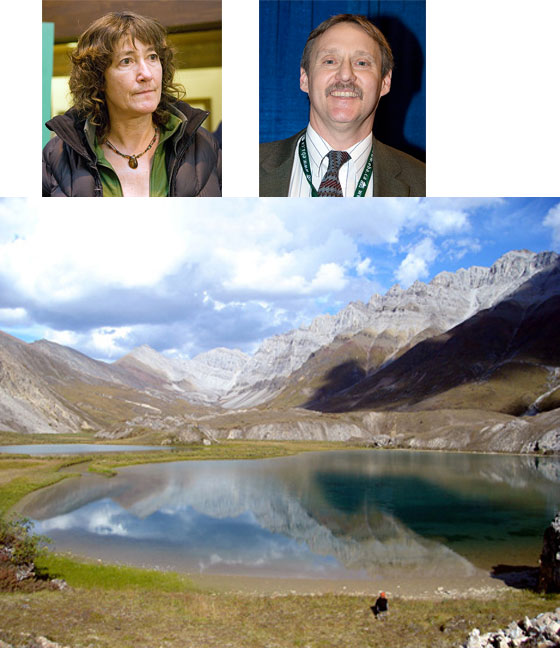
Karen Baltgailis, executive director of the Yukon Conservation Society, said the support for widespread wilderness protection is evidence of how passionately first nations, organizations and individuals feel about the area.
"It is a unique area," she said last week. "It is one of the last of its kind in the world.
"So I think people feel very strongly that the wildlife and wilderness values of the area have to be protected."
Of particular note, Baltgailis suggested, is the support for protection from the nearest communities and first nations that obviously feel the potential for employment opportunities does not outweigh the environmental impact development would bring.
The appointed commissioners met March 3 to review the three planning options before them.
Reg Whiten, senior planner with the Peel commission, said staff are aiming to have by the end of this month a draft of the final plan available for review by the parties to the process. It's expected the proposed final plan will be released publicly April 20, he said.
There will be another round of public consultation, and the commission is looking to have the exercise wrapped up by the end of the year.
Acceptance of the final land use plan will require the signatures of the Yukon government, and the Vuntut Gwitchin, Na-cho Nyak Dun and the Tro'ondek Hwech'in first nation governments.
The Tetlit Gwich'in of Fort McPherson, N.W.T. also have traditional territory inside the planning area, but currently is not officially required as a signatory to the land use plan.
Ultimately, the Yukon government will have the final say on what will and will not be allowed on Yukon Crown land, which accounts for almost all of the study area. First nations will have the final say about what will and will not be allowed on settlement land.
The land use planning process was established as a commitment under the territory's aboriginal land claims process, with the intent to eventually have land use plans covering the entire territory.
Work by the North Yukon Planning Commission was the first to go ahead, and the plan is currently being reviewed by the two affected governments - the Yukon and Vuntut Gwitchin.
The Peel commission began its work in 2004.
Commissioners have three scenarios to considers.
Scenario number one, as it is known, provides for a mix of wilderness protection and industrial development, though access to half of the planning area would be by winter road only.
Scenario two provides for outright protection of more than half the area, and allows for development elsewhere, subject to the regular environmental screening process.
Scenario three was developed at the 11th hour, after the public consultation had begun, and only after the mining industry had a chance to review the first two scenarios.
The third scenario calls for much greater industrial access to the entire planning region - all-season road access - subject to regular the regular environmental screening process.
The Peel planning commission received more than 400 submissions on the three scenarios, though there has only been time so far to include 168 for the purposes of the summary, following the Feb. 28 deadline for comments.
Staff indicated last Wednesday, however, that efforts were made to include the most pertinent and local submissions which reflect the general trend in the responses.
Among key considerations set out in the different planning scenarios is the issue of all-season roads and the access they would would open up, as well as the presence of existing mineral claims.
Under scenario two, for instance, the commission notes a primary consideration would be the level of compensation required for a large number of existing claims inside the area recommended for wilderness protection.
Under scenario three, most favoured by industry, there would be the least potential for compensation, the commission notes.
Statistics provided by the Yukon Chamber of Mines indicate there are some 10,000 claims inside the planning area. The chamber estimates the mineral exploration sector has spent $48.2 million in the area since 2000.
In a submission to the commission from six Keno City residents, the residents call for the implementation of scenario two and maximum protection for a "unique wilderness environment that should not be developed."
The letter writers suggest no compensation be paid for existing mineral claims, as many claims were staked after the planning process started, and it says companies should have known it was a case of "buyer beware."
On the other hand, in its submissions to the board, Taris Capital Corp. points out the claims it holds inside the planning area are 36 years old, and have been maintained in good standing since they were filed in 1973.
Companies have spent millions over the years keeping the claims in good standing, and Taris has itself spent about $1 million - $750,000 just in the last year alone.
"Our company cannot support any proposal which would deny us the ability to access our claims by road on a year-round basis," reads the submission, which was copied to Energy, Mines and Resources Minister Brad Cathers.
Comments (2)
Up 0 Down 0
Joe Yanisiw on Mar 27, 2009 at 4:10 am
Shame on you! Chuck Tobin, for writing such a biased article regarding the Peel Watershed.
My hair stands on end when I read biased newspaper articles with head lines like, "Support Robust for protecting Watershed".
Why this commission was ever conviened in the first place,is beyond my comprehension
First, publish the true identity of the 168 supporters of this proposed example of self interest and then explain the self serving interest of these few Eco's who have taken it upon themselves to save the Yukon from itself, by attempting to block any or all future development outside of Whitehorse.
Are these 168 people supposed to approve how the rest of the Yukon's 30'000+- population are going to earn a livelyhood
First get them to let the public know if and when they took the 10 day or 14 day all inclusive canoe/kayak trip from Bonnet Plume Lake and down the Wind River/Peel Rivers.
Get them to mention, how little money they spent or were planning on spending for the trip, so that a dollar value can be placed on Eco Tourism in the Yukon, as compared to the 100 million dollars per year that the mining exploration industry spends in the Yukon.
Ask them about real life experiences they would like to enjoy for 10 or 14 days of their all inclusive holiday or if they can quote documented survival stories about the people who survived travelling "UP" the Peel and Wind rivers to reach the Klondike goldfields in 1898, using this overland route from Edmonton.
Don't forget honouring those pioneers who didn't make it, as some are still buried at Wind River City.
These people were miners who pioneered travelling the Peel/Wind River watershed and not Eco tourists. They established this transportation corridor, that is still necessary today.
This portion of the Yukon needs to be given the same consideration as a proposed new subdivision does in Whitehorse. (for more Eco's to move to the Yukon and live in)
If a road is required to access any area in the Yukon, for what ever reason, then it should be built.
Exploration of the area's potential mineral resources cannot be terminated, this is already carved in stone and covered by both the Yukon Quartz and Placer mining acts.
I also have to question, why it is necessary for someone working as a prospecting or geological survey team, to need a land use permit to legally prospect/examine any area in the Yukon and yet an Eco tourist can get off a airplane from Germany and without any form of permission or permit fly into Bonnet Plume lake, with the blessing of self interest Eco groups like the Yukon Conservation Society and Wilderness Canada and the next day, be "Ein Wien-ing" their way to Wind River and down the Peel watershed, camping where ever they desire, starting campfires, cutting trees to leave their mark,and if they are lucky, maybe even come across a mining exploration company's, supply cache site, where they get to tip over core boxes, contaminate fuel caches and then get to go back home and start writing letters of objection against developement, that Yukoners require to sustain themselves.
Go Figure!
With the state of the world economy today, lets just wait and see how many eco tourist's go to the Peel watershed in the future or how necessary a Peel watershed plan really is.
Up 0 Down 0
HotWomen on Mar 26, 2009 at 1:43 am
Keep working ,great job!