Seniors cut to the chaste of skill-learning
Making knives isn't what comes to mind when thinking about how the retired or semi-retired spend their leisure time.
By Chuck Tobin on February 1, 2013
Making knives isn't what comes to mind when thinking about how the retired or semi-retired spend their leisure time.
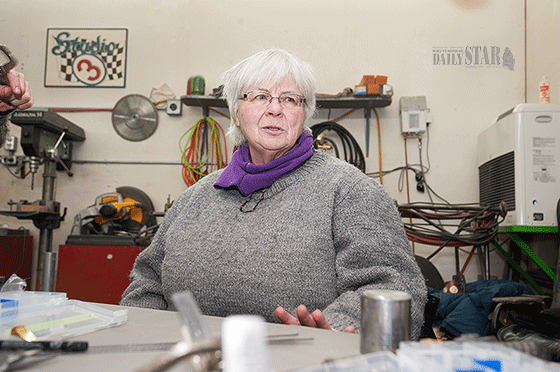
For Linda Cameron, it's exactly the kind of thing that makes her tick.
"I like making things with my hands and knowing how they they work,” the 63-old pensioner said this week.
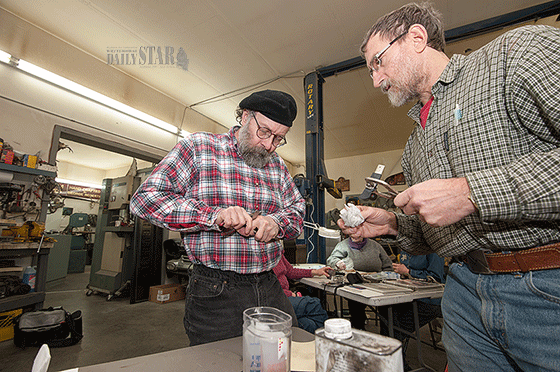
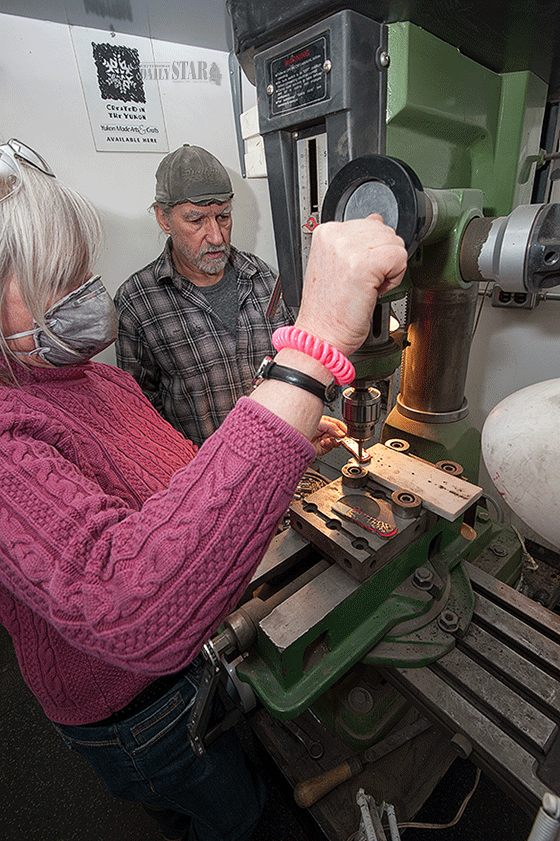
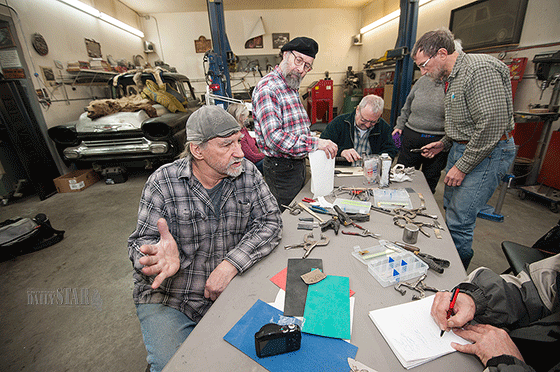
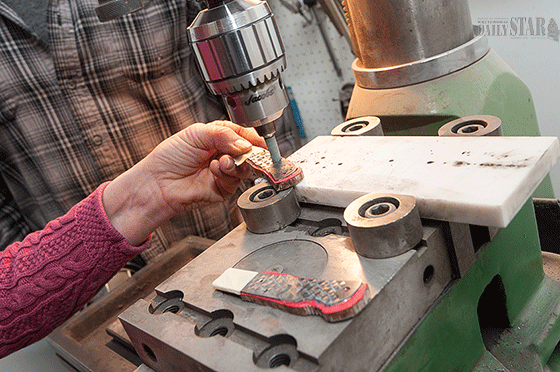
She spoke as she and five other students were busy fashioning their own folding knife under the tutelage of George Roberts, a professional knife maker.
"I have never seen the inside of a little knife like this.”
Cameron and five others enrolled in the federally funded Horizons for Seniors program are in their second of six half-day courses.
They'll graduate with their own pocket knife, unlike any other pocket knife, a knife fashioned by their own hands, using the material of their choice.
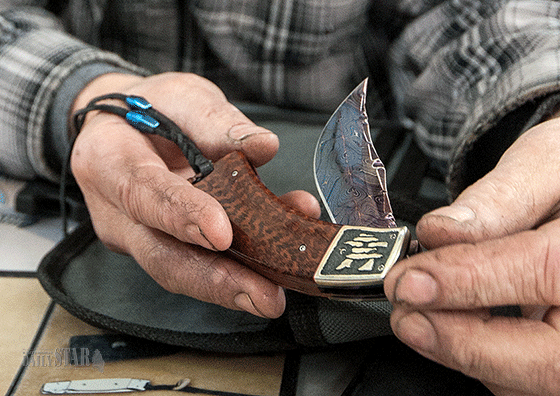
For some of the six, the handle will be made from Mastodon ivory, or snakewood, which Roberts says is amongst the rarest and most expensive exotic wood in the world.
Cameron has chosen tulipwood common to the eastern side of North America and parts of China. It shows off a light redish-burgundy tinge when polished to a finish.
"It's really nice to be able to access something new with people who have the skills to teach you how to do it,” she says. "It's fun.
"A knife is nice. You can use it ... and it was just something completely different.”
Cameron points out she's also enrolled in the needle felting course offered by Kate Williams through New Horizons, which is administered by the Yukon Artists@Work organization.
Seniors can sign up for any two courses offered by New Horizons, free of charge, she emphasizes.
Local potter Patrick Royle is Cameron's classmate on this day. On another day, he's teaching seniors hand-built pottery at the Thomson Centre, another option offered under the federal program.
When it comes to making knives, says the instructor, the folding knife is the toughest of them all, even for him.
"I can work on a folding knife for a few hours but then I have to set them aside and do other things,” says Roberts.
"It's the same for fancy knives as well, because you have to have full patience and concentration to do that stuff, so when you get out of that realm, it's best to leave it and come back to it.
"You can't get rammy with them. Everything has to be just so-so.”
He says it's the first time he's teaching the art of making a folding knife, and it's the first time he's instructing an all-seniors class.
"I figure we have enough time, and they have enough patience, so I thought we would give it a try.”
All the knives will be the same size and style, except for the students' choice of material for the handle, and individual design preferences.
Roberts says it's nothing for him to put in 100 hours on a folding knife. Then again, he doesn't sell them for anything less than $1,500, and some top out at $5,000.
In amongst a rollout pouch of several sheaths plugged with folding knives destined for Germany later his year is one of the $5,000 deals.
Its grip is snakewood, fastened with gold screws. The blade is made of hardened Damascus steel, heat coloured by Roberts to a dark blueish hue.
The knife maker of 35 years says a knife like that is a piece of art for collectors who probably aren't going to be carrying it around in their back pockets.
Germans in particular, he says, have an eye and appreciation for craftsmanship.
Roberts estimates when the seniors are finished, their knives will have a value of somewhere around $400.
"It's not just an everyday, plain Jane, run-of-the-mill folding knife. It's a lot different.”
Normally, says Roberts, he'd charge about $1,000 a head for the same type of course, given the 20 or more hours of his time teaching, material and use of his equipment and machinery at his shop in McCrae.
As a private businessman, he says, he doesn't want to discuss what New Horizons is paying him, but it also has to cover the time he's not spent making his own knifes to sell.
Glenn Piwowar, a 55-year-old semi-retired professional engineer, says if you ask anyone who knows him, he's a firm believer in lifelong learning.
With Northwestel Inc. for almost 20 years, Piwowar says he misses the learning opportunities that come along with full-time employment.
"What attracts me about this is it's a different sort of learning, a different set of skills,” he says of the hand-eye co-ordination required and the use of the tools and machinery.
Piwowar, who's chosen Mastodon ivory for his handle grip, suggests it didn't take him long to sign up the course, as he describes Roberts as extremely knowledgeable with an incredible willingness to share decades of his experience.
"We own three of his knifes,” he slips in. "So it's a real pleasure to learn from the master.”
Be the first to comment