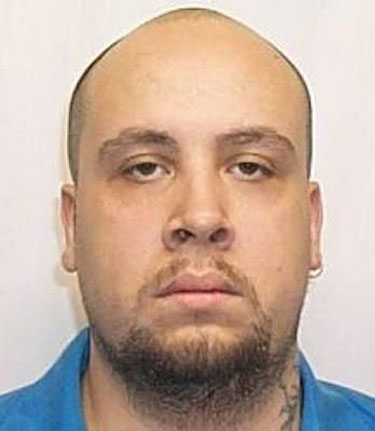
Photo by Whitehorse Star
Norman Larue
Photo by Whitehorse Star
Norman Larue
There were so few human remains left inside the burned-down rubble of Gordon Seybold's home, there's no way to determine an official cause of death.
There were so few human remains left inside the burned-down rubble of Gordon Seybold's home, there's no way to determine an official cause of death.
But Thursday, the defence lawyer in the ongoing Yukon Supreme Court murder trial questioned if there was even enough to prove it was Seybold who was found inside the cabin.
Norman Larue, 30, is being tried for a first-degree murder charge.
The Crown is alleging Larue and his then-fiancée, Christina Asp, attacked Seybold in his Ibex Valley home and burned it down.
On Thursday, the jury heard from two doctors who examined the remains collected from the fire: forensic pathologist Dr. Charles Lee and forensic odontologist Dr. James Severs, a specialized dentist.
Lee estimated there was less than 10 per cent of the body remaining to be examined, the largest piece being a portion of the torso.
Severs is part of the on-call B.C. forensic odontology team and has identified hundreds of people from their dental records.
He was part of a group who went to Thailand following the tsunami eight years ago to help identify victims.
Severs told the court he was provided with eight tooth root fragments collected from the fire scene. None of the fragments were attached to the jaw.
The dentist was also provided with fragments of jaw bone. Those bones had defined sockets and clear paths marked where the roots would have gone.
Severs and he was able to match the sockets and root paths in the jaw bones with the root fragments taken from the scene.
He then took x-rays of those pieces and matched them with the most recent x-rays taken of Seybold.
In all, five of the eight fragments were matched to the remaining jaw bone. The other pieces were too badly damaged to work with, the dentist testified.
Severs told the court things like the shape of the roots, drilling marks from cavities and signs of gum disease enabled him to identify Seybold.
But defence lawyer Ray Dieno suggested the methods used to identify the body were not reliable.
Dieno questioned Severs' credibility and credentials. He suggested the ID was only "a best guess.”
The doctor disagreed, saying it was not a guess at all.
Dieno went on to point out differences he said existed between the two sets of x-rays.
Severs responded that some slight damage may have been caused by the fire, but key elements between the two sets of teeth were a match.
When the forensic pathologist who performed an autopsy on the remains took the stand Thursday afternoon, he said there were signs that the person in the fire was dead before the flames broke out.
Lee testified that a sample of the body's liver was taken and tested for carbon monoxide (CO).
The results came back with a measurement of only two per cent.
If someone had inhaled smoke before he or she died, that number would likely be higher, he said.
The average smoker, such as Seybold, has a CO level of between five and 10 per cent.
The doctor admitted that using a piece of liver to do the testing is less reliable than using blood. In this case, there was no blood left in the body to do the test the conventional way.
In a typical fire, a doctor would also look for soot in the airway of a victim to determine if smoke was inhaled, Lee said.
In this case, no airway was found to be examined.
There have been cases where a person could have been alive at the time of the fire but inhaled no smoke, he said.
Those include if the fire was so hot it caused a person's airway to seal off right away, or if someone lights themselves on fire and the smoke is billowing away from their body.
Lee said there was no way for him to determine a cause of death nor if there was any blunt force trauma done to the body before death.
"There just wasn't enough of the body remaining,” he told the court.
One piece of the body Lee was able to examine was an artery, likely one that travelled to the leg.
The doctor testified it showed plaque buildup, but he could not determine how extensive the problem was without the rest of the body.
The jury has already heard that Seybold had a stroke about a year before the fire.
During cross-examination, Dieno asked if a fire started by Seybold and fed by leaking fuel would have been hot enough to cause airways to constrict and prevent smoke inhalation.
The doctor repeated that yes, high heat could lead to that possibility.
The trial, which will continue Monday, is being heard in front of Justice Scott Brooker, and is expected to last three months.
In order to encourage thoughtful and responsible discussion, website comments will not be visible until a moderator approves them. Please add comments judiciously and refrain from maligning any individual or institution. Read about our user comment and privacy policies.
Your name and email address are required before your comment is posted. Otherwise, your comment will not be posted.
Be the first to comment