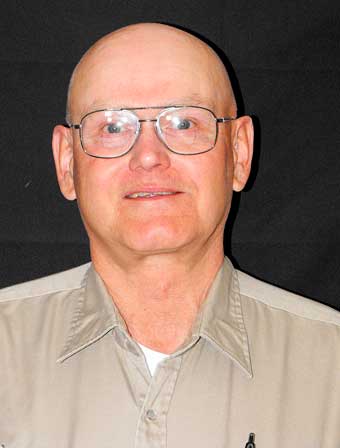
Photo by Whitehorse Star
Ken Gabb
Photo by Whitehorse Star
Ken Gabb
Implementing a no-hunting corridor along the Atlin Road is being recommended in this year's round of proposed changes to regulations under the Wildlife Act.
Implementing a no-hunting corridor along the Atlin Road is being recommended in this year's round of proposed changes to regulations under the Wildlife Act.
"The proposal is in response to safety concerns about hunting along the Atlin Road corridor,” says the explanation prepared for the booklet of proposed changes used to gather public input.
"Area residents have expressed concerns about safety when hunters shoot near their residences.”
Each year – last year being an exception – the Yukon Fish and Wildlife Management Board circulates recommended changes to gather input which it uses to determine whether to recommend the change to the minister of the Environment. Anyone can recommend changes for consideration by the board.
The Atlin Road proposal was put forward by Environment Yukon.
In its proposal for a 500-metre corridor on both sides of the road, the department notes regulations already prohibit shooting within a kilometre of a residence.
There may be times, however, when hunters are not aware of a nearby home because sometimes it's difficult to tell where dwellings are located.
The proposal does not mention the furor which erupted last year when hunters were driving the road looking for bears to shoot.
Some argued it's not a pleasant sight to be driving by while a hunter shoots a bear in the ditch. It was suggested by some that the majestic presence of a grizzly bear feeding harmlessly along the right-of-way is more valuable as a wildlife viewing opportunity for locals and tourists than as a stuffed head on the mantle.
Longtime Atlin Road resident Ken Gabb was among those who voiced their displeasure about hunters who hunt the road right-of-way, both from a safety point of view and as a matter of ethics.
There's no sport involved in shooting an animal while it grazes passively in the ditch, Gabb said again this morning when asked about the proposal by the Environment Yukon.
"All I can say is it's a good thing,” he told the Star. "That is going to save the lives of a few bears and maybe a few moose and a few deer.”
Gabb said when he moved here in 1969, you could drive the highway and see next to no evidence of homesteads or settlements along the road. That isn't so anymore.
Today, hunters could be shooting at animals in the ditch without realizing somebody is out working their field just behind a narrow buffer of trees separating their property and the road, he pointed out.
On the other hand, there were those who pointed out hunters who may have mobility issues or are without the means to get into the backcountry see roadside hunting as an opportunity to fill the freezer.
Once the management board finishes gathering public input, it sends its recommendations – usually in late December or early January – to the Environment minister.
The minister can accept, reject or alter the recommendations.
The public meeting for Whitehorse is scheduled for Monday evening at the High Country Inn with community meetings to follow.
There are seven other proposed regulation changes out for public review.
They are:
• Increase the no-hunting area around the range inhabited by the Chisana caribou herd in the southwest Yukon near Beaver Creek.
Chisana caribou are listed as a Specially Protected Wildlife. An intense recovery program was undertaken in recent years to help recover the herd's dwindling population.
The Chisana generally overwinter in the Yukon and spend the summers in Alaska. A count in 2007 indicated a population of 766 animals. The recommendation for an expanded no-hunting area was forwarded by the Yukon government.
• Restrict the Dall sheep hunt in three subzones west of Whitehorse and east of Kusawa Lake – 7-14, 7-16 and 7-19 – by implementing a permit hunt.
The annual harvest, according to Environment Yukon, has climbed above the sustainable threshold.
In 7-19, which abuts Fish Lake, rams have all but disappeared, according to the department. A census in 1994 came up with 40 rams. No rams were observed in the 2009 count. The recommendation was put forward by Environment Yukon.
• Prohibit the import of all body parts from the deer family which carry a high risk of being contaminated by deadly chronic wasting disease.
And prohibit the use of deer hunting lures made from urine, glands and tissues collected from the deer family, which also may be contaminated with CWD.
Hunters do return to the Yukon with deer meat taken during hunts down south, it is pointed out in the information booklet. CWD has devastated the deer family in the prairie provinces. The recommendation was put forward by Environment Yukon.
• Eliminate the harvest of woodland cow caribou and reduce the harvest limit for bulls from two to one in the eastern edge of the Yukon, in subzones 2-45, 2-64, 2-65, 2-70 and 2-93.
It's the only area in the Yukon where the harvest of cow caribou is still allowed.
The proposal forwarded by Environment Yukon also requests the extended season to Jan. 31 to hunt bulls be removed.
There is very limited hunting pressure by Yukon hunters, and most of the big game hunts by outfitters is over by Oct. 6, says the proposal.
• Extend the grizzly and black bear hunting season to Aug. 1 to June 21 of the following year, to increase harvest opportunities for bears who are still out of their dens in late fall and winter.
The proposal was put forward by the Teslin Renewable Resource Council. It says bears still out of their dens at that time of year are generally older and under-nourished, and allowing a harvest would be in the best interest of wildlife management, says the proposal.
• Change the regulations for harvesting grizzly bears from one every three years to allow hunters to harvest grizzlies in two consecutive years, to a maximum of two bears in six years.
Proposed by the Teslin Renewable Resources Council, it is suggested the idea would provide hunters with more flexibility, without impacting on the overall harvest level.
• Redefine the boundaries of all game management subzones across the Yukon to increase the ability to implement a more responsive moose management plan.
Existing boundaries are generally defined by mountain top and river valleys, and do not allow for the most effective management when there are two or more subzones running through the same primary moose habitat, it is suggested in the proposal advanced by the Teslin Tlingit Council and the Teslin Renewable Resources Council.
In order to encourage thoughtful and responsible discussion, website comments will not be visible until a moderator approves them. Please add comments judiciously and refrain from maligning any individual or institution. Read about our user comment and privacy policies.
Your name and email address are required before your comment is posted. Otherwise, your comment will not be posted.
Comments (3)
Up 0 Down 0
Mike Kohler on Nov 12, 2010 at 3:23 am
Another stupid law created around the emotional hype of one dead bear, which probably would have ended up being killed by some resident in a yard or by a CO for safety reasons anyway. So what does this mean? Idiots will still fire their guns at anything they choose along a road, residents will still kill bears to protect their families, more people and wildlife will be killed on the roads because we condition wildlife to make seeded road corridors their prime habitat. If you want to protect wildlife it needs to be harassed away from properties and overpopulated highway corridors, not attracted to. But who cares about dead motorists or totaled vehicles as long as a tourist gets a snapshot of a speck of a bear while he visits our territory.
Up 0 Down 0
j.grauserd on Nov 11, 2010 at 7:25 am
There should be a no-hunting corridor of at least 500 meters along "all Roads" in the Yukon!
Up 0 Down 0
Susan Rogan on Nov 10, 2010 at 9:25 am
Atlin has always been challenged due to its isolation, and the wildlife on the road to our neighbours in BC, is one of their best draws for a visit.
We had visitors from Austria in the summer of 2009, who were extremely thrilled to have seen the grizzly bears on the Atlin Road. They took pictures and proudly showed them to all, including us right after one of them was killed. We had to hide our sadness and knowledge in order to preserve their good memories of that 'bear encounter'.
The pictures are now showcased in their homes in Austria.
One of the bears who added so much to their vacation was featured in the newspaper dead and with no skin, lying in the ditch beside the Atlin Road. It was too heartbreaking to mention this to our guests. They were still here when the 'hunters' killed that bear, and when the article came out.
The behaviour of those supposed 'hunters' was shameful. They shot an animal beside the road, and left the body in the ditch to rot...
The bear had a lot more class than they did, and he gave people joy. Consider that.
Maybe at least this behaviour will no longer be legal, and we will continue to enact laws that reflect our respect and admiration for wildlife, not to mention the value that they add to industries other than hunting, such as tourism.
Thank you very much Ken Gabb, you did what most of us may have just been too depressed to do. It was an incredibly sad situation, but may end up being a meaningful sacrifice.
Let's hope the initiative passes to stop hunting on the Atlin Road.