Photo by Sarah Vanderwolf
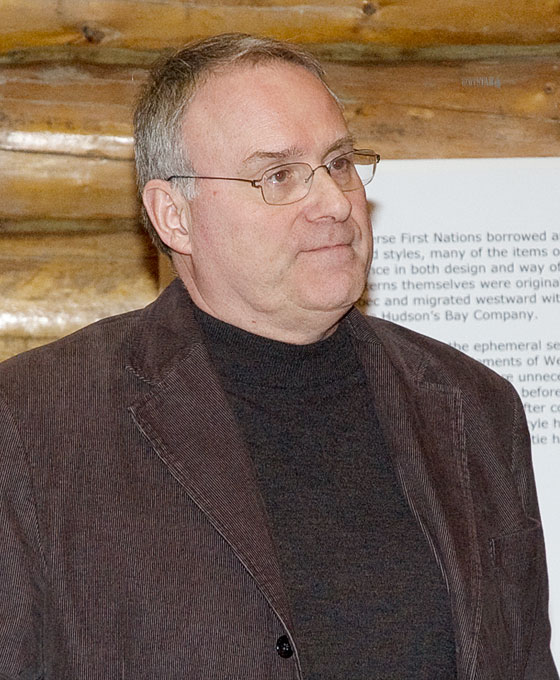
Liberal MP Ken Dryden is seen Wednesday in Whitehorse, where he listened to Yukoners' perceptions of poverty and homelessness.
Photo by Sarah Vanderwolf
Liberal MP Ken Dryden is seen Wednesday in Whitehorse, where he listened to Yukoners' perceptions of poverty and homelessness.
Poverty is an urgent problem that must be addressed now, a Liberal MP and chair of his party's social development committee told an audience at the MacBride Museum Wednesday afternoon.
Poverty is an urgent problem that must be addressed now, a Liberal MP and chair of his party's social development committee told an audience at the MacBride Museum Wednesday afternoon.
Ken Dryden visited Whitehorse this week as part of a national anti-poverty tour that has taken him to cities across Canada, including Charlottetown, Montreal, Toronto, Winnipeg, Edmonton, and Vancouver.
The tour, called It Takes a Country, is a "national call to action to address the unacceptable levels of poverty that affect Canadians of all ages and all walks of life," says a Liberal news release.
"It's just not right that so many Canadians live in poverty," said Dryden, a star goalie for the Montreal Canadiens between 1971 and 1979.
"Poverty is a life, your life as you experience it, seven days a week, 24 hours a day. Taking on poverty is hard; (it) takes time, has lots of ups and downs.
"It means you truly have to believe that taking a big bite out of poverty really matters. It takes an entire country to fight this fight and it needs to be fought because we're better than this. Canada is better than this," he told the crowd.
The tour also provides an opportunity to publicize Liberal Leader Stephane Dion's 30-50 Plan to Reduce Poverty, which he announced last November.
The release says the plan sets "firm targets to cut poverty by 30 per cent and child poverty by 50 per cent within the first five years of a Liberal government."
These targets would be achieved by creating a "Making Work Pay Benefit to lower the welfare wall to encourage and reward work," says the release.
Other initiatives to reduce poverty would include:
supporting working families by making the non-refundable Child Credit into a refundable credit and expanding and improving the Canada Child Tax Benefit, so that even people who do not pay taxes receive a benefit; and
helping lift vulnerable seniors out of poverty by increasing the Guaranteed Income Supplement payments for the lowest-income seniors, says the release.
A Liberal government would also honour the Kelowna Accord and "its plan for a better future for aboriginal Canadians," says the release.
"It's time to do something about poverty," Dryden, a former president of the Toronto Maple Leafs, said in his address.
"There are too many people in this country who live in a way they shouldn't live. It's not right and we know it as people and as politicians," said Dryden, a candidate in the 2006 Liberal leadership race.
He said it isn't good enough for his cross-country tour to be a "listening tour.
"This is a responsiveness tour," he said.
Dryden said that although Canada's economy and education system are thriving, poverty still exists.
"We need affordable housing, public transit, early childhood education, and support for first nations," he said.
"Municipal governments can't take on poverty alone. Not even close," said Dryden. "Provincial and territorial governments can't either. We need ambitious targets.
"If we don't have targets, we won't meet our goals."
Following Dryden's address, the other members of the four-person panel gave presentations.
Charlotte Hrenchuk, co-ordinator of the Yukon Status of Women Council, spoke of the difficulties many northern women face in the struggle against poverty.
Brian Eaton, a representative from the Second Opinion Society (SOS), said poverty is the water that mental illness swims in.
Eaton said poverty bears a direct relationship to mental disorders. Mental illness is three times more prevalent among low-income households than amongst higher wage earners, he said.
He added that by 2020, 75 per cent of inmates in Canadian prisons will have a mental disorder. Schizophrenia is also more prevalent in prison populations than the general population, Eaton added.
Ross Findlater, a longtime activist with the Yukon Anti-Poverty Coalition, said one of the factors in poverty in the Yukon is "lack of understanding and lack of treatment for mental health disorders.
"Small population is often used as an excuse (for lack of treatment)," he said. There are no day treatment centres in the Yukon for those suffering from mental disorders, Findlater noted.
"Poverty and homelessness are like an iceberg," he added. "Only a small portion is visible."
But Findlater said he believes Yukoners are a caring community and will offer help once they are aware of a problem.
"All we hear is doom and gloom," city councillor Dave Stockdale said when the forum opened to comments from the audience. "There can't be a panacea for everything."
Stockdale asked the panelists to name two good things the government has accomplished since the 1939-45 Second World War.
Dryden replied by saying improvements in the education and health care systems are two notable accomplishments.
In order to encourage thoughtful and responsible discussion, website comments will not be visible until a moderator approves them. Please add comments judiciously and refrain from maligning any individual or institution. Read about our user comment and privacy policies.
Your name and email address are required before your comment is posted. Otherwise, your comment will not be posted.
Be the first to comment