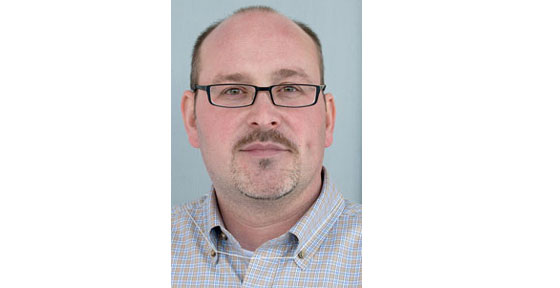
Photo by Whitehorse Star
Richard Elliot
Photo by Whitehorse Star
Richard Elliot
The Yukon's lawmakers sat down with one of the country's foremost advocates for the rights of people living with HIV/AIDS last week to discuss possible changes to the Mandatory Testing and Disclosure Act.
The Yukon's lawmakers sat down with one of the country's foremost advocates for the rights of people living with HIV/AIDS last week to discuss possible changes to the Mandatory Testing and Disclosure Act.
The act was first introduced by the Department of Justice late last year. It has been available for public consultation over the past two months.
The legislation would give emergency responders, including police, ambulance attendants and Good Samaritans, the power to demand a blood test from someone in the event they come in contact with that person's bodily fluids while assisting in an emergency.
The blood test would have to be ordered by a judge, after hearing the responder's case.
Police organizations, as well as ambulance attendants and firefighters, have come out in support of the act, which already exists in several other parts of the country.
Creation of the draft act was supported unanimously by the members of the legislature when it was proposed by then-Liberal MLA Pat Duncan in 2005.
But not everyone is a fan of the act.
Nurses' associations have typically remained silent on it, or have said they do not support the law; the Yukon's nurses' association has not yet commented publicly on the act.
Its most vociferous opponents are civil liberties groups and organizations that support and advocate for the rights of people living with HIV/AIDS and Hepatitis.
Richard Elliot is at the head of one of those organizations. He is the executive director of the Canadian HIV/AIDS Legal Network, and he was in the city last week to speak at a conference on harm reduction in the North, put on by Blood Ties Four Directions.
He brought with him a submission to the Department of Justice that described the Mandatory Testing Act as "an unjustified and unnecessary violation of rights."
Last Thursday and Friday, he met with caucus members of the Yukon Liberals and New Democrats, as well as with the deputy minister of Justice, Dennis Cooley.
Elliot's first choice would be to see the act scrapped. However, he included in his submission a list of suggested amendments to the act which, should it pass, would "tighten up" the legislation and mitigate some of the potential rights infringements.
It was those amendments that members from the opposition and third party were most interested in.
"It was a very informative meeting,"Liberal Leader Arthur Mitchell said after speaking with Elliot.
"We ultimately asked him for additional information regarding other jurisdictions, frequency of use, and whether it has changed the outcomes ... if the order was made and whether that has had an effect on the prophylactic decisions made for the people."
According to Elliot, the act is rarely used, primarily because the vast majority, about 98 per cent, of people willingly give a blood sample when requested.
As for the use of prophylactics - an aggressive treatment of anti-HIV drugs given to someone who has been exposed to the virus - they must be taken immediately after the incident, and would be useless if administered after the exposed person had gone to court, obtained the order, and the sample was taken, analyzed and returned. Even on the tightest timeline, that process would take weeks, if not months.
There is no such treatment for exposure to Hepatitis C, the other prevalent blood-borne illness this act would cover.
"I do find interesting the information to date the very, very small number of cases - I think there is only one (in Canada) - of HIV infection in the line of duty," Elliot said.
In that case, the virus was passed on via a needle, from a patient in the late stage of AIDS to a health care worker. It did not occur in an emergency situation.
Mitchell said he and his fellow caucus members have not made any final decision on whether they will support the act in the legislature.
"We're still in the information gathering stage," he said, adding the party will review the results of the public consultation and speak to groups such as the Yukon Medical Association before coming to any conclusions.
NDP Justice critic Steve Cardiff said his meeting with Elliot brought to light substantial concerns about how the act could affect people's right to privacy, especially in a place like the Yukon.
"We live in a fairly small jurisdiction," he pointed out. "There needs to be some comfort for individuals who are subject to mandatory testing that their privacy is going to be protected and that they won't suffer stigmatization in their community."
In the draft act, the person who requests the sample would have access to the results.
Elliot argues the results should be given exclusively to that person's doctor, who could then take the necessary steps to assist his or her patient, either with medical treatment or counselling.
Cardiff said one thing that was clear in his conversation with Elliot is the need for better education about the actual risk of infection.
Outside of unprotected sex and needle-sharing, Elliot's submission shows, the chance of contracting HIV or Hepatitis is very low.
A person with an open wound that is exposed to HIV-infected blood has a one in 300 chance of catching the virus. There is a one in 1000 chance of contracting HIV if the infected blood comes in contact with a person's mucous membranes. HIV cannot be contracted by skin-to-skin contact.
"We need better public education about the types of precautions people can take," Cardiff said
"And as well, we need to provide comfort to people who may have been exposed about what the real risk of exposure is."
The question he was left with, Cardiff said, is: "Will this legislation do more harm than good, and are there better ways to address these problems than passing this legislation?"
He said he will be trying to find the answer to that question in the coming weeks in talking to first responders, doctors, nurses and the public.
Deputy Justice minister Cooley was not available for comment today on his meeting with Elliot.
In order to encourage thoughtful and responsible discussion, website comments will not be visible until a moderator approves them. Please add comments judiciously and refrain from maligning any individual or institution. Read about our user comment and privacy policies.
Your name and email address are required before your comment is posted. Otherwise, your comment will not be posted.
Be the first to comment