Photo by Whitehorse Star
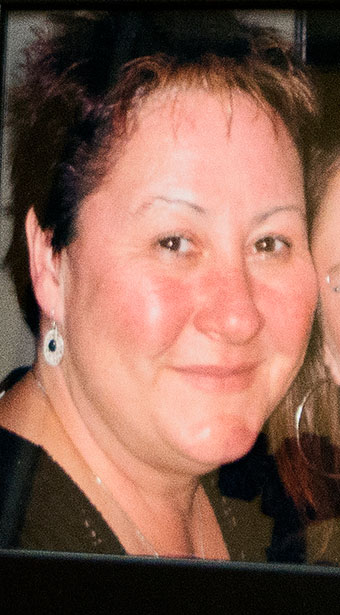
Teresa Scheunert
Photo by Whitehorse Star
Teresa Scheunert
Neither doctor who treated Teresa Scheunert in the weeks before her 2012 death observed any signs that she suffered from an overdose of narcotics, according to testimony heard Tuesday during a coroner's inquest.
Neither doctor who treated Teresa Scheunert in the weeks before her 2012 death observed any signs that she suffered from an overdose of narcotics, according to testimony heard Tuesday during a coroner's inquest.
Tanis Secerbegovic was Scheunert's primary doctor during her two-week stay at Watson Lake's hospital between June 7 and June 21, 2012, the day she died.
Tanis' father, Said Secerbegovic, also treated her.
Scheunert, a nurse at the Watson Lake hospital, was admitted on June 7 suffering from severe back pain, which she attributed to an injury sustained during a CPR course in Whitehorse in April, 2012.
Tanis, who was the first person to testify Tuesday, said she admitted Teresa to hospital intending to provide pain management and emotional support.
She hoped it might lead the Yukon Workers' Compensation Health and Safety Board to expedite the investigation into Scheunert's injury.
Scheunert's health care providers had requested an MRI through the board, given it was a work-related injury.
Said noted during his testimony that MRIs could often be secured more quickly if they were ordered by the board, rather than the family doctor, which could sometimes take up to six months.
Tanis noted the board never said when Scheunert might be sent for the MRI, only that the investigation was ongoing.
It was only in the days immediately prior to her death that Tanis and Scheunert began to discuss moving forward with a care plan which included trying to secure an MRI privately.
Counsel for the coroner asked Tanis why she hadn't ordered an MRI herself earlier.
She testified that her mind was focused on pain management and waiting for the compensation and safety board to order the MRI.
But she agreed that's something she could have done earlier and said it's one of the lessons she's discovered from the ordeal.
"I've learned many, many, many things,” she said.
Scheunert did have a CT scan done on her back but Tanis wasn't satisfied with the imaging.
She was hesitant to order a second CT though because of the high radiation associated with the tests.
She also noted that an MRI is a better form of imaging for detecting injury to nerves and other soft tissues, which she suspected was the cause of Scheunert's pain, although a diagnosis was never made.
On June 7, Scheunert was "fearful and distraught,” Tanis told the inquest. She was in a great deal of pain and felt she couldn't cope on her own at home, so she admitted her.
Prior to and during her stay in hospital, Scheunert was prescribed numerous opioid medications for her pain.
Tanis described her approach to pain management as trying to achieve good pain control rather than "chasing the pain.”
Her goal was to start Scheunert on a long, slow-acting narcotic, using a faster-acting pain medication to determine the required dosage of the longer-term drug.
For example, Scheunert was prescribed a fentanyl patch as the longer-acting narcotic. At one point, she was also given dilaudid to use as needed for faster pain relief.
Tanis aimed to monitor Scheunert's use of dilaudid to determine the appropriate dose of fentanyl to manage her pain over a longer time period.
Scheunert was started on a 75-microgram patch of fentanyl, which Tanis upped to two 75-microgram patches on June 20, the day before Scheunert died.
Counsel for the presiding coroner questioned Tanis on her decision to double Scheunert's dose of fentanyl.
Tanis noted she would have preferred to have monitored Scheunert's use of the dilauded for a day or two more before deciding to up the dose. She said she did feel some pressure from Scheunert to make the change more quickly, as she was eager to get her pain under control.
She commented that while it was a relatively high dose of fentanyl, it wasn't unheard of. She noted she has a patient who is about the same size Scheunert was who is taking 300 micrograms of fentanyl.
Multiple times during Tuesday's testimony, the two doctors noted some care decisions were slightly unusual, given that Scheunert was an experienced nurse and a colleague.
Over the two weeks Scheunert was in hospital, she was prescribed other medications, including hydromorphone and oxyneo.
Tanis testified that Scheunert complained that the hydromorphone made her feel too sedated, so she prescribed the oxy instead.
On more than one occasion, Scheunert reported feeling dizzy and at one point "whacked out,” following doses of oxy, according to nurses' notes.
But Tanis said she never observed Scheunert in a confused state, having slurred speech or depressed respirations, or displaying other symptoms that would have indicated an overdose of drugs.
She noted Scheunert was frequently up and outside for a cigarette, and often went home on day passes during the day, with Tanis' permission.
On two occasions early on, Tanis smelled alcohol on Scheunert's breath when she returned to the hospital after having spent the day at home.
She didn't make a written notation of the incidents but spoke to Scheunert and said she didn't feel concerned it would happen again.
During Tuesday afternoon's testimony, Said reiterated his daughter's testimony that there were no signs to indicate Scheunert may be suffering from narcotics toxicity.
While he said the day passes can inhibit monitoring, the situation was a bit different considering Scheunert's nursing experience and the fact that she was a colleague.
Tanis called them a bit of a professional courtesy.
The lack of doctors' notes available was another topic of interest during Tuesday's questioning and testimony.
After June 7, there are no notes from Tanis regarding Scheunert's care – just doctors' orders.
Tanis agreed it's "inexcusable” that she wasn't completing her charting, nor filling out electronic medical records as she had planned to do in this case to make it easier to submit documentation to the compensation and safety board.
But she noted that for most of the month that Scheunert was in hospital, she was the only physician serving Watson Lake. Her priorities were seeing patients, she commented, and her paperwork suffered.
She maintained though that she provided "safe” and "adequate” care to her patients during that time.
While counsel for the coroner noted there are no records, then, of when Tanis saw Scheunert, the young doctor assured the jury she saw Scheunert daily.
During Said's testimony, considerable time was devoted to discussing what happened after Scheunert was found dead.
Once nurses discovered Scheunert, Said was called and attended the scene. He noted he was probably at the hospital in under a minute, as his clinic is nearby.
Scheunert's skin was mottled and cool by the time he arrived, Said said, leading him to believe there was little hope of reviving her.
Regardless, numerous efforts were made, he testified.
Scheunert's time of death was called at 11:34 a.m. She had been observed to be sleeping at 10:15 that morning and was found unconscious close to 11:00.
The doctor said it didn't occur to him to use narcan, a drug used to reverse the effects of opioid overdose, during the efforts to revive Scheunert, as he'd never observed her to exhibit any symptoms of toxicity.
When questioned on the symptoms that may have alerted him to possible toxicity, Said said he would have expected to see respiratory depression, lethargy and grogginess, and he wouldn't have expected that she would be able to go for a cigarette five or six times a day, nor that she'd be eating.
Following her death, Said felt the most likely cause was some sort of cardiac event. He testified that Scheunert had several risk factors for a heart attack, including high blood pressure, poorly controlled type two diabetes, she was obese, a smoker, and didn't exercise.
But, her age – 47 – led him to request an autopsy.
He also noted Schenuert's partner at the time, who is now deceased, mentioned on June 23 that Scheunert appeared to suffer from sleep apnea – she would sometimes stop breathing during the night for five or 10 seconds at a time – another risk factor.
The nurses did monitor Scheunert's sleep during her time in hospital and made no note of any apnetic episodes.
Questions were also raised Tuesday about why a pharmacist was never consulted on any of the medications prescribed to Scheunert.
Said is the primary owner of the Parhelion clinic and the sole pharmacy in Watson Lake.
Both Tanis and Said noted it wasn't standard practice then, as it is now, to consult a pharmacist.
The inquest, which is being overseen by B.C. coroner Norman Leibel, is scheduled to run until Friday evening.
A live stream of the proceedings is being telecast in Watson Lake.
In order to encourage thoughtful and responsible discussion, website comments will not be visible until a moderator approves them. Please add comments judiciously and refrain from maligning any individual or institution. Read about our user comment and privacy policies.
Your name and email address are required before your comment is posted. Otherwise, your comment will not be posted.
Comments (4)
Up 12 Down 1
anon on Jun 5, 2014 at 6:29 am
Why was the MRI never done? I went through the same outrageous situation of incredible back pain for months and months with nothing done by my doctor other than t-3 prescriptions. And even that was done with a lot of attitude. I did finally get an MRI after stating that I would have one, paid for by myself or the system, but I would have one. Finally they booked me one. Unbelievable. MRI's are standard procedure in most developed countries. Up here it's like something you are supposed to beg for. Luckily my back did get better on its own, but everything you read says that if intense back pain lasts for longer than 2-3 weeks, an MRI is standard. I know how messed up you can get after a couple months on pain killers! You are not yourself anymore. Condolences to the family and friends.
Up 12 Down 0
wondering on Jun 5, 2014 at 5:15 am
@ my2bits -- I was wondering the same. And I've had the thought that maybe while being at home, maybe she was taking more medications that no one knew about.
I'm not sure why they allowed her to check out and in daily. That seems unusual to me. But I'm also not an expert and know nothing so I won't speculate on this. This might be normal practice for any hospital. After all, they can't hold you against your will.
There is always more to the story. Blaming doctors isn't the only thing here.
It's unfortunate for sure. I feel for the family and this woman who suffered.
Up 20 Down 1
my2bits on Jun 4, 2014 at 2:37 pm
While this must be very hard for the family, I can't help question what this person was doing on "passes" given her unbearable pain? Smelling of alcohol after a pass? Could there be more to this than just the events that took place at the hospital? If the hospital staff and Doctors actions are in the spotlight should not this young woman's own lifestyle and / or habits also be of interest to this fact finding ordeal?
Up 27 Down 6
Catherine Johnsen on Jun 4, 2014 at 8:13 am
Both these doctors have served our community, providing great care for the people of Watson lake. Tanis is a very compassionate warm Doctor