Photo by Whitehorse Star
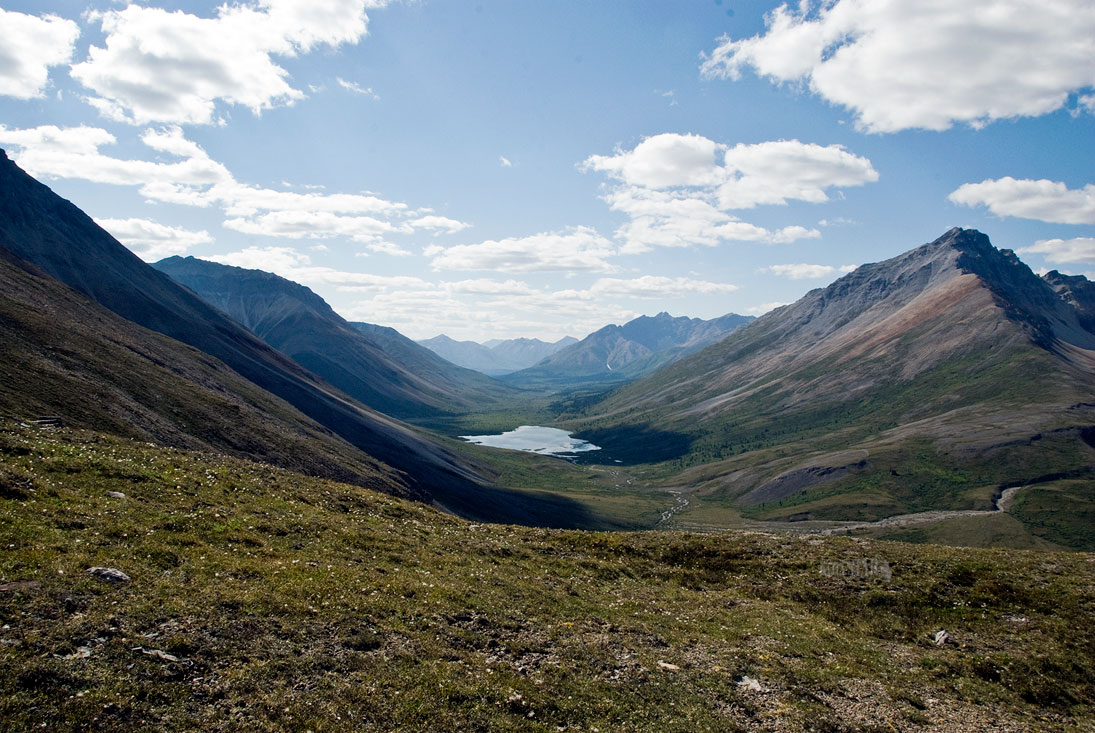
SENDING A CLEAR MESSAGE – Most respondents to the round of final consultations, says the report released Tues- day, want the interim protection for parts of the Peel Watershed (above) elevated to permanent protection.
Photo by Whitehorse Star
SENDING A CLEAR MESSAGE – Most respondents to the round of final consultations, says the report released Tues- day, want the interim protection for parts of the Peel Watershed (above) elevated to permanent protection.
The report on the final round of consultations for the Peel Regional Land Use Plan was released Tuesday.
The report on the final round of consultations for the Peel Regional Land Use Plan was released Tuesday.
The division in public opinion over the future of the Peel burst into the open in 2009 with the beginning of the public consultation process.
That division, still alive today, led to a prolonged court battle that was settled in December 2017 by the Supreme Court of Canada when it ruled the Yukon government of the day failed to properly negotiate a land use plan.
It ordered the government to largely accept the plan recommended by the planning commission, which the Yukon government had wholly rejected under the direction of the Yukon Party – and subsequently substituted its own plan.
The Supreme Court ordered the Yukon government to return to the planning process to conduct the last round of public consultations on the land use plan recommended by the planning commission, as set out in the process established in the aboriginal land claim agreements.
The Supreme Court also ruled changes to the plan at this point must be minor in nature, unless changing circumstances can justify changes that are more than minor.
The Yukon Liberal government of today and the four First Nations with interests in the Peel Watershed hired Stantec to conduct the final round of public consultations.
Tuesday’s report by Stantec summarizes the final round of public consultations late last year. It summarizes the results of public meetings in eight communities last fall and meetings with individual stakeholder groups. It summarizes the response to questionnaires filled out by 2,046 people and letters written by 628.
“From this high level of participation, it is apparent the outcome of the Peel Watershed planning process is important to Yukoners, residents from the affected communities and others around the world,” says Stantec’s report.
The two fundamental principles contained in the planning commission’s recommendation was wilderness protection for 80 per cent of the 68,042 square kilometres, with virtually no surface access into the region by road or rail.
Stantec’s report says the final round of consultations is showing the majority want greater protection for the Peel. It notes for instance, that while 80 per cent of the Peel is protected, a quarter of that is under interim protection. Most, says Stantec’s report, want the interim protection elevated to permanent protection.
Whether that would constitute a minor or major change will be up to the five governments which must now digest the last round of consultations, Jesse Devost, a director of communications with the Department of Energy, Mines and Resources, explained this morning.
Devost said there’s been no schedule laid out, though he knows senior representatives of the five governments saw Stantec’s report before it was released and have had at least one meeting about it.
Following the Supreme Court of Canada’s decision, the five governments agreed they would strive to reach consensus on a land use plan, following the final round of consultation, Devost said.
He said he expects the process to unfold in the coming months.
The five governments, he said, are faced with key decisions based on what they’ve heard in the final round of consultations, and on what the Supreme Court ruled.
Executive director Mike Walton of the Yukon Conservation Society said this morning from where they sit, elevating the 25 per cent of interim protected wilderness to permanent protection is minor in nature, given the court’s ruling.
If it’s not minor, then certainly making the change can be justified by the recognition of changing circumstances, he said.
Walton said he would argue a major change in the last four years is the continuing loss of biodiversity on the entire planet. What was being described as an urgent matter four years ago is now being called a crisis by scientists around the world, he said.
The executive director said the response in Stantec’s final round of public consultation clearly sets out the importance of protecting the biodiversity in the Peel Watershed.
Samson Hartland of the Yukon Chamber of Mines said this morning he wasn’t about to get into a debate right now over what would be considered a minor or major change in the plan recommended by the planning commission.
But the chamber, he insisted, will be watching.
Hartland said what he’d like to point out is the shrinking amount of land available in the Yukon for exploration and what it means for the territory’s long-term economic outlook.
Including the protection laid out in the Peel plan, 52 per cent of the Yukon is closed to mineral staking, he said.
Hartland said 52 per cent is closed right now, and there are still five more regional land use plans to go, with the possibility of a whole bunch of sub-regional land use plans emerging.
“Is it the plan to withdraw the entire Yukon, or just what is it?” Hartland said, adding that’s a discussion that needs to happen.
And there’s still the elephant in the room that nobody seems to want to talk about, he suggested.
Hartland said the Peel plan in its current form, with no access by road or rail, essentially expropriates the economic viability of over 8,000 legally recorded mineral claims inside the Peel Watershed.
What about the hundreds of millions spent by companies staking those claims and conducting exploration work? said Hartland.
What about compensation for the loss of investment by those companies, he asked.
“It is a big elephant in the room,” he said. “It is the elephant in the room that nobody is talking about right now.”
The Peel planning commission went public with three land use options in early 2009, and the division between the pro-wilderness and pro-development communities was immediate, and passionate.
The commission released its draft recommendation later in 2009, calling for vast wilderness protection, and limited surface access.
The First Nations had always been adamant they wanted wilderness protection. They started at 100 per cent, and eventually said they would accept 80 per cent as a sign of good faith. The Yukon government never put up a number. After the commission issued its draft recommendation, it responded by asking the commission to have another look, with more weight given to balancing economic interests with wilderness protection.
In its final recommendation after receiving input on the draft from the Yukon and First Nation governments, the commission told the Yukon government it had already given its full attention to all matters. The final recommendation was largely a mirror of the draft recommendation, calling for 80 per wilderness protection with no surface access.
The Yukon government rejected the recommendation, as it controls 97 per cent of the Peel land mass.
The court action began.
The courts found the government was in breach of its constitutional obligation to negotiate in an honourable manner, that it never was specific about its vision for the Peel. The courts ruled it could not pull the ace out of its back pocket at the end of the day and claim victory. The Supreme Court ruled the government must return to the consultation process, at the point where it received the final recommendation, and was then obligated to conduct the final round of consultations based on the planning commission’s final recommendation.
The courts ruled the government could not make major alterations at this point, that the government’s time for input had passed, and any changes from here on would have to be minor in nature.
In order to encourage thoughtful and responsible discussion, website comments will not be visible until a moderator approves them. Please add comments judiciously and refrain from maligning any individual or institution. Read about our user comment and privacy policies.
Your name and email address are required before your comment is posted. Otherwise, your comment will not be posted.
Comments (1)
Up 20 Down 5
*I'm going to let you finish on Mar 1, 2019 at 9:34 am
I was wondering if anyone has taken the time to look into the Peel Planning Committee's funding + the "protect the peel" group?
I ask this for a very simple reason.
There was a bumper sticker awhile ago that read, "They're not saving it for you, they're saving it from you."
I didn't think much of it. After awhile, seeing the organization +funding + marketing of the "protect the peel" group (even in comparison to any other political party in the area) something seemed amiss.
It's actually difficult to find the data that I'm looking for, however, there is a very similar trend happening here that has happened elsewhere in the world.
Usually done by the U.S. Locking a countries natural resources for their own is a common theme. By doing this under the guise of conservation people have blindly jumped on board. The peel planning should include a caveat that minerals/resources extracted from the Peel must be done so by Canadian owned companies. If you look back on this decision 150 years from now I think you'll see the U.S. and Canada becoming one country. Alaska will be used to pull resources right out of the Yukon, including water, and take it to port where it will be used in the U.S. We can hopefully buy it back afterward.
There is a huge lack in transparency. I'm not for protecting the peel. I believe resource extraction is only going to increase. Technology has led to more resources used, not less. As more people move to the Yukon there will be a demand for energy. As more technology requires zinc, silica, gold, there will be more demand for those resources as well. The question is, will Canada be selling their product to market, or will it simply be taken from them?
With the SNC issue, it's clear there are backroom deals. The worth of the peel is in the billions. With our weak economy, Canadians are being bought out and influenced by outside sources versus thinking of the best interests for Canada.
Locking down the Peel will simply save the resources for the U.S.
A smarter idea would be to open the peel up and lay the groundwork that is Canadian owned (Territorial owned roads) ; so that the resources in the area cannot be moved without using Canadian routes.