Opening submissions in Peel case presented Monday
Lawyers sparred in a Yukon Supreme Court jousting match Monday over competing visions for aboriginal rights,
By Christopher Reynolds on July 8, 2014
Lawyers sparred in a Yukon Supreme Court jousting match Monday over competing visions for aboriginal rights, government obligations and land-use planning around the future of an expanse of iconic northern wilderness — the traditional territory of several First Nations.
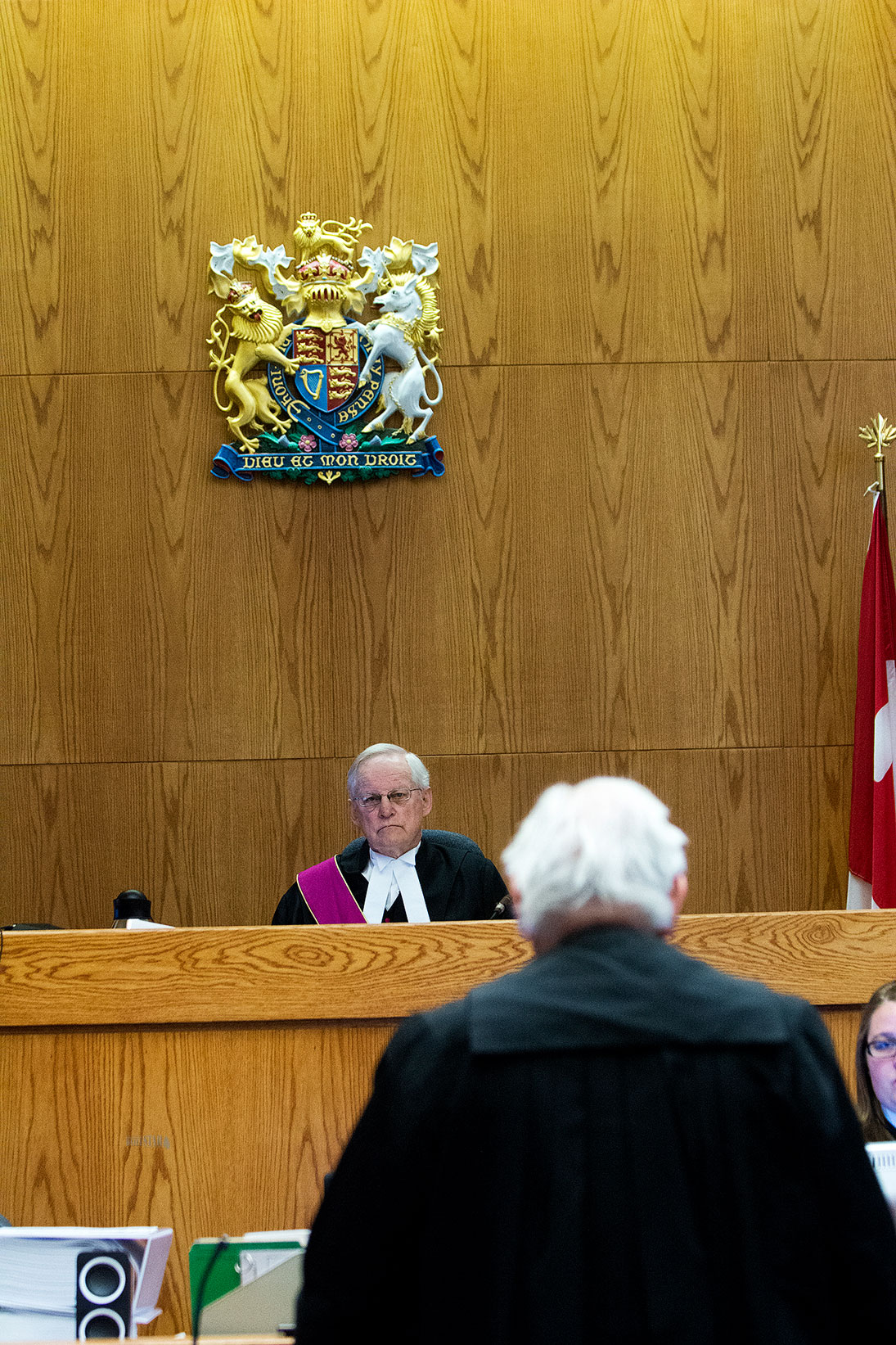
The civil trial over the Peel River watershed — in its first of five days yesterday and featuring both video camera and media broadcasting allowance for the first time in Yukon history — is the culmination of a lawsuit launched by two First Nations and two environmental groups against the territorial government over its plan to open the pristine region to development.
The Na-Cho Nyak Dun and Tr’ondek Hwech’in First Nations, the Yukon chapter of the Canadian Parks and Wilderness Society and the Yukon Conservation Society want the government’s “unilateral” plan struck down, replaced with one previously recommended by an arm’s-length commission that would shield 80 per cent of the area from new mineral staking, development and roads.
The government argues its plan, adopted last January, should remain as is, having been arrived at through a process inscribed in the Umbrella Final Agreement — a comprehensive framing document for aboriginal land claim settlements in the Yukon.
The land-use plan that emerges from the hearing will likely set a precedent to guide consultation processes and the balance of authority on how an area can be mined, drilled, paved, conserved and reclaimed.
Thomas Berger, a renowned aboriginal rights jurist retained by the plaintiffs, argued yesterday the government had no right to adopt a plan he said differed drastically from the one proposed by the Peel land use planning commission following seven years of research and consultations.
“The government of Yukon has turned the process on its head,” he told Yukon Supreme Court Justice Ron Veale.
“If the government of Yukon can now reject the final recommended plan, the whole elaborate process provided for under the UFA (Umbrella Final Agreement) is confounded.
“It would not be meaningful dialogue; it would be meaningless dialogue,” he said.
John Hunter, the government’s lawyer, said his client was entirely within bounds when it “developed some options of its own and then went out and consulted exactly on those options.”
He said the Umbrella Final Agreement is clear in dictating that the government can ultimately “approve, reject or modify” a final recommended plan put forward by the commission.
Hunter argued ultimate authority over the Peel’s 68,000 square kilometres of river-laced mountains and plateaus lies with the territory, as it is Crown land.
Settlement lands — owned and managed by individual Yukon First Nations according to modern-day treaties — constitute only three per cent of the Peel’s rugged sprawl, believed to contain abundant mineral wealth, such as base metals like iron ore and uranium.
The other 97 per cent — non-settlement land — belongs to the state.
Hunter insisted that “settled” aboriginal communities and the government have “symmetrical” responsibilities: “The agreement really works the same for both sides.
“These are non-settlement lands, so our position is that the decision is made on the land-use plan by the government going through the process that the parties agreed to, and the government feels ... that the government did go through that process properly,” he told reporters after the first day of hearings.
Berger himself admitted the near-identical processes demanded of both parties.
Like Hunter, he referenced a 2011 letter from then-Energy, Mines and Resources minister Patrick Rouble to the commission that sketched the department’s ideal land-use plan, one that “reflect(s) the varying conservation, tourism and resource values” of the territory.
Berger said that two of the five proposed modifications listed in the department’s letter were “too general and non-specific for the commission to come to grips with.”
“These issues, the amount of land to be protected and provisions for access, were the two main issues in land-use planning: they were woven into the fabric of the recommended plan in its land use designation system,” he said.
The plaintiffs also asserted the “duty of consultation” — an obligation firmly established by the courts only within the last 10 years via the Supreme Court of Canada precedents — which insists “that consultation with First Nations must be meaningful.”
The duty of consultation carries the shield of constitutional protection in Canada: Section 35 of 1982’s Constitution Act enshrines all modern land claims rights as protected treaty rights; the two First Nations involved have land claim agreements — modern-day treaties — with the territorial and federal governments.
Therefore, the logic goes, the consultation requirement incumbent upon the Yukon government “has been given constitutional force,” Berger states in his outline of argument, filed earlier this year.
The Whitehorse courthouse saw two courtrooms packed to the gunnels Monday. One hosted about 60 First Nations elders, interested parties and media, and another down the hall allowed 100 more members of the public to view the proceedings on a flat-screen television via in-house video streaming.
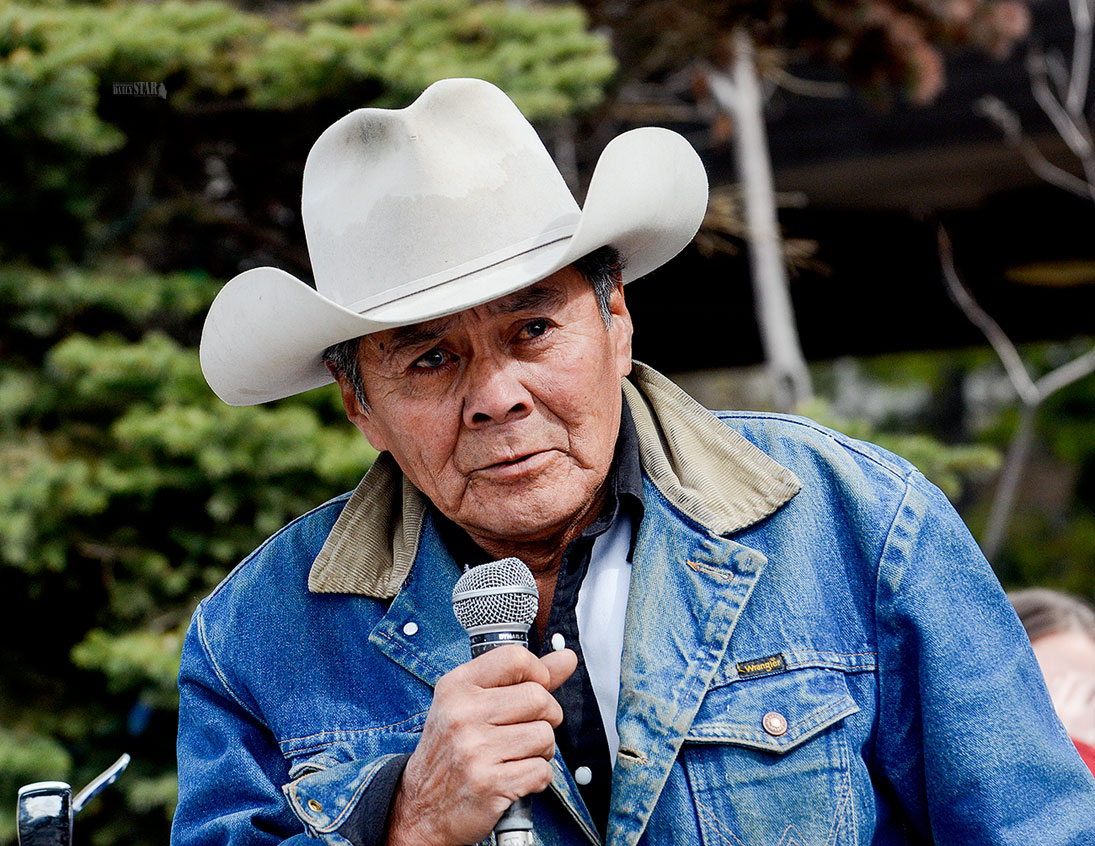
Jimmy Johnny, a Na-Cho Nyak Dun elder who has spoken out — and sung out — about development issues in the Peel, said: “I’m here for the protection of the Peel River watershed. It’s something I’ve been waiting for for a long time.”
About 150 demonstrators took part in a silent vigil on the courthouse steps around 12:30 p.m. Monday. They wore signs featuring pictures of wildlife and First Nations elders. “Protect the Peel because,” they read.
“This is pretty special,” said Whitehorse resident Lorna Bell, 79. “It’s important to me because I have 19 grandchildren and great-grandchildren and I’m not certain there’s going to be an environment for them.”
An all-day fire circle will be held at the Kwanlin Dun Cultural Centre through the week.
The Peel region came to public attention about 10 years ago, when environmental groups joined with First Nations to advocate for its protection.
In July 2011, the Peel River watershed planning commission put forward its final land use plan following seven years of research and consultation. The commission recommended complete protection for 80 per cent of the region.
The plan formally adopted by the government last January, however, calls for wilderness protection for 29 per cent of the watershed, and allows for surface access via roads, trails and bridges through much of the area.
The government argues it had the right under the land use process to accept, reject or modify recommendations advanced by the Peel planning commission because 97 per cent of the watershed is territorial Crown land.
Berger, a former B.C. Supreme Court justice, suggested earlier this year the government is bound by — and violated — the principle of fair play, which includes proper consultation of any proposed changes to the original recommendation by the planning commission.
The 81-year-old jurist came to public prominence as the head of the Mackenzie Valley Pipeline Inquiry — referred to as the Berger Pipeline Inquiry — in the mid-1970s.
His report cited the potential environmental harm, overestimated economic benefits and “devastating ... social consequences” of a proposed gas pipeline running through the Yukon and, in the Northwest Territories, Mackenzie River valley — the longest river system in the country.
Aboriginal land claims and ongoing negotiations with government factored heavily in the inquiry.
Comments (1)
Up 3 Down 3
Denise Simmons on Jul 8, 2014 at 7:09 pm
NA-CHO NYAK DUN should be going through all of the video tapes that were taken during the negotiations with the government before their land claims agreements were signed. As I recall they weren't worried about this area because a land use plan would be developed for this area for its protection, so the first nation didnt select much lands in this area for this reason. I guess they were tricked once again by the government. In addition to this, people were told if any other first nation settled a better agreement, there would be the opportunity to go back and renegotiate if the first nation chose to do this..... Food for thought..... Maybe more lies that were told to our elders...