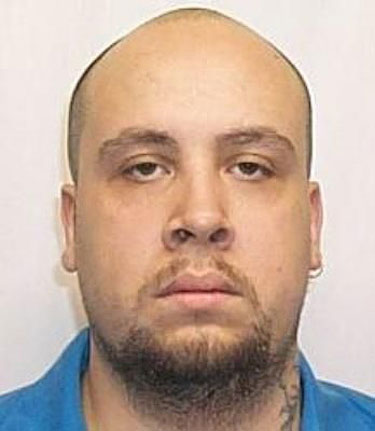
Photo by Whitehorse Star
Norman Larue
Photo by Whitehorse Star
Norman Larue
It was only days before his arrest for murder that Norman Larue would first meet the undercover officers central to the RCMP's investigation.
It was only days before his arrest for murder that Norman Larue would first meet the undercover officers central to the RCMP's investigation.
On July 29, 2009, Larue was met at the Calgary halfway house where he was staying after having been released from prison, by his girlfriend, Christina Asp, and someone he didn't know.
Unbeknownst to either Asp or Larue, that person was an undercover police officer.
By this point, the group of covert officers had already spend nearly six months convincing Asp they were members of a powerful criminal gang with the ability to hide crimes from the police.
Larue is on trial in Yukon Supreme Court charged with first-degree murder in the 2008 death of Gordon Seybold, whose Ibex Valley cabin burned to the ground with human remains inside.
Asp has already been convicted for her role in Seybold's death.
The first undercover officer to meet Larue was the officer who would become closest to Asp during the investigation.
Her identity is protected by a publication ban.
She testified Monday that, on that day outside the Calgary halfway house, she waited in the car for Asp and Larue to greet each other, before being invited out of the vehicle by Larue, who gave her a hug.
"We joked that it was like we already knew each other,” the officer testified
It was an interaction that Larue's lawyer would dispute later.
After the quick reunion, Asp and the undercover officer then left for two days of "work” in Lethbridge, Alta.
The court has heard Asp was under the impression she was working for the gang, sometimes smuggling (fake) weapons.
Multiple recordings have been played throughout the trial of Asp describing what happened on the night of Seybold's death.
She tells her new friends, as well as the organization's powerful leader, that the pair attacked Seybold with a bat before Larue burned the cabin down.
Investigators have testified they could have arrested Asp for murder back in March 2009 after she met with the group's leader and led other officers on a re-enactment of the night of Seybold's death.
Instead of arresting her, they decided to wait for a chance to meet with Larue.
On the stand Monday, the officer said that after returning from Lethbridge, she, along with Asp, Larue and two other undercover officers, met up at a Calgary park.
The officer testified she was excused from the group to go to a nearby deli. A few moments later, Asp followed.
Asp was upset because Larue had found out the gang "knew what they had done.”
She "thought she had betrayed him,” the officer said.
When the pair returned to the park, Asp was crying, and hugged Larue. "He advised her that it was OK,” the officer said.
The jury has already heard a recording taken the next day in the parking lot of a Bass Pro Sport.
In what has been described as a job interview, Larue describes attacking Seybold alongside Asp, then slitting his throat and burning the cabin down.
His lawyer has told the jury he was lying.
Asp and Larue were arrested and charged with murder on Aug. 4, 2009, about 16 months after the fire on Seybold's property.
During cross-examination, Larue's lawyer, Ray Dieno, questioned both the methods used by the undercover officers and the memory of the officer on the stand.
He suggested that the first meeting between the officer and Larue did not begin with Larue initiating a hug. Instead, he suggested Larue was "shocked and reserved” when the two met and did not return the hug.
The officer insisted, "That's not how it occurred.”
The lawyer questioned how police could be certain Asp was telling the truth during all the recorded conversations.
He pointed out that within three days of meeting the apparent gang, she was being offered a job.
"You want the court to conclude that only three days after meeting you, everything she tells you is the truth?” he asked.
Dieno went on to suggest that Asp had given very contradictory versions of events in the various recordings.
The officer replied that she didn't believe that was the case. She said Asp did provide additional details as the case progressed.
The officer admitted that Asp relied on the police for certain things during the investigation, but said she didn't believe Asp was ever completely dependent on the police.
Dieno questioned the officer on her note-taking techniques. She told the court she would take rough notes at the time of the event, then go back later to expand on them when she had more time.
Dieno pointed on that some of the officer's expanded notes were written weeks after an event took place.
The trial continued today.
In order to encourage thoughtful and responsible discussion, website comments will not be visible until a moderator approves them. Please add comments judiciously and refrain from maligning any individual or institution. Read about our user comment and privacy policies.
Your name and email address are required before your comment is posted. Otherwise, your comment will not be posted.
Be the first to comment