Photo by Whitehorse Star
Larry Bagnell
Photo by Whitehorse Star
Larry Bagnell
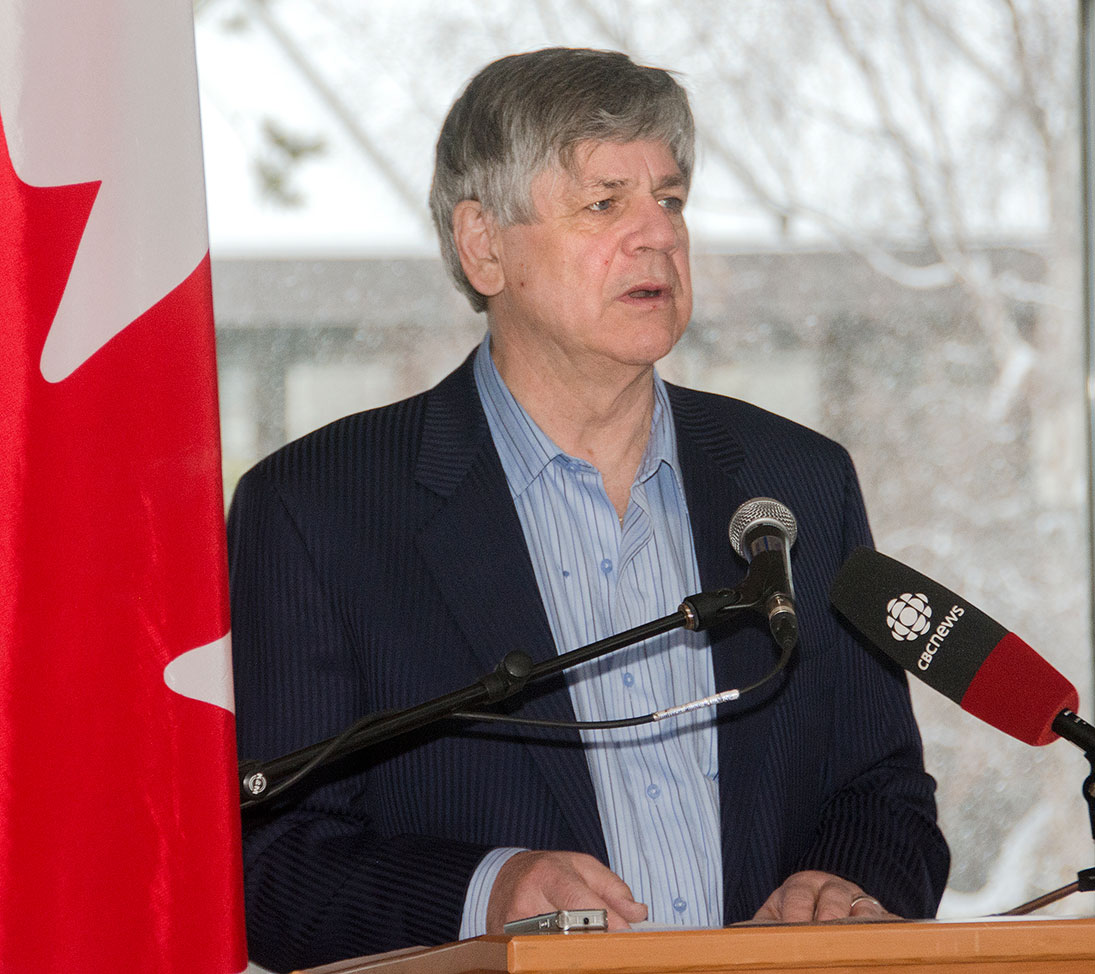
Larry Bagnell, the territory’s Liberal MP, wants to hear from Yukoners before he decides how to vote on the physician-assisted dying legislation that was tabled Thursday in the House of Commons.
Larry Bagnell, the territory’s Liberal MP, wants to hear from Yukoners before he decides how to vote on the physician-assisted dying legislation that was tabled Thursday in the House of Commons.
Normally, MPs are expected to vote with the party, but on this bill, MPs can vote according to their conscience. This is because, as Prime Minister Justin Trudeau said, the bill deals with a “deeply personal” issue.
“A lot of bills don’t affect everyone; they affect a very specific group,” Bagnell told the Star Thursday afternoon. “But this one affects everyone in Canada.”
Bagnell said Yukon residents can send him their thoughts on the matter and he will try to get them into the debate.
“It’s a very personal decision, and it’s a religious decision .... It’s good that people can vote their conscience and they can hear about what their constituents think,” he said.
“Some Yukoners say they don’t want (medical assistance in dying) at all, but of course, it’s going to be allowed because the Supreme Court says it’s going to be allowed,” Bagnell said.
The Supreme Court of Canada struck down the ban on doctor-assisted dying, so the practice will soon be permitted everywhere in Canada.
What is going to be debated in Ottawa now, are the details: how medical assistance in dying will work, and who can have access.
In 2015, the Supreme Court unanimously ruled that the Criminal Code provisions banning physician-assisted dying were unconstitutional. The federal government had until June 6 to draft new legislation.
The bill tabled Thursday says a patient may seek medical assistance in dying if they are 18 years of age or older and have a “grievous and irremediable medical condition.”
The patient must be “competent,” and she or he must make the decision for her or himself; no one can make it on another’s behalf.
In the unlikely event that a new law isn’t passed, medical assistance in dying will still be allowed after June 6, but without the additional safeguards outlined in the proposed legislation.
One safeguard included in the bill is that the patient must make his or her request for medical assistance in dying in writing, with two independent witnesses present.
Another is that opinions of two separate doctors are required.
Bagnell said he has also heard from people the Yukon who want medical assistance in dying to have a broader scope.
“Some people would like it for people with dementia, some people would like to make it in advance but you can’t do that with that bill,” said Bagnell.
Under the proposed legislation, a patient’s natural death must be “reasonably foreseeable.” He or she cannot give an advance directive to end his or her life at some unspecified date in the future.
This becomes complicated for a person with a with terminal illnesses like dementia, ALS or Huntington’s, which cause tremendous physical and psychological suffering, but at a point when the person may not be of sound mind.
Dr. Robert Zimmerman, the chair of the Yukon Medical Council, said today the patient must be medically competent, have a serious, incurable illness, and be suffering intolerably at the time of the request.
“Death must be ‘reasonably foreseeable’ – what does that mean?” he asked during an interview.
“From the perspective of doctors, doctors must have some clear understanding of what that means. Does that mean weeks, months, years?
“It seems to not imply years, which may be the case with ALS and Alzheimer’s,” he said.
The proposed bill is not clear on what will be done in such a case, Zimmerman said.
Justice Minister Brad Cathers said it’s too early to say what medical assistance in dying will look like in the Yukon.
“At this point, we need some time to assess the new legislation and talk it over with the working group and advisory panel which was formed after the Supreme Court decision, this is including Yukon physicians and other members of the Yukon community,” Cathers told the Star this morning.
“The decision made by the Supreme Court really puts all the provinces and territories in somewhat untrod territory,” said Cathers.
After June 6 and until the Yukon government formally implements physician-assisted dying plans, Cathers said, a patient may need to seek a court order if they wish to access medical assistance in dying.
“The issue of physician-assisted dying is something that people across the country have very strong moral views (about) on both sides,” he said.
“The government is giving this whole area thoughtful and careful consideration.”
Zimmerman pointed out that based on population studies, the number of physician-assisted deaths in the Yukon each year will likely be small.
“We’re not anticipating a landslide of cases here,” he said.
Zimmerman pointed to Oregon, which has a population of four million people and where physician-assisted dying is permitted.
“We’re a 100th of Oregon’s population and they’re not even doing 200 a year, so if you drop that down to us, it’s two,” he said.
“People sometimes overestimate those numbers.”
The Yukon Medical Council drafted guidelines for implementing medical assistance in dying in the territory after the Supreme Court decision in 2015.
Zimmerman said medical councils across the country drafted guidelines according to each province’s and territory’s health care systems. These will be modified to reflect the federal legislation, once it has passed.
The Yukon’s guidelines were adopted from Alberta’s, Zimmerman said. He added that according to those guidelines, if there is a difficult case in the Yukon, Alberta would co-ordinate an investigation.
Cathers said it was “premature” to say the Yukon government’s guidelines would resemble Alberta’s.
In order to encourage thoughtful and responsible discussion, website comments will not be visible until a moderator approves them. Please add comments judiciously and refrain from maligning any individual or institution. Read about our user comment and privacy policies.
Your name and email address are required before your comment is posted. Otherwise, your comment will not be posted.
Be the first to comment