Photo by Whitehorse Star
Marion Horne
Photo by Whitehorse Star
Marion Horne
Yukon MP Ryan Leef continues to call for a national inquiry into missing and murdered aboriginal women,
Yukon MP Ryan Leef continues to call for a national inquiry into missing and murdered aboriginal women, but now takes a more flexible stance on the issue.
The subtle shift in tone nonetheless clashes with Prime Minister Stephen Harper’s rejection of the idea last month in Whitehorse.
It comes in the wake of the annual premiers’ conference in Charlottetown last week, where the idea of a national roundtable surfaced as a possible first step.
“If that’s the wish of Yukoners, to have an inquiry, then I’ll continue to communicate that,” Leef told the Star this morning in Whitehorse.
“Of course, we’ve heard the prime minister’s position on it, so ... we may not continue to find agreement on the government level on that.”
Last October, Leef called unequivocally for a national inquiry into the endemic problem of indigenous women and girls murdered or missing since 1980.
Those individuals number nearly 1,200, according to an RCMP report released earlier this year.
Leef made the initial demand — in direct contradiction to his government’s stated position — at the Sisters in Spirit vigil in Whitehorse last October.
Since then, a detailed RCMP report and results from a parliamentary committee on the issue have come out.
“We have an additional vat of information that we didn’t have a year ago, and it’s important for me to make sure that I consult with people to make sure that’s still the track that they want to go on,” Leef said during a media scrum outside the visitor information centre today.
“When we look at a national inquiry and the hundred million dollars it could potentially take and the indeterminate amount of time, there might be an appetite to see that money go in a better direction.
“My commitment to carry Yukon’s message forward is still firm and strong, but I think there might be a different position on it,” he added, moderating his previous position further.
Nearly two weeks ago, Harper ruled out the idea of a national inquiry.
He categorized the slow-motion crisis as a matter of individual “crimes,” and not a “sociological phenomenon.”
Drawing criticism from groups across the country, the remarks came in response to a question from local media in Whitehorse on Aug. 21, and trailed him throughout his annual northern tour and beyond.
Last week, Canada’s premiers and aboriginal leaders called on the federal government to meet with them to discuss the “phenomenon.”
Preliminary discussions have begun for a national roundtable with federal ministers following a meeting of provincial, territorial, and indigenous leaders last Wednesday in Charlottetown.
Leef said he was “intrigued” by the possibility of a roundtable on “best practices” for tackling the tragedy of missing and murdered aboriginal women and girls.
That long-smouldering issue flared up again across the country following the discovery of the body of 15-year-old Tina Fontaine in Winnipeg’s Red River on Aug. 17.
On Oct. 4, 2013, Leef joined the Native Women’s Association of Canada in calling for a national inquiry.
“This is not an aboriginal issue,” he said. “This is not a territorial issue. This is a national issue.”
Applause greeted his announcement that day.
“We heard the stats loud and clear. And they are alarming,” he said.
In 2009, aboriginal women were almost three times more likely than non-aboriginal women to report having been a victim of a violent crime, according to Statistics Canada.
The bulk of these incidents occurred among women under 35.
Aboriginal women are also more likely to experience forms of extreme violence or mistreatment, including human trafficking.
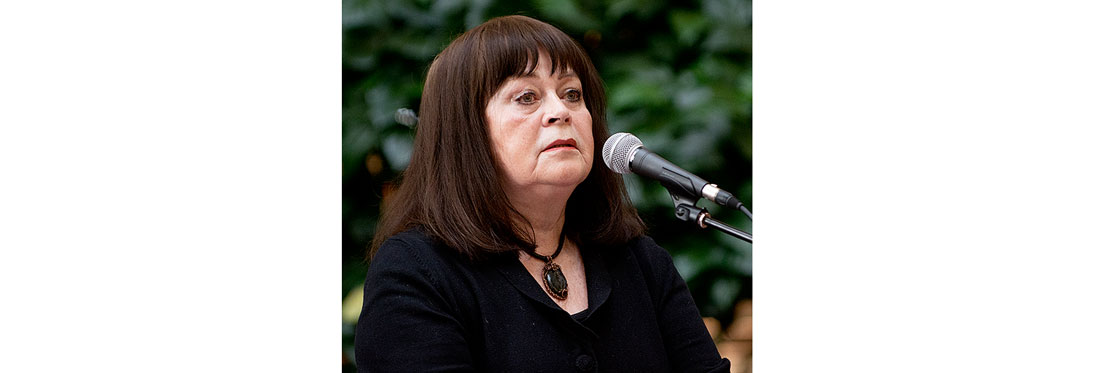
Marian Horne, president of the Yukon Aboriginal Women's Council, spoke at the Kwanlin Dun Cultural Centre on that autumn afternoon.
“Today is our day for us to come together ... to heal,” said the former Yukon Party Justice minister.
“It touches my heart to see so many people out.”
Horne held up an anonymous doll before the attendees.
“These faceless dolls are visual representations of the strong, vital, youthful aboriginal women who thought they had a long life ahead of them.
“Instead, their lives were cut short by violence.”
Premier Darrell Pasloski tabled a motion that passed unanimously in the territorial legislature last year calling on Ottawa to instigate a national public inquiry.
In order to encourage thoughtful and responsible discussion, website comments will not be visible until a moderator approves them. Please add comments judiciously and refrain from maligning any individual or institution. Read about our user comment and privacy policies.
Your name and email address are required before your comment is posted. Otherwise, your comment will not be posted.
Comments (4)
Up 14 Down 7
Local Drifter on Sep 3, 2014 at 4:39 pm
Living a high risk lifestyle is dangerous, the end.
Oh, the RCMP's report concluded that in over 90% of instances, the murderer was a spouse, friend, or family member. Sounds like an internal problem.
Up 16 Down 3
June Jackson on Sep 2, 2014 at 9:58 pm
http://www.justice.gc.ca/eng/news-nouv/nr-cp/2010/doc_32564.html
"Violence against women remains a problem in Canada and throughout the world, affecting women's personal safety and their ability to participate in and contribute to society.
The risk of violence is compounded for Aboriginal women (First Nations, Inuit, Métis and non-status Indians), who are three and one-half times more likely to experience violent victimization than non-Aboriginal women. Aboriginal women report higher rates of violence committed by strangers and more serious forms of family violence. They are significantly over-represented as victims of homicide and are also three times more likely to be victims of spousal violence than non-Aboriginal women."
That being said and recognized as such, I think FN chose a title for their pursuance of an inquiry that seems to minimize the deaths of any other women by race. A FN life is not more important than an Asian life, or a White life or a Latino life. The violent death of any woman is a tragedy. If there is an inquiry it should be into ANY murder that is cold case to make sure that all avenues were investigated and everything possible was done to conclude the file.
Up 5 Down 13
kate moylan on Sep 2, 2014 at 7:57 pm
Former comment, "Getting the Federal Government to complete an inquirer would be a mistake." I totally disagree! The Federal Government should be interested and accountable for all values that are national. Provinces, and Territories (including the Yukon) don't have a very good track record, nor the financial resources to deal with this issue comprehensively.
Up 26 Down 5
Missing Women in Canada on Sep 2, 2014 at 3:37 pm
Causes why women going missing are known. The issue starts at the family and community level. I am talking about all missing women not just First Nations. There is a history of issues for missing women; broken home, substance abuse, peer groups bad influence, social issues in the community, lack of support to work through problems, mental issues, on and on.
Getting the Federal Government to complete an inquirer would be a mistake. The Federal Government is not close to the issues like the provinces or territories are. All inquirer is going to do is show us what we all ready know. Each region has to develop a solution to solve the problems. Having the Federal Government spend $200 or $300 million dollars on inquirer is a waste of money and that money should be focused at solving the issue. The issue needs to be dealt with on the ground with First Nations communities. There has to be a plan developed addressing the causes and the Federal Government can play a role when the plan is completed and implemented.
Key areas are social economic in families, substance abuse, community conditions, on and on. There should be a special Unit of the RCMP, combined with social and health care workers on the front lines to take a preventive approach before problem arises and the women go missing. Women who leave their families, communities, have to have a safe outlet where they can go to and people they trust so they can work their way back into main stream of life.
Missing women are targets of predators and sociopaths. Prevent the women from going missing and identify the signs and get the team to intervene. Just spending money without direction is wrong. Keep the Federal Government out of it until the regions define their role is in the solution and the only way this might have a chance of working. From a social and financial perspective, prevention is always the best solution and is the best investment. Women who go missing and are murdered cost in-credible amount of money in the investigation.