Mental health strategy disappoints NDP critic
The Yukon government released its long-awaited mental health strategy Thursday.
By Pierre Chauvin on May 6, 2016
The Yukon government released its long-awaited mental health strategy Thursday.
The document calls for better co-ordination among various players and improving access to services.
It also calls for addressing gaps in service, through establishing working groups.
But it doesn’t say what measures should be taken.
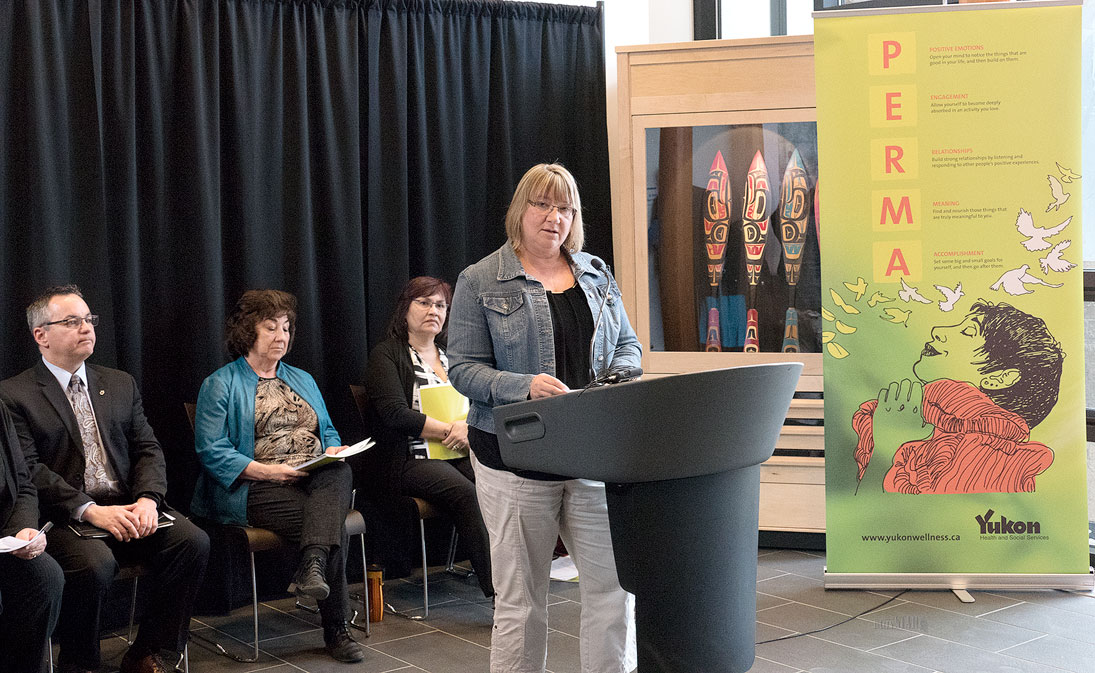
Health and Social Services Minister Mike Nixon made the announcement at the Kwanlin Dün Cultural Centre.
“I believe it was worth taking the time necessary to develop a strategy that paves the way to improve mental wellness and health in Yukon residences,” said Nixon.
For the past several years, NDP and Liberal MLAs have been regularly asking in the legislature when the strategy would be released.
As far back as 2012, the government had been saying it was on the strategy.
“This is not a strategy that could or should have been rushed if we want to do it right,” Nixon said during the announcement.
He was joined by Kwanlin Dün First Nations Chief Doris Bill, Council of Yukon First Nation Grand Chief Ruth Massie and Kim Solonick, the Mental Health Association of Yukon’s vice-chair.
The next two years will prioritize youth, children, and families, Nixon said, as the onset of many mental health issues develop during adolescence and early adulthood.
One of the initial activities will be to identify “innovative ways to expand mental wellness for children and youths in schools and other places frequented by youth.”
A vague plan
For the official Opposition health critic, the strategy lacks one thing: measurable goals and timelines.
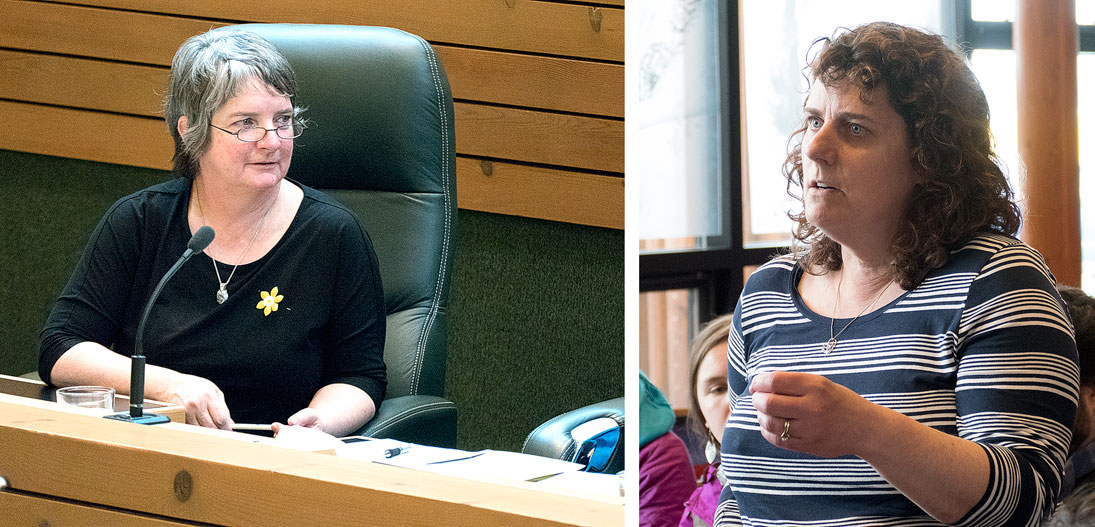
“Where is the meat ?” NDP MLA Jan Stick asked in an interview with the Star yesterday.
“I’m disappointed; I really thought that after all these years it would be better and stronger.”
The strategy calls to reduce wait times, but it doesn’t set out a precise goal, e.g. reducing wait times by 60 per cent, Stick said.
It also doesn’t indicate how it will be done.
“Yukon people are not having their diverse needs met, and often do not know where to go for assistance,” the strategy reads, quoting a 2015 Yukon study.
There is also the question of funding: in this fiscal year’s budget, $1 million has been set aside to implement the strategy.
“If you read some of the criteria, there’s no core funding,” said Stick.
“And core funding is what is used to hire people.”
Today, the Department of Health and Social Services told the Star no new mental health professionals will be hired for now.
“First we’re going to focus on the resources the partners in the strategy have and how we can use them more effectively,” said spokesperson Marcelle Dubé.
Known issues
Last December, the Star reported the territory is experiencing a shortage of psychiatrists.
Whitehorse General Hospital doesn’t have a psychiatrist on staff.
Instead, physicians can request psychiatrists who run their own businesses in the territory to attend WGH or refer patients to an Outside source.
The strategy recommends looking at telehealth options – consulting with a mental health specialist not in the territory via videoconference.
Dubé noted the strategy is a “living document” and that it will evolve.
“The work doesn’t stop just because we have produced the strategy,” she said.
But some of the needs have been known for a while.
Last September, the Star reported on several deaths at the Chilkoot Trail Inn involving people on social assistance who were struggling with alcoholism.
Those deaths highlighted the need for more affordable and social housing, advocates said at the time.
It’s still the case, says Patricia Bacon, executive director of the Blood Ties Four Directions Centre.
“We still don’t have a government saying housing first is a philosophy they can get behind,” she said in an interview.
“Stable housing, not shelter, is going to be one of the best things we can do to stabilize people with mental health (issues) and addiction.”
Once these people are stabilized, work can be done to improve their quality of life, she said.
Bacon noted the $1 million allocated to the strategy is a good thing – as long as it’s not used for more studies but to explore new programs.
“Where those dollars go and what innovation we do is what’s going to make a difference,” she said.
Staggering stats
Nixon acknowledged the territory could do “better” during the press conference, but that it will take time.
“We know this strategy will not and cannot immediately address all the gaps in the mental wellness system,” he said.
The strategy is to be implemented over the next 10 years.
The strategy recognizes the need for more co-ordination between the patchwork of services available.
“In some situations, the care providers do not know what other program or service area providers are doing because the system is complex,” the strategy notes.
The strategy also sheds some light on the prevalence of mental health issues.
An estimated 7,500 Yukoners struggle with mental health or addiction issues every year.
There are also more than 1,000 emergency visits per year related to drug or alcohol use.
Children and young adults are not spared: there are about 40 emergency visits on average for intentional self-injury for that population.
More than half of young girls living in the city reported feeling sad or hopeless almost every day for two weeks or more, according to a 2015 study.
Nixon noted the strategy has the support of the KDFN, CYFN, the Mental Health Association of Yukon and Yukon communities.
For Chief Bill, the strategy is also there to recognize the long-lasting legacy of colonialism.
“The historical trauma of the indian residential school system has had ongoing intergenerational effects on the psychological well-being of our people and our communities,” she
said.
“As a result, there are serious concerns about mental illnesses and substance abuse.”
A mental wellness forum is scheduled for June, and in July, the working groups created by the strategy will start developing action plans for the upcoming year.
“Yukoners are counting on us,” Nixon told the audience on Thursday.
The minister was unavailable for an interview this morning to further discuss the strategy.
Comments (9)
Up 0 Down 1
Josey Wales on May 12, 2016 at 9:54 pm
What is the deal with the "ban crews"?
you clearly disagree so they should not be heard?
Please get over yourself you "ban" folks...whatever lucrative pigment you may be.
Up 7 Down 6
Ban the troll JC on May 11, 2016 at 2:27 pm
I seriously doubt that you are FN, you say you are but judging by a lot of your comments on this site, you are not. If in fact you are, I feel sorry for you, you must be terribly conflicted or walking around with rose colored glasses on, otherwise you would see, hear, feel the pain from the thousands of FN children that lie in unmarked graves across Canada!!
Up 6 Down 6
jc on May 10, 2016 at 9:48 pm
Ban the troll: The truth is, the truth hurts. Why is the fact that I and my 6 siblings who spent years in a residential school and foster homes and not suffer any psychiatric or personal damage be so hurtful to you? Is it perhaps guilt on your part? Just asking.
Up 5 Down 7
Ban the troll JC on May 10, 2016 at 3:19 pm
The comments that JC makes are always hurtful, insensitive and not accurate with regards to First Nations people and their struggles. I strongly suspect that the numbers are shrinking, when it comes to people who think like jc. I feel sorry for you and people that think like you.
Up 6 Down 7
Ban the troll 56 on May 10, 2016 at 8:23 am
The comments that 56 makes are always hurtful, insensitive and not accurate with regards to First Nations people and their struggles. He speaks as if he speaks for Canadians, I somehow doubt that is the case. I strongly suspect that the numbers are shrinking, when it comes to people who think like 56. I feel sorry for you and people that think like you.
Up 10 Down 7
jc on May 9, 2016 at 6:02 pm
Doris Bill, how much longer are you going to milk the "residential school" t!t? It's time to get over it and do something for your own people instead of constantly blaming the whites and demanding more cheques. I spent 3 years in a residential school and another 10 years in foster homes and I got on with my life quite well and I might add with no financial or psychiatric help and no criminal record. Have your people set up special programs in the communities? Are they helping and doing any good?
Up 11 Down 16
Politico on May 8, 2016 at 11:30 pm
Yukon@56, You neglect to take into account the continuing racism and attempts to assimilate and destroy the native identity. With government policy and the casual racism endemic in our society it's impossible to solve the problem.
@Charles, well done for cheer leading the total inaction by the Yukon Party and lack of real interest in solving so many issues in the communities. I'm sure that the real winner here will be the lawyers that will deal with another law suit because the YP can't keep it's word.
Love living in an enlightened society.
Up 16 Down 16
Charles Pugh on May 7, 2016 at 1:19 am
This Strategy represents a great step forward in a unified approach, wellness should never be political, it's about everyone working together so we can build the best future for all Yukoners, congratulations Minister, Chiefs, Mayors and everyone that dedicated their time and spirit to build a better future for those in pain and needing hope, encouragement, and opportunities to reach their dreams
Up 26 Down 24
yukon 56 on May 6, 2016 at 4:20 pm
“The historical trauma of the indian residential school system has had ongoing intergenerational effects on the psychological well-being of our people and our communities,” she said. Help yourselves we Canadaians have bent over backwards, provided funds and all we hear is "poor me"