Manage wildlife attractants wisely: biologist
If conservation officer Dave Bakica had a nickel for every time he’s heard someone say, “I’ve never had a bear problem in the many years I’ve lived here,” he’d be rich.
By Rhiannon Russell on May 6, 2015
If conservation officer Dave Bakica had a nickel for every time he’s heard someone say, “I’ve never had a bear problem in the many years I’ve lived here,” he’d be rich.
That’s a common refrain from residents who’ve recently had a bear prowling around their homes, getting into their garbage or chicken coops.
Bakica tells them they’ve been lucky.
“The bears have always been there,” he said. “It’s just been a matter of luck you haven’t had an issue.”
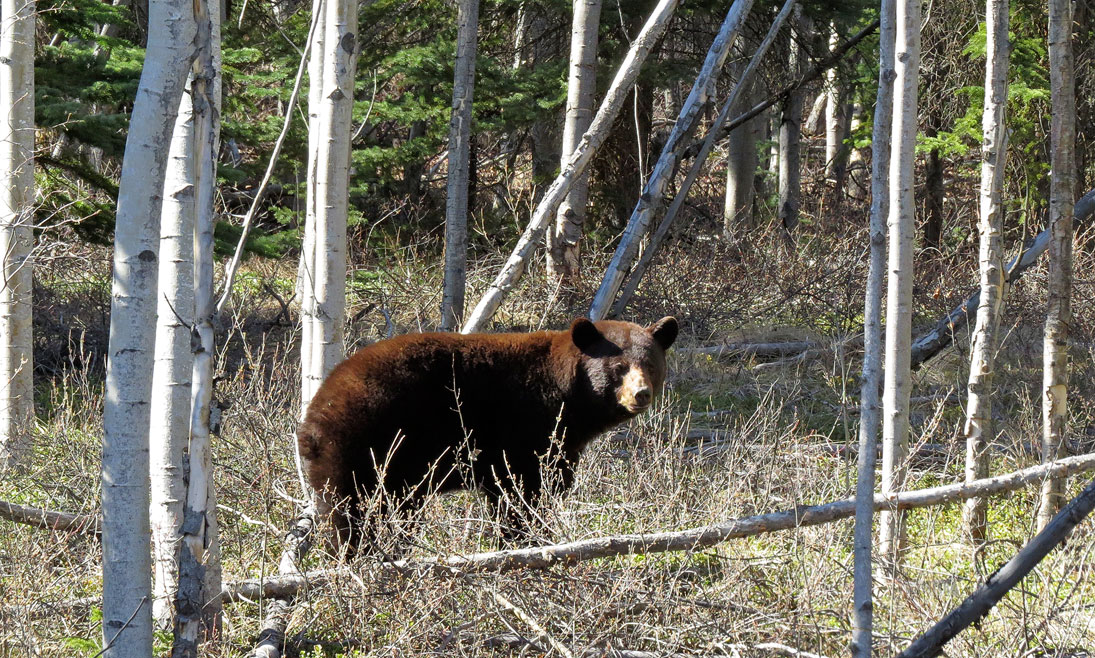
As bears emerge from hibernation, Bakica and carnivore biologist Ramona Maraj talked to reporters last Friday afternoon about human-wildlife conflict and how Yukoners can avoid it.
“There’s often attractants that bring wildlife into our communities and when we don’t manage those things properly, we end up with bears in garbage, chicken coops and breaking into homes,” Maraj said.
She said garbage is the biggest attractant, but bruins can also be drawn to livestock, meat, pet food, bird seed, barbecues, fibreglass insulation – it smells like an anthill – compost and vegetable gardens.
Poorly managed attractants led to at least two high-profile bear deaths last year.
Conservation officers had to kill a sow black bear after she got into garbage bins in Copper Ridge last July.
Despite relocating her and her two young cubs across the river, she returned within days and was back into residents’ trash bins. She was showing no fear of people and posed a safety risk, COs said at the time.
Last November, a male grizzly was shot by a resident in the Annie Lake Road area after it feasted on mushers’ dog food supplies.
According to Environment Yukon statistics, approximately 49 human-bear conflicts were reported in the Whitehorse area between April 1 and Oct. 31, 2014. Fifteen involved grizzlies.
One bear – the Copper Ridge sow – was killed by COs, while four grizzlies were killed by people defending life or property, according to the department. Five bears were relocated.
“Quite often what we’re caught between is a value system of the public – some people who feel very utilitarian and want animals dispatched immediately and some people who feel (bears) are more sort of along a deep ecologist line and they have high intrinsic value,” said Maraj.
Having to destroy animals is the worst-case scenario, only occurring when other options aren’t possible or don’t work, she said.
Maraj said the department tries to be proactive by looking at land use planning and how to reduce impact on bears’ habitats, working with the City of Whitehorse and its bylaws to keep people from having attractants around and doing outreach and education with the public.
It has partnered before with WildWise Yukon, an organization that seeks to reduce human-wildlife conflict.
Over the last two years, WildWise conducted a pilot project, in partnership with the City of Whitehorse, that saw roughly 100 residents’ garbage and compost bins retrofitted with bear-proof locks.
Outside of the pilot, WildWise sells the kits for $60.
Maraj also recommends people don’t put their garbage bins out until the morning of collection and suggests electric fencing for residents in rural areas to keep wildlife away from livestock and feed.
“At the end of the day, there has to be some human behaviour modification,” said Bakica.
What Maraj tells people puzzled by seemingly sudden bear activity on their properties is this: “What they don’t keep in mind is their house has been there for 30 years and maybe their house hasn’t changed, apart from the interior decor and maybe the plants they’ve put up, but the forest around them is constantly changing.”
Trees get older, the forest thins out, berry patches grow in new places and a bear may have to forge a new path.
“All of those changes constantly mean that the animals are changing their behaviours,” Maraj said.
“So you may have gone 20 years without anything coming by, but that’s because the forest was the way it was then and it’s a different place now.”
Environment Yukon’s bear incident map is up and running for the year on the department’s website.

Comments (3)
Up 4 Down 1
WestofBelfast on May 9, 2015 at 11:57 am
North60: Agree somewhat with your comments, but what I see is people moving their bins out to the curb the night before pick-up in almost all areas of Whitehorse. Keep them in the garage or shed until the morning if you can and for those without an inside place to keep them, call Environment for some suggestions on how to secure, improve and overcome the problem. I agree the design of the bins is totally inadequate for bear issues...good for the COW garbage trucks though!
Up 5 Down 1
north_of_60 on May 7, 2015 at 3:03 pm
Bear incidents substantially increased when the CoW mandated 'bear-friendly' compost bins designed and manufactured in the south. The compost is picked up on two week intervals so food scraps get a long time to get ripe in the summer heat. Any bear deaths are a direct result of the misguided mistakes of the inept, southerner-staffed Sustainability Department. It's clear they don't care about the bears, since the deaths are 'sustainable.'
Up 3 Down 3
Margret Njootli on May 6, 2015 at 5:31 pm
I highly respect wildlife such as bears, therefore, I take care of my garbage in my rural area. Two summers ago while I was at work to cubs came unto the property but did not destroy anything, unfortunately CO's had to put one of the cub away because of their human contact behaviour. Another time our dog brought a cub grizzy into the hard probably with mamma somewhere close by. The cub saw one of us outside of the house so took off, when you go for a hike with a dog, keep your dog on a lease.