Photo by Whitehorse Star
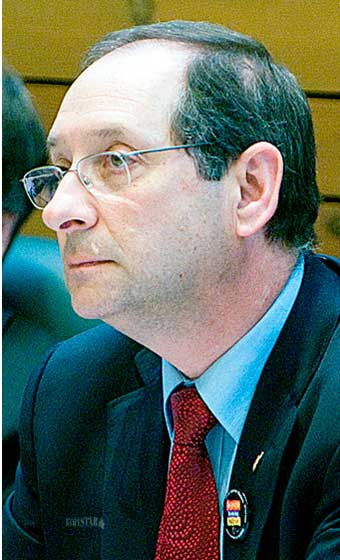
Arthur Mitchell
Photo by Whitehorse Star
Arthur Mitchell
Yukon Liberal Party Leader Arthur Mitchell wants an independent commission to review the territory's voting system.
Yukon Liberal Party Leader Arthur Mitchell wants an independent commission to review the territory's voting system.
"It's not all of a sudden,” Mitchell said this week of the timing of his most recent announcement.
"This was in our 2006 (campaign) platform – it's a commitment we made then and I'm just making it now again.”
Voter apathy among young people and dissatisfaction Mitchell has heard from Yukoners about the first-past-the-post ballot system caused the leader of Yukon's official Opposition party to revisit the issue.
While Mitchell cites voter turnout in the October 2008 federal election, in which less than 60 per cent of eligible voters nationwide cast a ballot, participation in the territory's previous elections has been relatively high by comparison.
When Yukon voters went to the polls in 1996 and NDP leader Piers McDonald and his party won a majority government, more than 79 per cent of eligible voters participated; the best turnout in the territory's history.
The spring election of 2000 ushering in Pat Duncan's Liberal government that garnered its winning share of votes from 78.58 per cent of the Yukon's electorate.
When current Premier Dennis Fentie led the Yukon Party to power two years later, voter participation fell less than half a percentage point from the 2000 election.
In 2006, Fentie and the Yukon Party made it back-to-back majority governments and nearly 73 per cent of eligible voters marked a ballot.
But as Canada, and by extension the Yukon, have moved beyond the traditional two-party system, Mitchell said, "governments elected by plurality” no longer reflect the wishes of the majority.
"People say they don't like the system and aren't getting what they're voting for,” according to the Liberal leader.
"In the last election, I think the Yukon Party won with 40.5 per cent of the votes. Naturally, there are 60 per cent who aren't happy. Now that might not be solvable, but we think Yukoners should be asked.”
Of 13,545 votes cast in the Yukon's previous general election, Yukon Party candidates earned 5,506 votes (40.6 per cent), Liberal candidates, 4,699 (35 per cent), and the NDP's candidates, 3,197 (23.6 per cent).
These votes dispersed to candidates from the three parties contesting 18 ridings, however, translated into 55.5 per cent of seats (10) for the Yukon Party, 28 per cent of seats for the Liberals (five) and just 16 per cent of seats for the NDP (three).
David Brekke, a former federal returning officer for the territory, is one Yukoner keen to see changes to the way Canadians vote in federal, provincial and territorial elections.
At Brekke's website, electoralchange.ca, he outlines the idea – what he calls a "paired-riding, preferential/proportional” system.
"I can tell you that in the last election, 53 per cent of the people who went out to vote didn't make any difference in the result,” Brekke told the Star today.
"The only ones who successfully voted were the ones who voted for the winner of their riding. To me, that's a major factor of why we're getting less and less people voting.”
Brekke's idea is to pair ridings; in the Yukon, that would mean nine instead of the current 18.
The candidates chosen by their parties to contest each of the nine newly-paired ridings would be elected based on 50-per-cent support from voters marking their choices on a preferential basis.
The remaining candidates would earn their seat in the legislature based on the popular vote across the territory.
Using Brekke's system and the results from the 2006 election, the seat breakdown in the legislature would have seen seven seats apiece for the Yukon Party and the Liberals, while the NDP would have earned four; a result that more accurately reflected the popular vote.
"To me, it would give a much more positive atmosphere in the election. If you're out running down the other candidate, I don't think you could expect getting very many second choice votes,” Brekke said of what his system could offer, one he admits is more likely to elect minority governments.
"If you had minority governments and only expected minority governments, the opposition could demand more transparency.”
In order to encourage thoughtful and responsible discussion, website comments will not be visible until a moderator approves them. Please add comments judiciously and refrain from maligning any individual or institution. Read about our user comment and privacy policies.
Your name and email address are required before your comment is posted. Otherwise, your comment will not be posted.
Comments (1)
Up 0 Down 0
Michael Gladish on Mar 18, 2010 at 6:42 am
Perhaps it maybe time to consider doing away with the party system and going to a consensus form of government like Nunavut has done. Partisan politics appears only only addresses the vested interests of those who support the party in power.