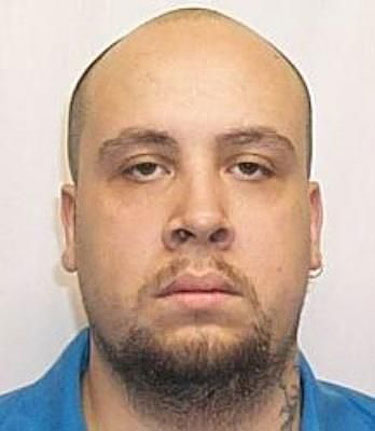
Photo by Whitehorse Star
Norman LaRue
Photo by Whitehorse Star
Norman LaRue
Before the trial of convicted killer Norman LaRue even began in Whitehorse, his lawyer attempted to have the case moved out of the territory.
Before the trial of convicted killer Norman LaRue even began in Whitehorse, his lawyer attempted to have the case moved out of the territory.
In a first-of-its-kind hearing late last year, LaRue's lawyer, Ray Dieno, had attempted to have the entire trial shifted outside the Yukon.
He argued his client could not get a fair chance from a jury selected in Whitehorse.
Dieno had wanted Justice Scott Brooker to move the trial south, suggesting somewhere like Vancouver, Victoria, Calgary or Edmonton.
LaRue was convicted of first-degree murder on Wednesday. He was sentenced to life in prison without the possibility of parole for 25 years.
He is the second person to have been convicted of killing 63-year-old Gordon Seybold in March 2008.
Last year, his girlfriend, Christina Asp, was convicted of second-degree murder.
They were charged with forcing their way into Seybold's Ibex Valley home, beating him with a bat and burning the cabin to the ground.
Any reporting on the application for a change of venue was prohibited by a publication ban until the trial ended.
At the hearing, Dieno had pointed to the massive amount of media coverage of the Asp trial.
He noted some media had also reported on the hearing itself, something the judge would later call "irresponsible.”
The first question Brooker needed to answer was whether the court even had the authority to try a case outside of the territory when the crime was committed in the Yukon.
Section 478(1) of the Criminal Code of Canada says "a province shall not try an offence committed entirely in another province.”
Translation: Crimes should be tried in the same jurisdiction where they're committed.
However, the Criminal Code also says that while the rules apply across the country, an exception is made when there is an inconsistency with the territory's Yukon Act.
Section 43 of the Yukon Act says a judge of the Supreme Court of Yukon "has and may exercise and perform, anywhere in Canada, all the powers, duties and functions of the court with respect to any criminal offence committed or charged to have been committed in the Yukon.”
Similar exceptions exist in the other two territories.
In the end, Brooker agreed he had the authority to move the trial out of the territory. Next, he had to decide if it was necessary.
Dieno argued that any jury pool was contaminated because of the "extensive, inflammatory and prejudicial media reporting on this matter,” Brooker explained in his final decision.
Prosecutors David McWhinnie and Bonnie Macdonald opposed the move.
They argued jury members could take their oath seriously, put the media coverage out of their minds and reach an impartial verdict if correctly instructed by the judge.
In his decision months later, Brooker acknowledged there were difficulties in impanelling the jury for the Asp trial, but said "this appears to have been the result of an inadequate jury panel having been summonsed in the first instance.”
Ahead of Asp's trial, 436 summonses were sent out, according to the Department of Justice at the time.
Sheriffs ended up on the street to round up additional candidates before the jury was filled.
In the case of LaRue, 1,300 summonses were sent out, the most ever in the territory.
The judge noted that while there was reporting on the evidence during the Asp trial, much of that evidence is the same as what would be heard during LaRue's case.
The news reports on the day of the application do not lead to the conclusion that jurors would be biased, Brooker said.
"It is more likely, in my opinion, to have the opposite effect, wherein a juror would take pains to ensure his or her verdict was unbiased and impartial so as to demonstrate LaRue could get a fair trial in this community.”
Brooker concluded he was not satisfied a fair jury could not be found in Whitehorse.
"I am satisfied that any concerns about publicity surrounding the crime, the trial last year of Asp, and the forthcoming LaRue trial can be dealt with appropriately and effectively through challenges for cause, pre-emptory challenges, jury instructions and the jury oath.
"I am satisfied that LaRue can receive a fair trial on these charges in Whitehorse.”
In order to encourage thoughtful and responsible discussion, website comments will not be visible until a moderator approves them. Please add comments judiciously and refrain from maligning any individual or institution. Read about our user comment and privacy policies.
Your name and email address are required before your comment is posted. Otherwise, your comment will not be posted.
Comments (1)
Up 2 Down 0
Dan McGinnis on Jul 4, 2013 at 11:15 am
Are U craxy he is as Guilty as HELL!!!