Photo by Whitehorse Star
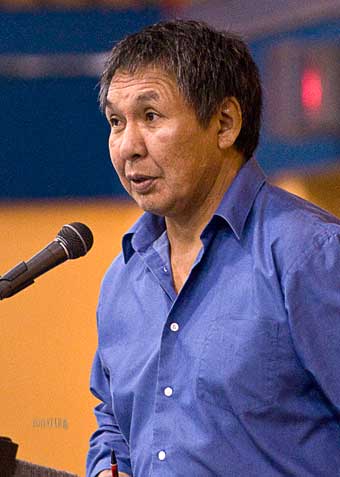
HERD ESTIMATE PLEASING – Joe Tetlichi, chair of the Porcupine Caribou Management Board, said even with good news over the herd's population estimate, it's important to maintain solid management principles.
Photo by Whitehorse Star
HERD ESTIMATE PLEASING – Joe Tetlichi, chair of the Porcupine Caribou Management Board, said even with good news over the herd's population estimate, it's important to maintain solid management principles.
Joe Tetlichi is happy – extremely happy – with the final count of the Porcupine caribou herd issued Wednesday by Alaskan wildlife managers.
Joe Tetlichi is happy – extremely happy – with the final count of the Porcupine caribou herd issued Wednesday by Alaskan wildlife managers.
Nonetheless, said the chair of the Porcupine Caribou Management Board, now is not the time let down the guard.
Preliminary results of last summer's aerial census of the herd were released last month. They indicated it was at least 123,000 animals strong, well above what many feared.
The final number was confirmed Wednesday at 169,000.
"When I first heard the 123,000, I said I was cautiously excited,” Tetlichi recalled in an interview.
"When they said 169, we are really happy, extremely happy.
"But the Porcupine Caribou Management Board is staying focused, and will still have to go out and deliver communication, education. There are a lot of young people who are beginning to harvest caribou.”
Tetlichi said while the count shows the herd has grown significantly in the last 10 years, communities must not, and he believes will not, lose sight of the importance to make sure it remains robust.
From 2001, when the herd was last estimated at 123,000 until last summer, poor weather or the herd's migration patterns foiled regular attempts to conduct a new count.
There was growing concern in recent years that the herd was continuing to decline, as it had fallen from 178,000 animals in 1989 to the 123,000 in 2001.
Evidence indicated other barren land herds were declining.
Communities and the governments of the Yukon and the Northwest Territories came together to negotiate a Harvest Management Plan to promote conservation and greater management strategies, in light of the growing concern.
A computer model generated in 2009 suggested the herd was at 100,000, prompting the Yukon government to implement emergency harvest restrictions.
Tetlichi said the parties know now the estimate was off, but it was still important at the time to take a precautionary approach while having no hard evidence indicating exactly how the herd was doing.
And now that the Harvest Management Plan has been adopted and is in place, it's not going to sit on anybody's shelf and gather dust, he insisted.
"We stressed the importance of the Harvest Management Plan,” Tetlichi said. "It will be there for all time, whether the herd is low or whether the herd is high.”
The plan recommends aboriginal hunters shoot bulls only when the herd is estimated at below 115,000 caribou, in order to protect the reproductive value of cows.
How the management board feels about the bull-only harvest now, he said, is addressed in a recommendation from the board's recent annual general meeting which is scheduled to be released soon.
Tetlichi emphasized there is no information regarding what's happened with the herd over the last 10 years, other than it's grown by 46,000 in the last year.
Whether it's continuing to grow, or whether it peaked at some point above the 169,000 where it sits now, nobody can say, he pointed out.
In order to encourage thoughtful and responsible discussion, website comments will not be visible until a moderator approves them. Please add comments judiciously and refrain from maligning any individual or institution. Read about our user comment and privacy policies.
Your name and email address are required before your comment is posted. Otherwise, your comment will not be posted.
Be the first to comment