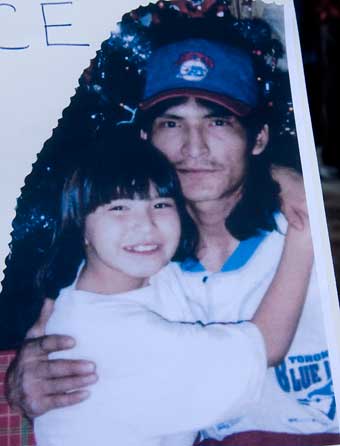
Photo by Whitehorse Star
Raymond Silverfox
Photo by Whitehorse Star
Raymond Silverfox
The family of Raymond Silverfox, the Carmacks man who died in police custody in 2009,
The family of Raymond Silverfox, the Carmacks man who died in police custody in 2009, has won a mid-distance victory in their quest to throw out the results of what they say was a biased coroner's inquest and replace it with a public inquiry into the tragedy.
Last week, Yukon Supreme Court Justice Ron Veale ruled that the entire RCMP investigation file given to chief coroner Sharon Hanley, and later released to lawyers for the Silverfox family and the police, should be part of an upcoming judicial review of the inquest.
At the time of the inquest, all the lawyers were required to sign an undertaking which promised they would not release the file to anyone and would return it no later than a month after the hearing was complete.
Only a handful of pages from the 1,500-plus page document, which also includes 13 1/2 hours of video and audio footage, were actually entered into the public record during the coroner's inquest.
Silverfox family lawyer, Susan Roothman, argued it is important for Veale to consider the entire document in his review of the inquest.
Roothman said she intends to show the coroner was biased and guided the inquest in favour of the RCMP.
Hanley never did her own investigation into Silverfox's death, Roothman charged.
Instead, the lawyer argued, Hanley accepted the RCMP's conclusions even though they were directly involved in the 43-year-old man's death and several officers treated him in a way that their own commanding officer called "shocking”.
Silverfox died after spending 13 hours in a bare cell, throwing up almost constantly.
He was never given any medical attention but was mocked and sworn at by the guards and officers, all of whom ignored RCMP prisoner-care policies.
He was finally dragged out of the filthy room when his lungs and heart had stopped functioning.
The RCMP's entire investigation file, which became the coroner's brief once it was given to Hanley, is vital to the judge's understanding of the case, Roothman said.
The general rule in a judicial review is that the judge will only look at transcripts and exhibits from the original hearing, and not consider any new evidence.
But as Veale pointed out in his most recent ruling, when there is a question of fairness or bias on the part of the coroner, the judge should rightly consider all the information she had at her disposal, even if it wasn't presented to the six-person jury.
"The coroner's brief was already part of the coroner's prior knowledge and could have influenced her conduct of the inquest,” Veale wrote in his decision.
"Thus, it may be very relevant to a determination of her impartiality or lack thereof.”
He rejected arguments from the RCMP and coroner's lawyers who said the file could only be entered if it passed the strict "fresh evidence test”, which says new evidence is only admissible if it was impossible to bring to the first hearing.
"The coroner's brief contains a considerable amount of evidence that was in the possession of all parties,” he explained, referring to the root principle of the test.
"Therefore, no one is disadvantaged by having it form part of the record or judicial review.”
He added: "It must be remembered that the bulk of this brief was collected and prepared by the RCMP, in whose cells and under whose watch this tragic death occurred.
"Surely, this evidence, which the respondents (the RCMP and the coroner) were so willing to have presented to the inquest, should now be part of the record when the fairness and impartiality of the inquest is being challenged.”
He stopped short of making the entire document public, but said the Silverfox family is "at liberty to use any of the coroner's brief to assist their case....”
All parties now have 30 days from March 2 to file an appeal of the decision.
No date has been set for the judicial review.
The inquest has sparked a number of other civil cases.
Silverfox's daughter is suing the federal government along with two dozen guards and officers for their roles in her father's death.
As well, the CBC is taking Hanley to court to get the audio and video footage of the cells on the day Silverfox died.
Both cases are still before the court or in negotiations.
A coroner's inquest is always held after a person dies in police custody and any other time the coroner deems one necessary. The purpose is to determine the cause of death, not cast blame.
A judicial review is a way of appealing the result of a quasi-judicial hearing.
In order to encourage thoughtful and responsible discussion, website comments will not be visible until a moderator approves them. Please add comments judiciously and refrain from maligning any individual or institution. Read about our user comment and privacy policies.
Your name and email address are required before your comment is posted. Otherwise, your comment will not be posted.
Be the first to comment