Photo by Photo submitted
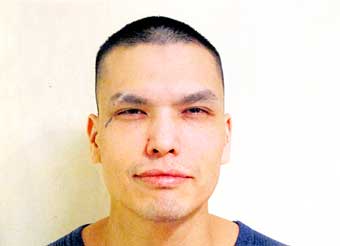
MOTIVE BEHIND CHARGE? – Whitehorse Correctional Centre staff wanted Michael Nehass (above) transferred to a southern penitentiary, argues Bibhas Vaze, Nehass's Vancouver-based lawyer.
Photo by Photo submitted
MOTIVE BEHIND CHARGE? – Whitehorse Correctional Centre staff wanted Michael Nehass (above) transferred to a southern penitentiary, argues Bibhas Vaze, Nehass's Vancouver-based lawyer.
Bibhas Vaze doesn't usually talk to the media, but late last month, following coverage of a sentencing hearing for Michael Nehass, the prominent criminal defence lawyer said he wanted to go on the record.
Bibhas Vaze doesn't usually talk to the media, but late last month, following coverage of a sentencing hearing for Michael Nehass, the prominent criminal defence lawyer said he wanted to go on the record.
The Vancouver-based prison-law specialist said he doesn't like it when he sees other lawyers try their cases in the court of public opinion. However, he felt it was necessary to right what he described as a dangerous misconception about Nehass.
On Feb. 25, the 27-year-old man was found not guilty of sexually assaulting a female guard at the Whitehorse Correctional Centre, but pleaded guilty to obstructing her in her duty.
According to an agreed statement of facts read into the court record, the guard was sent to check on Nehass' cell in the early evening of Oct. 10, 2009 because he and his cellmates appeared to be intoxicated.
The woman, who cannot be identified because of a publication ban, was greeted by the four drunk inmates.
One of them, Kevin Pahtayken, grinned and slapped her on the back in what she felt was a sincerely friendly gesture.
But when Nehass reached out and briefly touched her, she later told prosecutors, she felt the touch was meant to be threatening, and "compromised her authority as a corrections officer.”
She did not file a complaint or an incident report about the interaction, and it wasn't until four months later that she accused Nehass of sexual assault.
"She never even filed an incident report ... and then this charge came out of the woodwork,” Vaze said.
In the meantime, Nehass and Pahtayken were charged with aggravated assault because of an attack on a number of guards later that evening.
"He was immediately willing to take responsibility for (the aggravated assault charge),” Vaze said. "He wasn't trying to shy away from it.
"And he did talk to that particular guard and they shook hands and they both moved on, which was a major event for them, I think.”
But Nehass was not willing to admit to sexual assault – which came out of the blue – because it didn't happen, his lawyer said.
It has all the marks of a trumped-up charge, he said.
According to Vaze, several months after the October incident, "Mr. Nehass gets called in by a police officer who says to him straight out ... ‘Hey, I hear they don't like sex offenders in the pen.'”
Nehass refused to speak to the officer further and immediately called his lawyer to tell him what had just happened.
"Assuming this is what the officer said, the officer was making a very strong statement,” Vaze said. "And then lo and behold, a short time later, he's served with the new charge.”
Vaze suspects the accusation was made as a way to get his client out of the territorial jail and into a federal prison.
"I don't have any hardcore evidence to point to this, but basically the thinking was: ‘It would be great if we could get him to the pen and get him out of here.'”
His theory is backed up, he said, by evidence from other guards who were on the scene that day.
"There were accusations being made by guards, between guards ... accusations about their reliability, but also there were guards who were there at that time who said they didn't see anything happen at all. Nothing .... There were very serious things out there that called the whole charge into question.”
Furthermore, Vaze said, the one piece of completely objective evidence – a surveillance video of the cell – is not available, either because it was lost or erased, which he called "very problematic”.
"When evidence is lost and charges go away, the public is very quick to assume it's a technicality,” Vaze said. "But when there's a loss of evidence, then it's more than a technicality .... You have to ask, did it actually show that charge to be bogus? It's evidence in and of itself.”
But rather than take the charge to court and prove it to be false, Vaze said, his client preferred to plead guilty to a lesser charge of obstruction of a peace officer and move on.
"He acknowledges that he made it difficult for the guards to do their job ... but he maintains that under no circumstances did he do what the original charge made out and under no circumstances would he ever have agreed to that.”
After seven years of nearly constant incarceration, and having his stay in jail repeatedly extended because of offences committed in jail, Nehass has had a change in attitude, Vaze said.
"He's gotten over a hump, he's working with people instead of against them, and he can try and move on with his life now.”
But the plan to put October 2009 behind him backfired somewhat, Vaze feels, because of press coverage of Nehass' final sentencing hearing, which he thinks painted Nehass as getting away with sex assault.
"He's not a sexual creep, and it's very important that impression not be created,” Vaze said.
Although his client has a record of violent crimes, he has never before been charged with any sex crime.
"It has a huge impact on anybody. It's one of the unfortunate aspects of institutional politics that if you go down to the pen with something like that on your record, it really puts your safety at risk.”
Vaze said he hopes the public and institutional perception of Nehass as "some sort of unrehabilitative psycho” can finally be put to rest, and people can see, as he has, that Nehass has a genuine desire to turn his life around.
"He's realized I can't just react every time he feels slighted,” Vaze said.
"... He has learned that even though he feels he's gotten a rough go if it, he's learned that he has to just address problems rather than react to them, and that's a big step forward.”
Starting last year, Nehass has reconnected with his father and his Tlingit community, the court heard last month.
When he is released in October, he plans to return to Teslin, where he has not lived since his mother died when he was a child.
The Star was unable to reach anyone at the jail for comment.
In order to encourage thoughtful and responsible discussion, website comments will not be visible until a moderator approves them. Please add comments judiciously and refrain from maligning any individual or institution. Read about our user comment and privacy policies.
Your name and email address are required before your comment is posted. Otherwise, your comment will not be posted.
Comments (5)
Up 2 Down 2
Lizann Porter on Mar 17, 2011 at 1:47 am
I believe he deserves to be able to take all oppertunities to make the changes he is willing to do, an move on in life to better himself, and hat's off to the lawyer who went public on Mike's behalf. He is human an has been painted as a animal in the past.Which he's NOT! The Yukon is a small community an once your labeled it follow's u. So doesn't everyone deserve change for the better? I think so!
Up 1 Down 0
JuneJackson on Mar 14, 2011 at 6:43 am
I hear ya' RDrake.. and for the record..there isn't a lawyer in the world that dosen't like to go down in the newspapers as " just for the record".
Good grief.
Up 0 Down 1
marg on Mar 11, 2011 at 12:37 pm
Everyone deserves a second chance. Well most people. If there willing to change there life and contribute to the commnunity, i say let them prove it. Theres always a fresh cell waiting if they screw up
Up 1 Down 1
R Drake on Mar 11, 2011 at 11:35 am
Are you kidding?
Up 1 Down 0
JC on Mar 11, 2011 at 11:22 am
Yeah! Society has this perp all wrong. He is such a wonderful guy (his lyer seams to have fallen for the scam), he should be set free and left alone to do his own thing. I wonder how much the lyer is getting paid.