Photo by Whitehorse Star
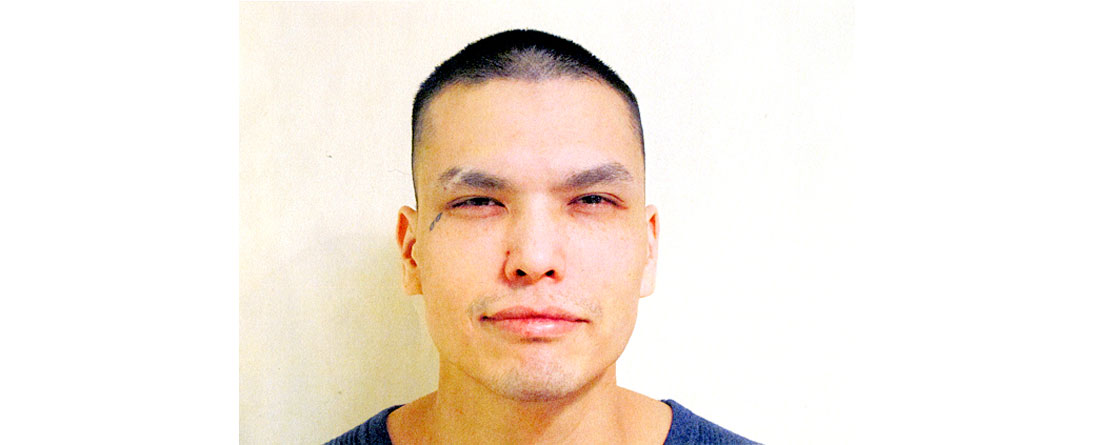
Michael Nehass
Photo by Whitehorse Star
Michael Nehass
Since May 2013, Michael Nehass has lived in what amounts to solitary confinement at the Whitehorse Correctional Centre
Since May 2013, Michael Nehass has lived in what amounts to solitary confinement at the Whitehorse Correctional Centre, according to a jail manager’s report filed in territorial court Tuesday.
It was at that time that Nehass’ behaviour “escalated” in the general-population area and he could no longer be managed outside of the segregation unit, states the November 2014 report. It was written by Karen Shannon, the manager of integrated offender management.
The document was filed by Crown prosecutor Eric Marcoux during a sentencing hearing for five charges laid against Nehass during his incarceration at the Whitehorse Correctional Centre (WCC).
It is the first time this information – about how long the 31-year-old has spent in solitary confinement at the jail – has been made public.
Nehass has said several times before in court that he’s been in segregation for a long time, at one time alleging 28 months. The Department of Justice denied this but would not reveal the actual length of time.
Shannon’s report shows that Nehass has spent about 350 days in either the jail’s segregation unit or secure living unit as punishment for bad behaviour from mid-2012 to July 2014. Both are separate from the general-population area.
On top of that, Nehass spent six months in the secure living unit while he was not being disciplined for any offences. This was because he was unmanageable anywhere else, according to the report.
The Department of Justice did not respond to a list of questions sent to it by the Star before press time this afternoon.
The United Nations Special Rapporteur on Torture has said that solitary confinement for longer than 15 days should be completely prohibited because it can cause “severe mental pain” and amount to “torture or cruel, inhuman or degrading treatment.”
Under the Yukon Corrections Act and its regulations, “long-term separate confinement” is permitted “for up to 15 days with the option to renew for further 15-day periods.”
The regulations allow for segregation to be used as punishment for bad behaviour.
Nehass has been in custody since December 2011, when he was arrested for eight charges. Those include the possession of a weapon for a dangerous purpose, assault with a weapon and intimidation.
These charges have not been proved in court – Nehass has been awaiting trial for three years. A trial is now scheduled for May in Yukon Supreme Court.
But while on remand, or waiting time, at WCC, Nehass has racked up further charges. He pleaded guilty in November 2014 to attempting to escape the jail, spitting on a guard, causing thousands of dollars’ damage to the segregation unit and threatening a guard.
“Mr. Nehass has been a significant behavioral management and security concern while remanded to custody at WCC,” Shannon writes.
He spent most of 2012 and the first few months of 2013 in the general-population area, where he assaulted six inmates and threatened to assault a seventh.
In May 2013, he was removed from this area and sent to the segregation unit.
The Corrections Act regulations and jail policies draw a distinction between “segregation” and “separate confinement.”
The former is when inmates are held in a segregation cell as punishment, while the latter is “a mechanism for separating inmates from one another in an environment that provides higher levels of security and physical separations as well as frequent monitoring,” according to the policies.
Inmates with “separate confinement status” may be held in either the segregation unit or the secure living unit.
In actuality, there is little difference in living conditions between these two units.
The segregation unit is more secure. Inmates spend 23 hours locked in a cell daily, with an hour out in the common area on their own to shower, use the phone and use the fresh-air “yard” – an enclosed room with a barred ceiling.
The secure living unit, on the other hand, is intended for “inmates who cannot cohabitate with other individuals or classes of inmates, or those requiring a level of monitoring not available elsewhere in the centre.”
This could include people with medical issues, or those who voluntarily seek to be isolated.
Inmates in this unit have a TV in their cell and may be permitted into the common area at the same time for meals if they get along, according to the jail’s policy manual. Otherwise, they eat in their cells, with food provided through a meal hatch.
Nehass has been moved back and forth between these units since May 2013; for instance, after he pried a phone off the wall in the segregation unit and cracked several panes of glass, he was moved to the secure living unit while the segregation area was repaired.
The report also states that jail staff have been concerned for Nehass’ mental health for about a year and a half.
“He has demonstrated a great deal of paranoia and has been suffering from delusional behaviour throughout this time,” Shannon writes. These are both known side effects of solitary confinement.
During his court appearances, Nehass has talked often about a conspiracy theory involving Yukon government officials, the Bilderberg group and nanochips being implanted into people’s brains.
He said Tuesday he has to be vigilant that his food isn’t poisoned at the jail, and he’s had to cover his cell window because he’s being threatened by the Yukon government.
“I really honestly feel that my life is going to be harmed,” he said, raising his voice. “If I am killed for some reason, and I don’t make it to court next time, then what?”
Nehass has also appeared alarmingly thin in the last few months. In court yesterday, his jeans were cinched at the waist with an elastic to keep them from falling down.
He filed an application Tuesday, alleging his rights under the Canadian Charter of Rights and Freedoms have been violated (see story below).
Nehass seeks a reduced sentence for his territorial-court charges or a stay of proceedings, because he says the conditions of his confinement have caused his physical and mental well-being to deteriorate.
His father, Russell Nehass, made the same claim in a complaint to the Yukon Human Rights Commission last year.
Tuesday’s sentencing hearing ended with testimony from William Riches, a correctional officer in charge of training staff.
He was on the team of guards who responded to the segregation unit in June 2013 after Nehass broke a phone off the wall and cracked several windows with it.
The Crown called three witnesses on Monday to testify about the five offences to which Nehass has pleaded guilty. This hearing was held because, although Nehass admitted guilt back in November, he disagreed with some of the Crown’s details about the events.
A second stage of this hearing will be held in March, at which Nehass will argue his Charter application.
It’s expected that any sentence handed down for these charges would amount to time served.
In order to encourage thoughtful and responsible discussion, website comments will not be visible until a moderator approves them. Please add comments judiciously and refrain from maligning any individual or institution. Read about our user comment and privacy policies.
Your name and email address are required before your comment is posted. Otherwise, your comment will not be posted.
Be the first to comment