Photo by Whitehorse Star
Leigh Gower
Photo by Whitehorse Star
Leigh Gower
The validity of the Umbrella Final Agreement in the Yukon land claims process is under an active legal challenge.
The validity of the Umbrella Final Agreement in the Yukon land claims process is under an active legal challenge.
Whitehorse lawyer Steve Walsh says the Ross River Dena Council will be challenging the legality of the UFA as part of its lawsuit against the federal government.
“The question of whether the Umbrella Final Agreement was validly ratified is going to be a huge issue when the proceedings resume,” he said in an interview Thursday.
“From the Kaska perspective, it is beyond doubt that the UFA was never validly ratified.
“The Government of Canada has been bending over backwards to suppress evidence of the fact of the non-ratification of the UFA.”
The Ross River Dena Council has been locked in a legal battle with Canada for years, as one of the three First Nations in the Yukon which do not have a land claim settlement or self-government agreement.
The Kaska First Nation claims the federal government is in breach of its legal obligation to negotiate in good faith and reach a settlement with Ross River.
It’s an obligation that goes back to the 1870 Order that saw the Yukon transferred to the Dominion of Canada as part of what was then the Northwest Territories, the First Nation argues.
The 1870 Order, Ross River emphasizes, is embedded in the Constitution of Canada.
Ottawa maintains there is no legal obligation arising from the 1870 Order.
If there were, or if there were an obligation arising out of modern-day circumstances, Canada fulfilled those obligations in the years spent negotiating aboriginal land claim settlements across the territory, the federal government insists.
The court documents point out those negotiations included the Ross River Dena Council, though they were unable to reach a deal.
Negotiations broke off in 2002 with the end of the federal mandate to negotiate settlements in the Yukon.
Ross River offered to continue negotiating, but refused to negotiate under the terms set out in the UFA, the blueprint used to negotiate final agreements in the Yukon, court documents indicate.
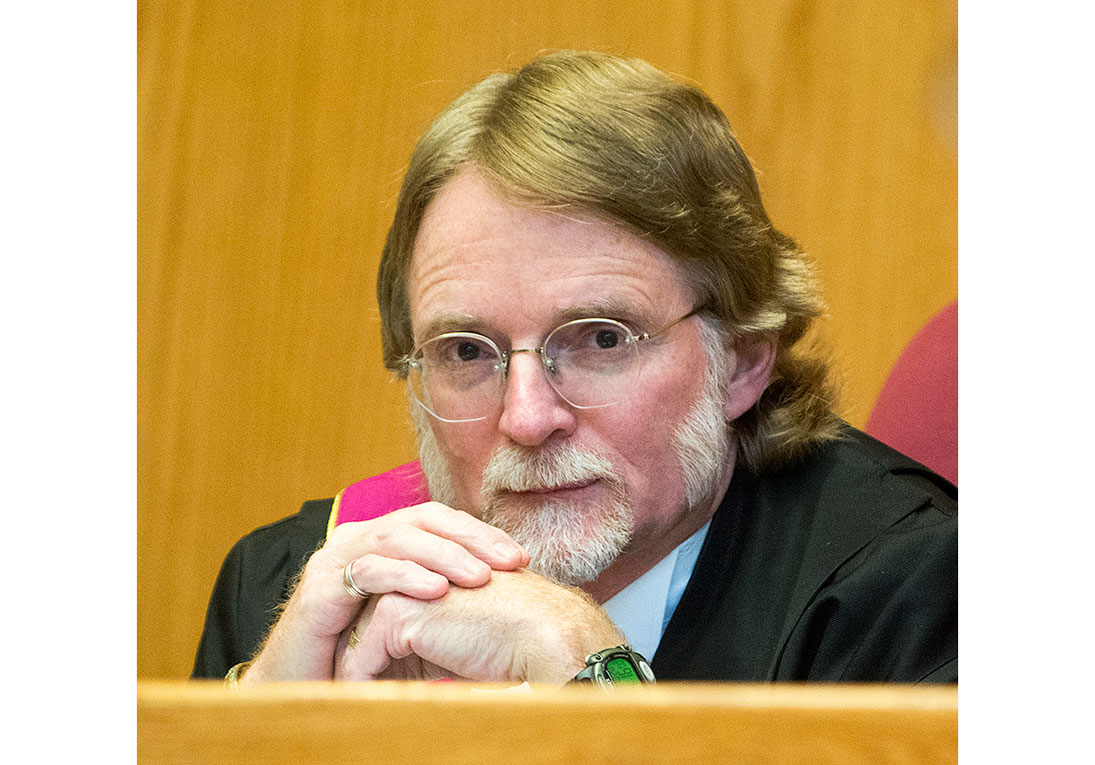
In something of a complicated legal twist, the case between Ottawa and Ross River was put on a new and entirely different track this week in a decision by Yukon Supreme Court Justice Leigh Gower.
The judge noted with the change in direction, he expects the UFA’s validity will be front and centre.
Ross River filed a lawsuit against Ottawa in 2005, claiming the 1870 Order created a legal obligation to settle the interests of the Ross River Kaska before giving away their traditional lands to third parties – the Faro lead-zinc mine, for instance.
The First Nation followed up with a separate but similar suit in 2006, claiming the federal government did not fulfill that obligation to negotiate in good faith.
The parties decided to first focus on the question of whether the Order of 1870 created an obligation enforceable by today’s courts.
Gower ruled in favour of Ottawa after a two-week trial in 2011.
But the Yukon Court of Appeal overturned the decision, but not on the merits of the legal arguments.
The appeal court found the trial was flawed from the beginning by a technical legal problem, and it ordered a new trial.
The trial recommenced last September for two weeks and continued this past spring with final arguments.
In late May, federal lawyer Suzanne Duncan suggested that for legal reasons, the judge should suspend his decision on the 1870 Order related to the 2005 case and instead should first conduct a trial on the merits of the 2006 lawsuit.
In his decision this week, Gower points out the focus of the 2006 case is focused on whether Canada has fulfilled its legal obligation to negotiate with Ross River in good faith.
Gower says in his decision he agreed with Duncan that he should suspend his decision on the 1870 Order and commence a trial on the 2006 suit.
Gower said for the purpose of the trial on the 2006 lawsuit, he will assume the 1870 Order did create a “binding legal obligation on Canada to consider and settle RRDC’s claims before opening up their lands for settlement.”
The judge said he will also assume that Canada was in breach of the 1870 Order.
If Canada, however, can demonstrate at trial that it did fulfill its legal obligations through its modern-day negotiations with Ross River, that would reduce the seriousness of any historic breach of the obligation, the judge says in this week’s decision.
Gower points out that in recent discussions, the lawyer for Ross River emphasized Ross River’s argument that the UFA was never legally ratified is paramount in their case.
“It is the UFA which formed the basis of the final land claim agreements between Canada, Yukon and the 11 other Yukon First Nations between 1995 and 2006,” Gower says in the decision.
“RRDC’s counsel concedes that the ratification question is a very important issue in the ’06 action.”
As the lawsuits started advancing several years ago, the federal government’s first line of defence was to ask Gower to dismiss the lawsuits outright.
They were without any substance, and were meant to be nothing more than a pain in Ottawa’s side, the government argued.
No only did Gower reject the federal government’s request, but in his decision, he said the Ross River lawsuits could have enormous constitutional implications for the Yukon.
In order to encourage thoughtful and responsible discussion, website comments will not be visible until a moderator approves them. Please add comments judiciously and refrain from maligning any individual or institution. Read about our user comment and privacy policies.
Your name and email address are required before your comment is posted. Otherwise, your comment will not be posted.
Comments (6)
Up 0 Down 0
Confused on Jul 23, 2015 at 4:04 pm
I have one question, how would this land mark agreement (The UFA) not have been ratified? That's a pretty huge mistake after 20 years of negotiations.
Up 37 Down 9
Lanatk on Jul 22, 2015 at 10:36 am
That's FANFRIGGINTASTIC!!!! Gunalchish, and I hold my hands up to the Kaska's and Mr. Walsh! In Yukon, we were sold out, at the end of the day, "The Minister Shall ..... do whatever the heck he wants to do! Let's get the Most Favored Nation Clause working for us!!!
Up 65 Down 98
Groucho d'North on Jul 18, 2015 at 9:38 am
With the outlandish legal expense that has been invested in Yukon's land claim process over the many decades, one would expect professional results and no-contest final outcomes at the end of the day.
I know that if I do not repair an engine satisfactorily for one of my customers, or it fails during subsequent use, I am responsible to correct it on my dime. No so the legal industry. More mumbo-jumbo gets hauled out or some bright light has a different viewpoint to argue, and it's back into court to start all over again at a huge expense to the taxpayer. When is enough going to be enough? It has become the Never-ending Story.
Perhaps if a ceiling on the legal budget was implemented with a strict time line for performance, these legal people could conclude the process and all parties could live with the results. I know - I'm dreaming in Technicolor.
Up 49 Down 4
Going to be interesting on Jul 18, 2015 at 9:02 am
Going to be interesting. The other 11 First Nation put a lot of work, time and effort to get land claims settled and working for their communities.
To have all that work pushed aside and have to go back to square one is not very good for First Nations.
Other regions of Canada would hope for what the Yukon has.
BC has been working for years trying to get a land claim agreement but nothing.
Up 92 Down 306
Yukon 56 on Jul 17, 2015 at 8:23 pm
We could give and give but it will never be enough. Just be thankful that the British conquered and settled. They were the only nation to grant any indigenous population with any rights.
Up 113 Down 46
YTer on Jul 17, 2015 at 5:11 pm
Here we go again. If you listen closely, you can hear the lawyers rubbing their hands together in eager anticipation.