Heavier police patrols easing waterfront woes
Ever since RCMP officers started enforcing a new strategy to crack down on public intoxication and unruliness in identified crime "hot spots" such as the Yukon riverfront, local business owners have noticed a change.
By AP on July 25, 2008
Ever since RCMP officers started enforcing a new strategy to crack down on public intoxication and unruliness in identified crime "hot spots" such as the Yukon riverfront, local business owners have noticed a change.
The RCMP said July 2 they planned to focus patrols of the downtown area on crime "hot spots", including the riverfront, Shipyards Park and Rotary Peace Park.
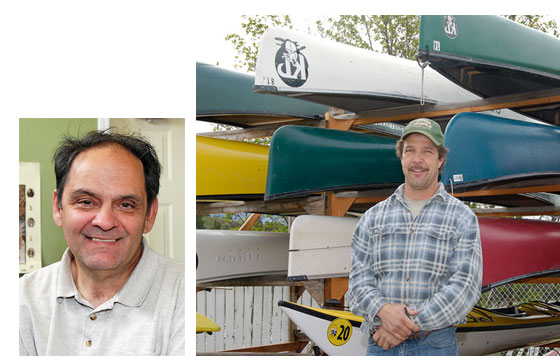
"We have noticed a difference. Things have kind of quieted down," Scott McDougall, owner of the Kanoe People, said this week.
McDougall commented that people who regularly loiter along the riverfront are "probably just moving down to a less obvious location."
He added that public drinking and unruliness have been problems in the past.
"They're loud and obnoxious at times," he said, referring to people who are publicly intoxicated and often tend to loiter near the riverfront.
"Unfortunately, we noticed there's a high percentage of younger people who are out there."
Recently, said McDougall, he noticed about six or seven teenagers drinking openly at about 9 p.m.
"It's just a shame."
While McDougall praised the RCMP's attitude and willingness to help, he noted that the crime "hot spot" strategy is not a panacea for the problem of substance abuse.
"It's a start. The problem is probably not going to be fixed by the police harassing people. The problem is a lot deeper than that. It's a community problem."
The executive director of Challenge Community Vocational Alternatives, located on First Avenue at Strickland Street, also responded positively to the strategy of heavier policing along the riverfront.
"It's a really good thing," said Rick Goodfellow, who has directed Challenge for the last five years.
Goodfellow said Challenge looks after the cleanup of the riverfront in the summer and has worked in collaboration with the RCMP and the Whitehorse Fire Department to keep the area "as cleaned up as we can."
Goodfellow noted that two of the biggest problems they've encountered along the riverfront are abandoned needles and campfires that get out of control.
"If a fire gets started down there, it won't stop," he said.
In past seasons, crew members would typically find dozens of needles each week, said Goodfellow.
"We're seeing with our cleanup along the waterfront, there are a lot less needles this year. We're hardly seeing any."
Aside from these types of physical safety hazards, said Goodfellow, the loiterers themselves who frequent the riverfront have presented a problem.
"That's the second part of it," he said. "They've been very threatening to clientele in years gone by."
As an example, Goodfellow described a young man who finishes his workday at Challenge at 4 p.m., but always "bolts out of here at quarter to four."
Goodfellow couldn't understand this behaviour until he learned that loiterers along the riverfront would frequently accost the employee, steal his money, and harass him if he took the bus at the same time as they did.
This young man would leave early to avoid these people, said Goodfellow.
There are about 125 people in the Challenge building at any given time, many of whom are vulnerable due to cognitive or other types of disabilities, and who are "very, very afraid of that particular group," said Goodfellow, referring to the loiterers on the riverfront who are often intoxicated.
"If we have a lot of those folks hanging around, it makes for an uncomfortable situation."
But Goodfellow has noticed an improvement in recent weeks.
"We definitely see that. There's a lot more tourist traffic along the river."
Goodfellow attributes the change partly to new sidewalks and a cleaner area, but also to increased police presence.
"(The RCMP presence) has been felt a little more. I think it's definitely helping. It's a complex problem, absolutely, but you have to start somewhere.
"For the most part, it's a good beginning."
A typical example of the RCMP's work on the waterfront was visible one afternoon this week near the White Pass depot.
A member of the force's bicycle patrol unit was kneeling to assist a shirtless, intoxicated young man lying face-down in the gravel, barely able to move.
Comments (1)
Up 0 Down 0
sheila Hager on Jul 28, 2008 at 3:01 am
my comments are that i feel this is really a good thing, now maybe alot of innocet people may not get hurt or killed in this kind of places. Also i wish that this kind of patrol would come into the communties to stop alot of this intoxicated behaviors, and bullying that is happening on the streets, espcially with the innocet poeople who are getting hurt. And the type of drugs that are going around foolishy.
Thank you