Health care tops election issues: CNA head
Judith Shamian didn't intend to step into the middle of the campaign trial when she started her northwestern Canadian tour this week,
By Justine Davidson on March 31, 2011
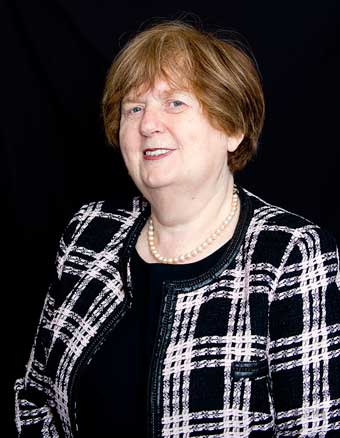
Judith Shamian didn't intend to step into the middle of the campaign trial when she started her northwestern Canadian tour this week, but that doesn't mean she isn't ready to talk about issues she wants to see on every party's policy platform.
The president of the Canadian Nurses Association, which represents 145,000 members across the country, is in Whitehorse today to talk to health care workers – on the ground and in the bureaucracy – about the future of Canada's health care system.
With an election looming May 2, the issue is all the more pressing, she said in an interview with the Star this morning, and will be at the forefront of Canadians' minds.
"In every single poll we have done and seen coming up to this election, Canadians have put health care as number one, far above the economy,” she said, and it's certainly at the top of her list.
"I decided to run for president because I am very passionate about medicare, and the protection of medicare and the expansion of medicare,” Shamian said.
She is unequivocal about her stance on private health care, or the two-tiered health system which some believe will reduce the strain on our public system by allowing people to pay a premium for faster service.
"We need to reinforce that the only way Canadians will be well served and the economy will be well served is by protecting the publicly funded and not-for-profit health-care system,” Shamian said.
The notion that the Canadian medicare system is underfunded or dysfunctional is a myth perpetuated by those who want to make it look weak and in need of replacement, she said, but those who actually use the system know otherwise.
"People who have been in the system rave about the system,” she said when asked why people shouldn't have the freedom to seek private health care at a premium price in Canada.
"The people who say that the system is falling apart, are those who are reading the newspapers. The system is nowhere near falling apart. It's there to serve Canadians day in and day out, number one.
"Number two: We have enough money in the system, because the other argument you get is ‘It's not sustainable.' We have enough money in the system – the way we organize the system needs to be transformed fundamentally.”
In the Yukon, it seems to be not so much an issue of changing the plan, as actually making one.
"I don't have a sense there is a master plan in the territory on multiple issues,” Shamian said of what she has heard so far from nurses in the Yukon.
"How to manage diabetes. How to manage human resources. How to manage integration of services between community and health services.”
It is the same criticism as Auditor General Sheila Fraser had when she looked at the Yukon's Department of Health and Social Services last year and found it was making policy and spending decisions without first creating business cases to support those decisions.
"She's absolutely right,” Shamian said of Fraser's diagnosis. "There are two dangers to that: One is that you don't get as much for the community because you are not maximizing the resources you have, and second, you spend money unnecessarily.
"I detect some level of frustration from the people I've spoken to, whether they are nurses or doctors or others, so there is no winning in that formula.”
The other issue raised in the Yukon is that of recruitment and retention of staff.
"People come to work here, but they are not necessarily offered permanent work,” she said.
The result is nurses who may be working full-time, but because they are classified as casual on-call employees, find it difficult to get mortgages and put down roots.
Access to health care is the other issue, which brings Shamian back to two of her organization's top priorities: home care and health care teams.
Both, she said will keep people from being treated in hospital beds, which is far more expensive than any other type of medical service.
In a place like the Yukon, it also allows people to stay in their home communities, rather than shuttling to Whitehorse, which reduces stress on both the patient and the system.
As Canada nears the end of the current health care transfer agreements with the provinces and territories in 2014, Shamian said it is critical for voters to understand each party's platform on that issue.
"When it comes to health care, this is a very, very important election because whoever is in government will be negotiating the health-care transfer and other social programs.
"This is not one of those where Canadians can afford to say, ‘Who cares?'”
Be the first to comment