Health care disparity must be addressed: CMA
The Canadian Medical Association
By Sidney Cohen on November 7, 2016
The Canadian Medical Association president says Canada’s health care systems have “consistently and repeatedly failed” to provide high-quality and timely care to rural and
indigenous citizens.
Dr. Granger Avery made the pronouncement Friday afternoon.
He was speaking to Yukon health care professionals at the Yukon Medical Association’s annual general meeting at the Coast High Country Inn.
He said the federal, provincial and territorial governments must address the disparity in care among rural and indigenous Canadians and other Canadians as they negotiate a new
health care accord.
That agreement determines the federal funding provinces and territories get each year to deliver health care services to their respective residents.
Canadians need only look at the numbers to see that the current system isn’t working for indigenous populations, said Avery.
“Diabetes is three times the national average, TB is eight times, suicide up to 10 times the national average and life expectancy is seven years less,” he said.
Avery added that there are a number of social and historical factors outside of the health care system that have contributed to unequal health outcomes in indigenous communities.
The harmful effects of contact and colonialism on indigenous cultures, and a subsequent “loss of self-determination,” have had real and lasting consequences for people’s health, said Avery.
He cited addictions and violence, and the medical problems they produce, as examples of social ills resulting from the loss of self-determination.
Doctors and health care workers are good at treating sickness and injury, but these are symptoms of a bigger issue.
Governments, and society as a whole, must take a look at the reasons why people end up in hospital to begin with, he said.
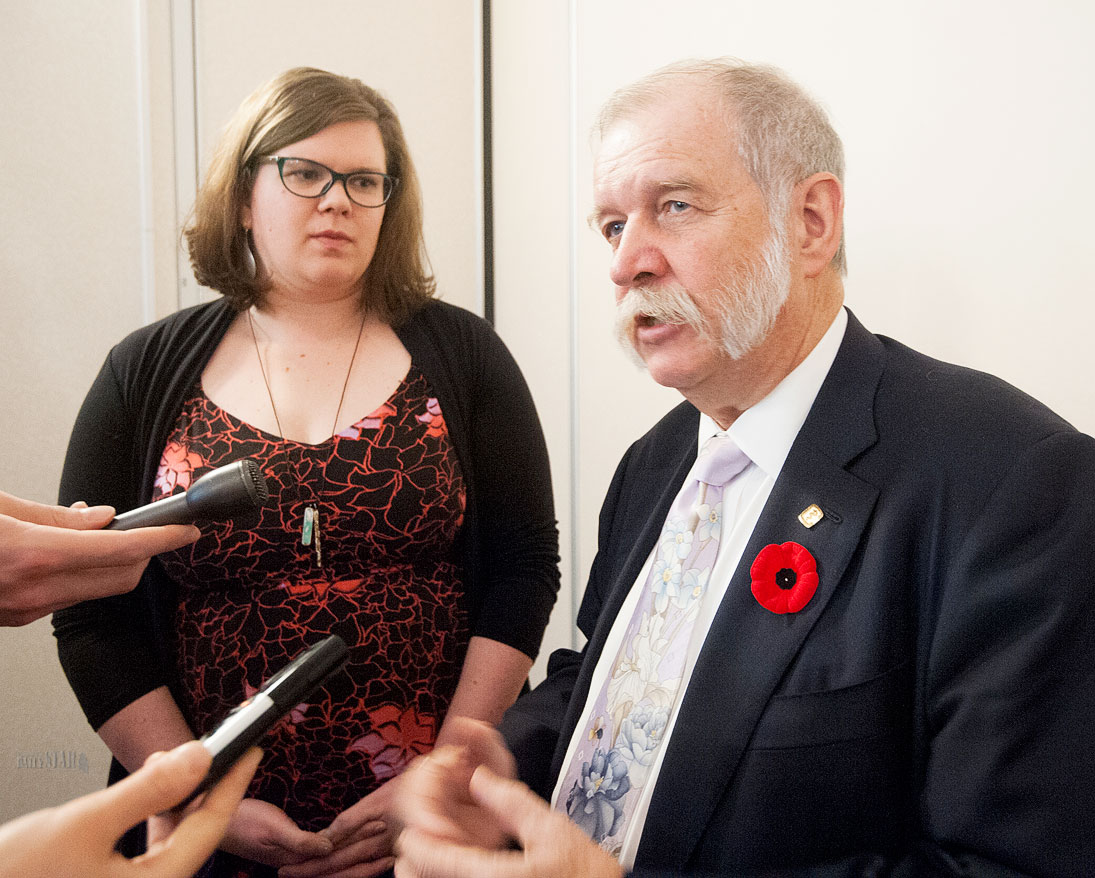
“We need to come together, particularly with indigenous people, to determine what is going to be best for them,” Avery told reporters following his remarks to the Yukon Medical Association.
“I could tell you what I think would be best for your heart failure ... but for me to help you with that whole cascade of illness, requires much more. It requires the incorporation of the people to help us formulate what it is, and to take ownership of what it is.”
In his speech to Yukon doctors, Avery also spoke of the need for a seniors strategy.
The Canadian Medical Association recommends more, targeted funding for provinces and territories with larger seniors populations.
The Yukon has a relatively low seniors population when compared with other jurisdictions in Canada.
In 2016, 11.6 per cent of Yukoners were 65 years of age and older, according to data from the Yukon Bureau of Statistics.
Only the Northwest Territories (7.1 per cent) and Nunavut (4.0 per cent) had smaller seniors populations.
By contrast, seniors represented between 18.8 and 19.5 per cent of the total populations in the Maritime provinces.
Still, the Yukon has seen a notable increase in the number of senior residents over the last 10 years. In 2006, seniors made up 7.2 per cent of the Yukon population.
“Continuing care in its entirety needs to be revamped, rethought,” said Avery.
Like indigenous peoples, seniors too must be brought into the conversation about their own care, he said.
Avery suggested looking to indigenous communities for effective models of supporting seniors.
“They’re much better at thinking about family and family supports for old people, for the elders,” he said.
“We don’t do that terribly well outside of the indigenous communities.”
Avery offered some suggestions for improving seniors care: young people should be incorporated into long-term care facilities and, he said, “we should be positioning the long-term care facilities right in town.”
One of the common complaints about the continuing care facility currently under construction in Whistle Bend is that it’s too far from downtown Whitehorse and the Whitehorse General Hospital.
When long-term care facilities are located in city centres, or more densely populated areas, “(seniors) can see what’s going on, they can watch the kids playing soccer or throwing snowballs... and they’re still part of the community,” said Avery.
More can to be done to support seniors in the rural communities as well, so that they may age in place, he said.
One solution is to offer refundable tax credits to “non-traditional caregivers,” such as family members, who are looking after their own aging parents, grandparents and aunts and uncles.
There needs to be a “network of supports” in the communities, he said. Social workers, nurses, pharmacists and others must be co-ordinated and accessible to seniors in the more remote parts of the Yukon and Canada.
Dr. Alison Freeman, president of the Yukon Medical Association, noted that enhancing home care and supporting nurses in the communities would enable seniors to stay where they are rather than be forced to move to Whitehorse, away from their homes, families and friends.
“The nurses are the ones that are providing much of the care in the communities,” said Freeman, but it’s proved difficult to recruit them.
“Often you might have one or two nurses on call that are responsible for taking care of all the patients in Carcross, or Teslin, or Old Crow,” she said.
Freeman said it’s been harder to attract nurses than physicians.
Part of the problem, she said, is that some health care services aren’t integrated in the communities.
Schools, hospitals and long-term care centres have separate budgets for certain health care services.
Recruitment becomes challenging when health care workers are only guaranteed a part-time or short-term contract through one of these institutions, she said.
“We need to find more creative and innovative ways to try to pool the funding so that we can do what’s best for the community and actually get our allied health professionals out in the communities,” she said.
Comments (5)
Up 2 Down 3
crazyrabbit on Nov 11, 2016 at 6:57 pm
Qualification for Elder is wisdom. Qualification for senior is anyone over 60-65.
There are people calling themselves elders because of their age. And also they try to wear the mantle of wisdom, or possessors of a secret, sacred tradition. Also sometimes called wannabes. So a person can be an elder at a very early age, think of Christ in the Temple at age 12 educating the 'elders' of the Jewish Priesthood.
Up 7 Down 6
Just Say'in on Nov 10, 2016 at 12:57 am
What is all this nonsense that this facility is some how or other way out of town. It is very centrally located in what very soon will be the highest concentration of people in Whitehorse. Give it a rest guys. This is not a facility that people will be going for a walk-about and shopping etc. This is an extended care facility. Not a lot of mobility there.
Up 6 Down 2
ProScience Greenie on Nov 8, 2016 at 12:42 pm
As a lifetime fan of MLK I'm not sure I get the difference between seniors and elders.
Up 13 Down 7
Just Say'in on Nov 8, 2016 at 12:00 am
Oh give me a break. Natives get way better Health Care then we do. Do your homework. If you want to say that rural people get less service then we can have that conversation but stop playing the race card I am sick of it.
Up 6 Down 7
June Jackson on Nov 7, 2016 at 4:19 pm
I truly hope the Paslowski government goes down in the dirt today. Under their governance health care went into the sewer.. chronic care in the sewer, travel, in the sewer. I personally know a woman who is legally blind that the Department would not provide an escort for. Kind Taxi drivers got her to where she needed to go. I know many seniors paying for their medications.. And.. hello Whistle Bend.
I have higher hopes for our health care system than anyone else getting into office but the YP. And what's with the delay in flu shots? Can they get nothing right? Apparently not.
Although, all 3 parties carefully avoided talking about health care.