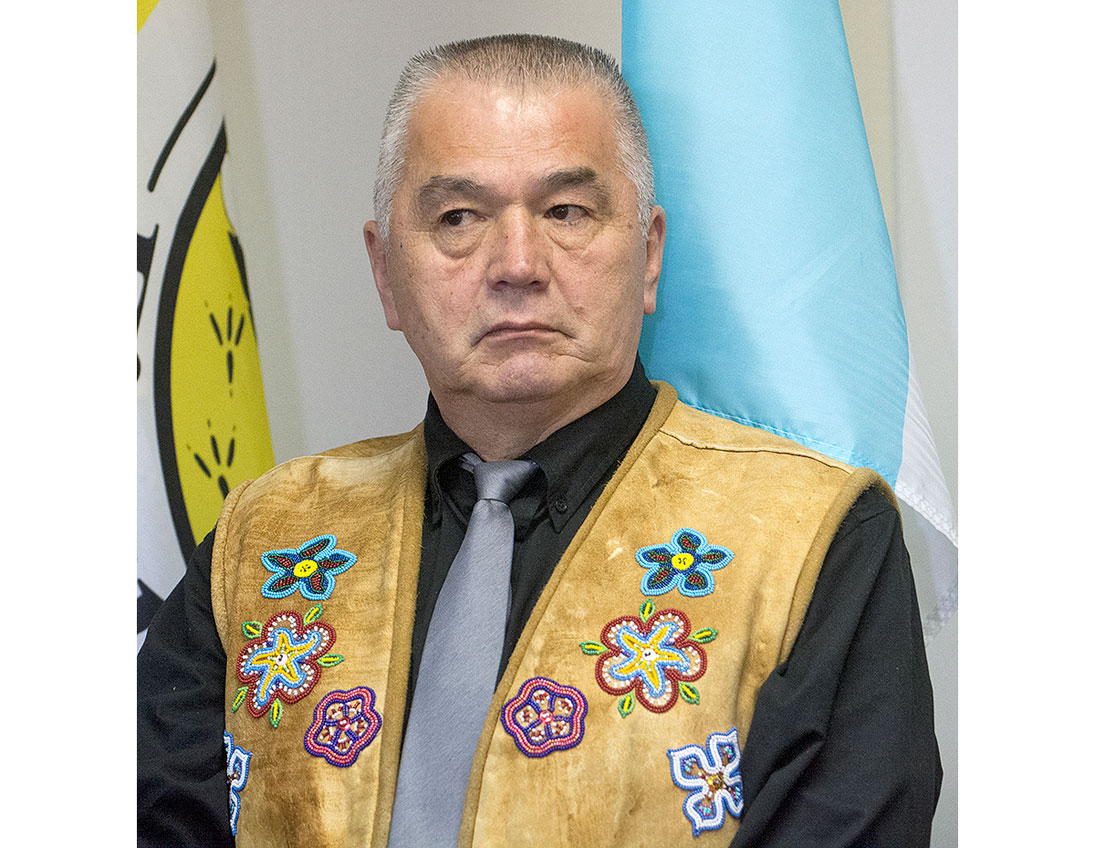
Photo by Whitehorse Star
Chief Carl Sidney
Photo by Whitehorse Star
Chief Carl Sidney
Three Yukon First Nations are leading the legal challenge of the federal government’s changes to the territory’s environmental screening legislation.
Three Yukon First Nations are leading the legal challenge of the federal government’s changes to the territory’s environmental screening legislation.
Bill S-6 was passed in June despite a huge outcry from all 14 First Nations and a significant portion of Yukoners in general.
The Teslin Tlingit Council, the Little Salmon-Carmacks First Nation and the Champagne and Aishihik First Nations (CAFN) have hired a Vancouver law firm specializing in aboriginal rights to spearhead the lawsuit.
“Yukon First Nations made every effort to resolve this issue through discussions and presenting sound options,” Chief Carl Sidney of the Teslin Tlingit Council said in a joint press release issued Thursday.
“Both the federal and territorial governments refused to engage in meaningful discussions. The current government seems determined to undermine or repeal environmental legislation throughout Canada, but Yukon First Nations’ rights to effective legislation were constitutionally guaranteed under our final agreements.”
The firm of Ratcliff and Company has been retained to prepare the legal action with Gregory McDade, a senior aboriginal rights lawyer, acting as lead lawyer.
“Mr. McDade has been legal counsel before the Supreme Court of Canada in a number of recent ground-breaking aboriginal cases,” says the news release.
Yukon First Nations argue Bill S-6 contravenes the provisions of their constitutionally protected aboriginal land claim agreements.
From day one, the First Nations threatened legal action if Ottawa proceeded with the changes.
The territorial Liberals and NDP issued statements Thursday blaming Premier Darrell Pasloski for thrusting the territory into yet another legal battle with Yukon First Nations.
The Yukon Environmental and Socio-economic Assessment Act has been undergoing an extensive review in the last several years, involving the First Nations and the territorial and federal governments.
The parties had agreed to more than 70 amendments to the legislation but the First Nations maintain they were never consulted on the handful of changes they disagree with.
The First Nations, in fact, have accused Pasloski and federal Aboriginal Affairs Minister Bernard Valcourt with crafting the controversial amendments in the backroom.
Pasloski, on the other hand, says his government was completely open with the First Nations at all times.
He also insists the amendments were required to streamline the review process and make the territory more competitive with other territories and provinces.
Industry in general supports the changes, though a couple of companies have expressed regret that the controversial amendments could trigger legal action and create more uncertainty about investing in the Yukon.
The First Nations maintain the amendments in question will introduce political influence into the review system and reduce the assessment board’s ability to conduct thorough screenings of important projects.
“We tried numerous times to work with Canada to resolve the key issues,” CAFN Chief Steve Smith said in the press release.
“Rather than treating our First Nations as partners in government-to-government dialogue, the federal government acted on their own and left us no choice but to use the courts to address these matters.”
“We will protect the integrity of our agreements,” said Chief Eric Fairclough of the Little Salmon-Carmacks First Nation.
“We will not stand by and let Canada erode them .... This is just one more case of the Government of Canada failing to honour modern treaties in Canada.”
The press release says the release was timed to coincide with Prime Minister Stephen Harper’s arrival in Whitehorse on Thursday evening.
Asked about S-6 at this morning’s press conference, Harper said the controversial amendments were requested by the Yukon government.
The release says the majority of the 11 Yukon First Nations with final land claim and self-government agreements are supporting the three First Nations leading the legal challenge, though it was not specific about numbers.
Nor does it say whether the support of the other First Nations comes with a financial commitment.
The Yukon Environmental and Socio-economic Assessment Act and the assessment board arose from the aboriginal land claim agreements. The review process and the board were to be independent and free to recommend which projects should be permitted to proceed and under which conditions.
It’s expected McDade and his law firm will file the official legal challenge within the month.
The CAFN’s communications officer, Amy McKinnon, said the chiefs of the three First Nations have been advised by the legal team not to conduct interviews.
“The Yukon Party government has shown that they are more interested in unilateral decisions than respecting the relationships established in our First Nation final agreements,” Yukon NDP Leader Liz Hanson said in a release Thursday after the First Nations announced their intentions.
“The fact that Bill S-6 has now joined the Peel Watershed land use plan in court is a clear sign that Yukon’s First Nations are not being treated as partners in government.”
See commentary.
In order to encourage thoughtful and responsible discussion, website comments will not be visible until a moderator approves them. Please add comments judiciously and refrain from maligning any individual or institution. Read about our user comment and privacy policies.
Your name and email address are required before your comment is posted. Otherwise, your comment will not be posted.
Comments (7)
Up 4 Down 1
Groucho d'North on Sep 10, 2015 at 5:22 pm
Since this issue was first reported I have been trying to better understand the positions of both sides in this issue. I hear the territorial government say they must hold the final say on project approvals as a publically elected government representing the electorate and I can understand that. What is it the first nations want in clear terms? An equal vote, a veto and whose interests are they representing, all FN citizens? Some clarity in this debate would be helpful for we Yukoners who don’t have the time or desire to sit in court and hear the well-paid lawyers prattle on which at times can be even more confusing. A story defining both sides of this debate in simple plain language- is there a reporter who can do this for us please?
Up 17 Down 5
just sayin' on Sep 9, 2015 at 7:47 am
just sayin' - you need to give your head a shake you don't seeming to understand value added thinking.
Up 26 Down 6
Duane Gastant' Aucoin on Sep 7, 2015 at 10:07 pm
@ just sayin
We pay taxes on the incomes we earn from whatever jobs we are employed at, both government & private...just like other Canadians.
Up 15 Down 31
Just Say'in on Sep 7, 2015 at 12:11 am
@Duane - And where does that money that you pay tax with come from. The First Nations seem to have a problem understanding "VALUE ADDED INCOME"
Up 27 Down 11
The feds and terries on Sep 6, 2015 at 5:35 pm
The feds and terries have long been sculking about trying to erode environmental protection measures and deregulate everything so more and more yukon zincs can happen. And to Jo Camp: first nations contribute lots to the national revenue, way more than you and me. Have a look at the tax portions of their agreements.
Up 57 Down 7
Duane Gastant' Aucoin on Sep 5, 2015 at 9:48 pm
All citizens of the self governing Yukon First Nations pay taxes.
Up 27 Down 81
Joseph Campbell on Sep 4, 2015 at 10:01 pm
The Yukon First Nations want to be treated as partners in Government. Fine. By the way, does that also include financial contributions? How much does the First Nations contribute to the national revenue ( in taxes for instance) ? Just curious.