Fertile appetite for seeds has germinated a shortage
Yukoners have been trying their hand at gardening since the COVID-19 pandemic, causing a shortage of seeds that is impacting local farmers.
By Gabrielle Plonka on June 19, 2020
Yukoners have been trying their hand at gardening since the COVID-19 pandemic, causing a shortage of seeds that is impacting local farmers.
“Understandably, people are a little bit more concerned about the future and food security in general, kind of like toilet paper, I assume,”
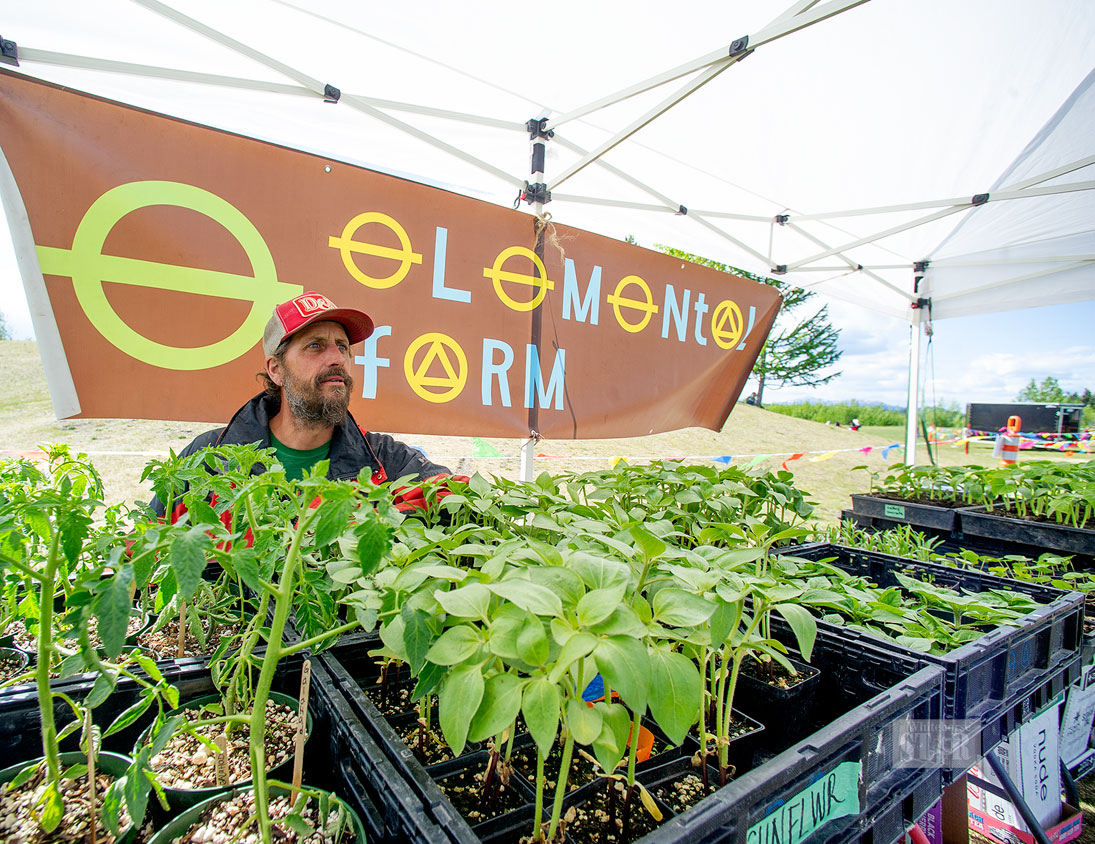
Bart Bounds of Elemental Farms told the Star last week.
“The run on seed for home growers kind of tapped out all of the seed.”
Bounds uses about $4,000 worth of seed every year on his 120-acre farm near the Takhini Hot Springs Road.
Thankfully, he ordered large quantities of seed last January before the pandemic and ensuing gardening craze hit the Yukon.
While he has enough stock to maintain his business, the shortage means he won’t be able to acquire the full complement of previous
years.
“There will be a few things I won’t have this year, because I couldn’t get seed, so that affects my business,” Bounds said.
This year, Elemental Farms couldn’t acquire seeds for bok choy, gold nugget tomatoes and Chioggia beets. Enough kale was available to
plant at the farm, but not enough to supply the demand for kale starters.
Starters are sapling plants that can be immediately transplanted into home gardens.
Bounds said there has been mounting demand for starters as well, because so many people are interested in growing food at home.
“This year, because I had limited seed, I had to hold back on vegetable starts,” Bounds said.
“If I had more vegetables, my starts would be doing awesome; that’s my hit for that.”
Bounds said he has spoken with other farmers who struggled to acquire seeds for the vegetable varieties that work best on their land.
For example, there is one variety of cucumber that works at Elemental Farm which Bounds discovered through the trial and error of 20
other varieties.
Even if cucumber seed is available generally, that doesn’t mean the correct variety will be available, Bounds explained.
He is also limited in his seed purchasing because he only uses certified organic, non-GMO, non-treated seed, which narrows the supply
field.
Apart from seeds, Bounds has seen a big shortage on peat moss, and has heard that local meat producers are struggling with supply
chain issues for animal feed.
More Yukoners are also raising chickens, causing supply issues in the local hatchery world.
He urged new gardeners to be conscientious about their seed usage and to utilize their supplies as well as they can.
“I get that people want to grow their own food and it’s great,” Bounds said.
“It’s just one of those things; with everybody suddenly doing it, we just don’t have the infrastructure and supply chain developed for that
massive increase.”
Lorne Metropolit, owner of Yukon Gardens, told the Star Tuesday his establishment has been extremely busy this spring.
“There’s a huge influx of new people trying to get into it; it’s so busy,” Metropolit said.
“Lots of questions; there’s been a lot of educating this year.”
Metropolit said it’s understandable that this season would be popular for gardening, since so many people are staying home with more
free time.
“It’s a reason to be outside, it gives you the pleasure sort of like catching a fish,” Metropolit said.
“The one you catch seems to taste better than the one someone gave you, especially if it’s a competitive fishing friend of yours.”
Metropolit said every garden centre in town has seen supply shortages and quick sell-outs this season.
Yukon Gardens has rapidly sold through potting soils, fertilizers, compost, shrubs, trees, flowers and vegetables.
“We only have so much greenhouse space, so that limits the amount we can grow,” Metropolit said.
The supply of flowers and vegetables that would usually stock the business for 11 to 12 weeks sold out in six weeks this spring, he said.
“Hindsight is worth a million dollars,” Metropolit said.
“I didn’t know what the season was going to be like, what this pandemic was going to do. To be on the safe side, we decided to cut back on the amount we seeded, and as a result, that was a bad choice.”
Metropolit said he realized too late that the season would boom with the influx of new gardeners.
“After we opened the doors it was like a whirlwind of customers; we started seeding rapidly, but it was too late,” Metropolit said.
Yukon Gardens opened for the season with 50 haskap berry bushes – enough to keep haskaps in stock for half a summer in a normal
year.
This year, the haskap bushes sold out in an hour.
Metropolit noted that Yukon garden centres compete with those in the rest of Canada when ordering plants and seeds, but northern
stores are at a disadvantage because of the late growing season.
Garden centres down south purchase their plants much earlier and often deplenish stock before orders can be placed for the Yukon, he
explained.
Now, most people have planted their gardens and business has calmed down at Yukon Gardens, though Metropolit’s remaining selection
of shrubs and trees are still selling well.
“I would expect the city to be the prettiest floral, horticultural presentation we’ve ever seen before,” Metropolit said.
“There’s so many people growing flowers and vegetables, we should have a very pretty city this year.”

Comments (4)
Up 11 Down 1
Donovan on Jun 23, 2020 at 8:18 am
Pre 1940 farmers NEVER ordered seeds. They made a point of raising a certain amount of plants for seeds. If you wanted to plant a new crop you traded seeds with other farmers.
George Washington fired his farm manager for buying seeds, it was just not the way things were done. Mt Vernon has seeds from 1776 that are still viable to this day. In 1942 the US and Canada were in the process of creating local seed banks. These banks were to hold enough seed to provide food for the entire community in case of a disaster or war. Then WWII started and the idea was never finished.
Every community should look into this. Every farmer should devote crops for seed only. I never could understand why farmers gave up 1000's of years of tradition for big seed companies.
Up 10 Down 0
iBrian on Jun 20, 2020 at 1:36 pm
I was surprised to read Bart doesn’t keep seeds. Has great eggs and nice conversation anytime we chat. Beautiful produce.
Up 19 Down 0
North_of_60 on Jun 19, 2020 at 11:31 pm
Don't discard unused seeds, they keep for years. Place the unused seeds in a ziplock bag and store them in the fridge.
Up 18 Down 6
Matthew on Jun 19, 2020 at 5:45 pm
Hmmm.. now if those seeds weren't patented and they were heirloom organic seeds, you'd be able to harvest for life! Not just 1 season.. yet another reason why chemical based agriculture and Monsanto is killing us off! There's a reason why Bayer bought Monsanto.. get it yet? LOL!