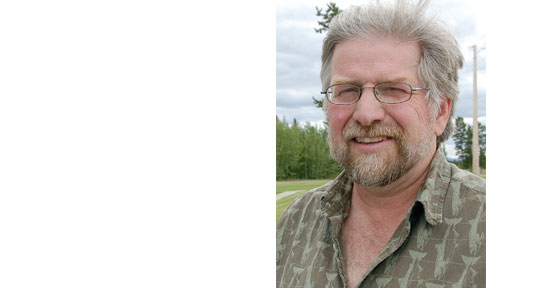
Photo by Whitehorse Star
Above: Sandy Johnston
Photo by Whitehorse Star
Above: Sandy Johnston
A noticeable decline in the number of female chinook returning in this summer's below-average salmon run up the Yukon River is even further cause for pause.
A noticeable decline in the number of female chinook returning in this summer's below-average salmon run up the Yukon River is even further cause for pause.
Sandy Johnston, a management biologist with the Department of Fisheries and Oceans, said Tuesday that 23 per cent of the fish caught so far in the test fishery below Dawson City have been female, compared to 17 per cent in the fish wheels.
"Those numbers are below average, but compared to the whole season, typically the larger females come in later in the run but right now those percentages are below what we would like to see," Johnston said.
Of the chinook salmon which reached the Whitehorse Fish Ladder last year, 39 per cent were female.
Johnston said the count at the Eagle sonar downriver from the Yukon-Alaska border was at 19,000 as of Tuesday, or well below the average of 45,000 at this point over the last three years.
The third and strongest pulse of chinook coming up the river is beginning to pass the Eagle sonar. But management officials are still not seeing the sonar numbers from the third pulse that they thought they would be by now, he said.
Johnston said the Eagle sonar has recorded between 1,200 and 1,600 chinook a day for the last four days.
"We are still expecting to see a little spike and hopefully it will be a long one, but that might be a little optimistic."
He said it's still estimated that a total of 30,000 to 35,000 chinook will pass by the Eagle sonar, substantially fewer than the minimum 45,000 Fisheries and Oceans would like to see on the spawning beds in the Yukon.
And there is still the salmon fishery at Eagle which harvests between 2,000 and 3,000 chinook annually, though restrictions have been imposed.
The commercial and sport fishery have been closed on the Yukon River this year.
First nations along the watershed have also been asked to limit their harvest to a total of 4,000 chinook, or about half of what the aboriginal food fishery would normally take.
Johnston said the third pulse of chinook should be past the Eagle sonar into the beginning of next week, providing a much clearer picture of the run strength.
Dismal returns along the Alsek River watershed, which includes the Tatshenshini and Klukshu rivers, has also forced the closure of the sport fishery there.
There is no commercial fishery on the drainage.
So few are the sockeye and chinook numbers that the Champagne and Aishihik First Nations issued an emergency order last week closing the aboriginal food fishery.
In order to encourage thoughtful and responsible discussion, website comments will not be visible until a moderator approves them. Please add comments judiciously and refrain from maligning any individual or institution. Read about our user comment and privacy policies.
Your name and email address are required before your comment is posted. Otherwise, your comment will not be posted.
Be the first to comment