Family tells of harrowing flight from fire
A week after they had to flee their home, a Fort McMurray, Alta. family is in Whitehorse, trying to recover from the traumatizing event.
By Pierre Chauvin on May 11, 2016
A week after they had to flee their home, a Fort McMurray, Alta. family is in Whitehorse, trying to recover from the traumatizing event.
“Right now, we’re still pretty wound up,” Jennifer Africa said Tuesday during an interview at her mother’s home in Whitehorse.
On May 3, an evacuation order forced 80,000 people to flee the city after a massive fire fuelled by dry conditions and high winds jumped the Atahabasca River, closing in on Fort McMurray.
It went on to destroy about 2,400 structures.
Jennifer and her husband, Henry, arrived in Whitehorse last Sunday evening. Their two children, Jonah, four, and Lyla, 16 months, had flown in two days earlier with their grandmother.
From the very first day, the family was amazed by the response from Yukoners.
“You go in a store, you say you’re from Fort Mac and they offer you discounts,” said Henry.
“People in town have been pretty generous.”
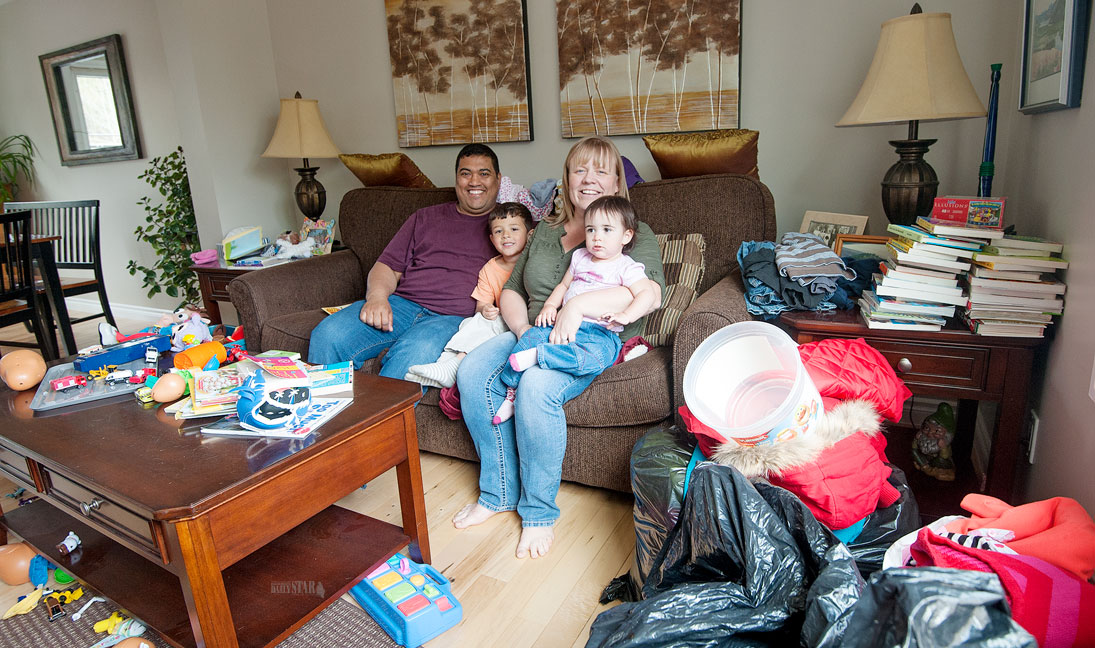
In the living room of her mother’s house, bags of clothes are piling up. Toys have taken over most of the living room floor.
All of it was donated, the couple said.
Like many who had to leave in a hurry, the couple didn’t have time to bring much with them.
A friend, Tammy Neunherz, helped organize donations through social media.
Throughout the country, more than $67 million has been donated to the Red Cross.
That’s on top of the goods sent to evacuation centres and random acts of kindness by strangers.
While driving though the burning city, Henry remembers seeing a man handing out water bottles to evacuees.
There’s also the Facebook group set up by victims of the 2011 fire that destroyed Slave Lake, Alta, offering advice.
“It’s about things you were not thinking about yet,” said Jennifer.
Things like taping your fridge and taking it to the dump if the town has been out of electricity for a while.
A traumatic event
May 3 started as a normal day for Jennifer. She was aware the fire was close to town.
It wasn’t anything unusual for Fort Mac – they had wildfires come close before.
“We didn’t think anything of it,” she said.
Around lunch time, she started getting calls at the school she works at.
Parents were starting to worry.
And within the next 30 minutes, everybody had to go home and get ready.
“I don’t think I took it seriously,” she said.
“I threw random clothes in back of the truck, grocery bags.”
She was first directed to evacuate through the north, but RCMP officers made her turn back and take the highway south out of the city.
“Driving through the city, there were ash and sparks, the side of the road was on fire,” she recalls.
“It was just like driving through a movie.”
It was only 4 p.m., but the sky was already dark because of the smoke.
Jennifer remembers following the tail lights in front of her, focusing on driving.
“I knew that if I started thinking about it, I was going to start crying and would not be able to drive.”
There were the sirens screaming, the vehicles honking, the helicopters flying overhead, her own children crying and the wind that wouldn’t stop blowing.
“I never want to experience something like that ever again,” she said.
Henry, who had to wait longer to leave the camp he worked at up north, remembers seeing abandoned burned-up vehicles along the road.
“The eeriest thing was a city transit bus right in the median of the highway, with signs still up – but abandoned,” he said.
After a harrowing 11-hour drive, twice what it usually takes, Jennifer arrived in Edmonton.
Henry arrived a couple of hours later.
Every second person in stores seemed to be from Fort McMurray, Jennifer said.
She recalls people buying pairs of socks and crying at the till.
“Why am I buying socks?” she said people asked themselves, as they just started to realize the size of the devastation.
Everywhere in the town, people were raising money for Fort McMurray.
“It’s very weird because … it’s us,” she said.
“You don’t ever think it’s gonna be you.”
Recovering
The family’s home is safe from what they could see on a security camera Henry checked.
“I can’t look (at the camera),” said Jennifer.
“If I turn it on and it’s not there ... I can’t,” she said, trailing.
Many families were not as lucky as them.
Jonah asked about his birthday, which is coming up in June.
“From his birthday list, four of the families have lost their homes,” Jennifer said.
At least the kids have been able to enjoy their stay so far.
“They think they’re just on a big adventure at Grandma’s,” said Jennifer.
For the adults, it was a bit more stressful with every newscast adding more tension.
Eventually, Jennifer dialed down on her news intake, as TV networks looped footage of burned-down homes.
From that traumatizing event, the family has one piece of advice to give: be prepared.
“Pack an emergency kit,” said Henry.
Passports, hard drives, medicines, some non-perishable food.
It’s the last thing you’ll be worrying about when rushing out the door, they said.
Be the first to comment