Photo by Vince Fedoroff
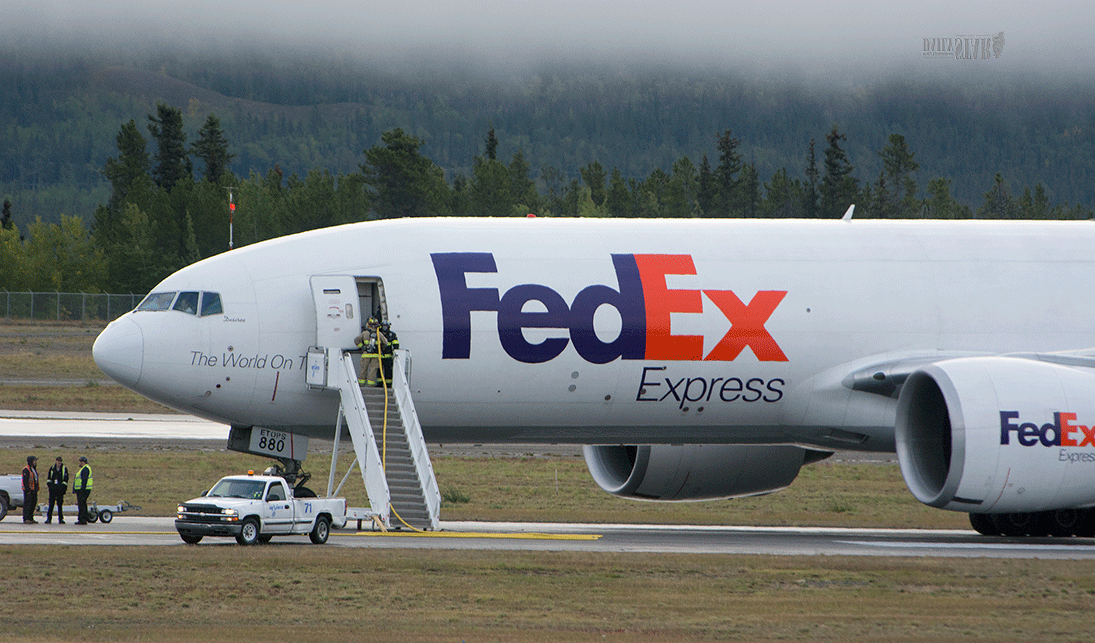
TAKING A LOOK – Airport firefighters inspect the FedEx cargo aircraft for problems this morning while it remained parked on the main runway for over an hour following an emergency landing.
Photo by Vince Fedoroff
TAKING A LOOK – Airport firefighters inspect the FedEx cargo aircraft for problems this morning while it remained parked on the main runway for over an hour following an emergency landing.
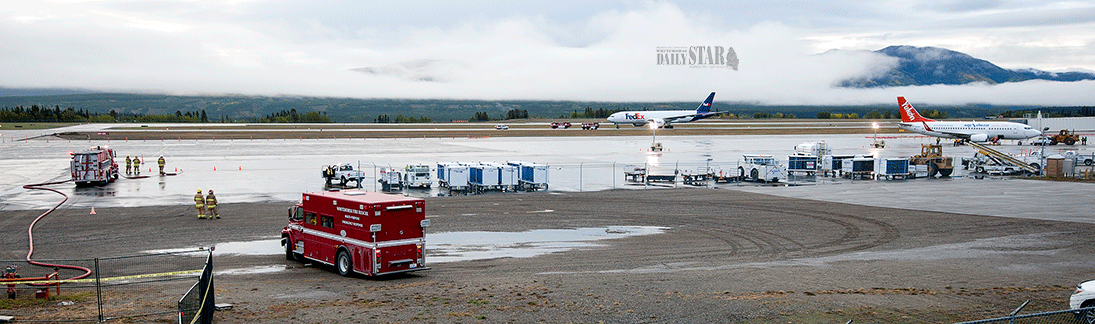
Photo by Vince Fedoroff
SHUT DOWN – The Erik Nielsen Whitehorse International Airport was closed down for two hours this morning after an emergency landing by a FedEx Boeing 777 cargo aircraft bound for Anchorage.
An emergency landing at 8:05 this morning by a FedEx cargo plane shut down the Erik Nielsen Whitehorse International Airport for two hours.
An emergency landing at 8:05 this morning by a FedEx cargo plane shut down the Erik Nielsen Whitehorse International Airport for two hours.
A FedEx representative notified the air manager at 7:25 of a possible emergency aboard the Boeing 777.
“The airport manager activated the emergency co-ordination centre at 7:26 and the airport emergency fire crews responded immediately and were staged for the plane’s arrival at 8:05,” airport spokeswoman Doris Wurfbaum said this morning.
“The Boeing 777 Federal Express landed without incident.”
While airport firefighters and their two foam trucks were parked in front of the terminal awaiting touchdown, city fire crews stood by on the tarmac for backup with a pumper truck and a water tanker, along with the rescue truck.
Neither Wurfbaum nor FedEx will confirm the exact nature of the emergency, though the Star understands it was related to a fire onboard, or an indication of a fire.
The same situation happened in May 2013, when a Japanese Boeing 747 cargo plane made an emergency landing in Whitehorse after an indicator in the cockpit was showing a fire in the cargo bay.
It was determined afterwards upon inspection by airport firefighters that there never was a fire.
This morning’s Boeing 777 landed from the south with a slight tailwind and came to halt on the main runway in front of the terminal.
The two airport foam trucks immediately drove to the aircraft and took up positions about 40 metres in front of the nose, one on each side, at about one o’clock and 11 o’clock.
For approximately one hour and 15 minutes, the cargo plane sat on the main runway while airport firefighters investigated the aircraft. It taxied off to the apron north of the terminal, following the inspection.
“We had to make sure everything was A-OK before taxiing the plane closer to the terminal,” Wurfbaum explained.
The emergency closed down all three runways from 7:26 to 9:25, until the 777 was parked safely on the apron, with the two foam trucks again taking up positions about 40 metres in front of the nose, at one and 11 o’clock.
The Air North flight scheduled to depart for Vancouver at 8 a.m. took off at about 9:33.
Wurfbaum said the Yukon government does not have a record of how many flights were delayed – commercial or private – as that information would have to come from NavCan. NavCan could not be reached late this morning.
Wurfbaum did confirm no inbound flights had to be turned around or diverted to other airports or landing strips as a result of the emergency.
The government is not releasing the details surrounding the emergency declaration at this point, not until a full report is available, Wurfbaum said.
FedEx spokesman Bonny Harrison said this morning by email the company is not speculating on the cause of the incident.
“We had to divert the plane due to technical issues in flight, and it landed safely at the nearest airport,” Harrison said.
“Everyone on board is safe, and our mechanics are currently assessing the incident. We are co-operating with the authorities in the investigation.”
Harrison said the flight was headed to Anchorage from Memphis, Tenn., when the issue arose.
The company is making arrangements to have the cargo continue on to Anchorage to its final delivery.
The Ted Stevens Anchorage International Airport is a central hub and fuelling station for cargo delivery around the world.
As a result, it handles several hundred wide-body cargo aircraft every week.
In order to encourage thoughtful and responsible discussion, website comments will not be visible until a moderator approves them. Please add comments judiciously and refrain from maligning any individual or institution. Read about our user comment and privacy policies.
Your name and email address are required before your comment is posted. Otherwise, your comment will not be posted.
Be the first to comment