Education program changes jeopardize two jobs
The Department of Education is making changes to the whole child program run out of Whitehorse Elementary School, to the dismay of the program's longtime outreach worker.
By Ainslie Cruickshank on May 8, 2013
The Department of Education is making changes to the whole child program run out of Whitehorse Elementary School, to the dismay of the program's longtime outreach worker.
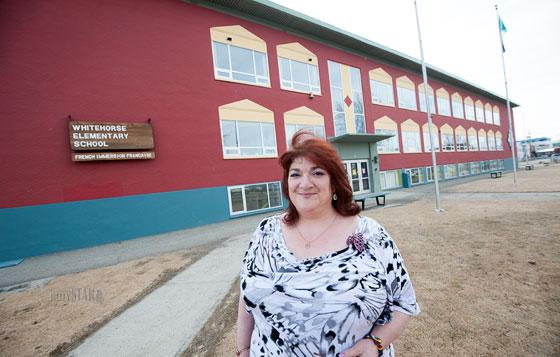
Barbara Curtis has been part of the whole child program since it began in 2001. Initially, she was a participant, then a volunteer, and now, for the past nine years, she has been the outreach worker.
But her job is in jeopardy, as is that of her executive director, Crystal Pearl-Hodgins.
Pearl-Hodgins, a teacher by trade, has been a driving force behind the whole child program since the beginning, but she'll be returned to full-time teaching for the new school year.
Education Minister Scott Kent explained Tuesday afternoon that the changes are being implemented to place a dedicated co-ordinator at each participating school.
Currently, the program is only fully implemented at Whitehorse Elementary. Two satellite schools, Elijah Smith and Selkirk Elementary Schools, have been involved since 2006 and 2011 respectively, but to a lesser degree.
With the changes, the Department of Education wants to see the program running fully at four schools, with Takhini Elementary possibly holding the fourth spot as long as the school community is supportive.
Valerie Royle, Education's deputy minister, said this morning that following a review of the program, the department concluded a teacher's skill set is unnecessary for its success.
Instead, co-ordinators are needed, with time dedicated at each participating school, in order to build relationships with students and families at each of the schools, as they have at Whitehorse Elementary.
How it will work specifically is up to the program's volunteer board of directors, said Royle.
The department made it clear to the board that Pearl-Hodgins will be returned to the classroom full-time, and that the program must be fully implemented in four schools.
Now they are waiting for the board to submit a proposal outlining how they plan to do it.
Last year, the program had a budget of about $100,000 for programming and Pearl-Hodgins' salary was paid by the department out of a separate budget.
With Pearl-Hodgins returned to teaching, Royle said the department is willing to provide up to $200,000, close to what was spent last year between Pearl-Hodgins' salary and programming funds.
Co-ordinators, she noted, won't require the same salary as a qualified teacher.
The whole child program aims to improve the overall well-being of students and families. It does this in a variety of ways. Probably its most well-known programs are weekly activity nights for families.
During these evenings, families can participate in cooking classes, crafts, or play in the gym.
Workshops are also offered on various topics, including talking to your kids about sex.
But Curtis said Tuesday that the activity evenings are just the tip of the iceberg; they provide an opportunity to build connections with families and students who may need a little extra support in a non-threatening environment.
The substance of the program comes once these connections are formed and the staff are able to offer tailored support to those families.
That could mean connecting families with other social services offered in the community, or simply checking in every now and then to talk about on going struggles.
As a single mother of three boys who started out as a participant, Curtis can attest to the program's importance.
But with changes to the Whitehorse Elementary program imminent, she fears for the relationships she and Pearl-Hodgins spent a decade building.
Curtis is also concerned about the new co-ordinator roles and the skills the department envisions they'll require.
She wouldn't want a "pencil pusher” offering support to families in need, she explained.
Royle noted that decisions concerning hiring, job descriptions, and required skills will ultimately fall to the volunteer board.
Curtis also warned against attempting to implement a carbon-copy of Whitehorse Elementary's whole child program at the three other schools.
The needs may vary, like they do for individual families, she noted.
She suggested a needs assessment should be completed like it was when the whole child program kicked off at Whitehorse Elementary.
The official Opposition raised the issue of changes to the program during Tuesday's question period in the legislature.
"There is a conflict between volunteer whole child advocates and the Department of Education over the direction of the program,” said NDP Leader Liz Hanson.
"The department is implementing its plan and ignoring the pleas of the volunteer board of directors. Will the minister meet with the society, listen to their concerns and ensure that the voices of the whole child advocates are heard with regard to any decisions about the whole child program?”
Kent responded that the "Department of Education, as well as the principals — the administrators, the leaders — of those schools at Selkirk, Elijah Smith and Whitehorse Elementary do not believe that the position requires a teacher skill set, as it is a co-ordinating role, rather than a role focused on instruction.
"What we are looking to do is have dedicated program co-ordinators for each of the four school communities and to work with the whole child program's volunteer board of directors toward even greater success for the students who access this program.”
Kent also noted he finds the NDP's concern interesting considering it was only a few months back that the party's Education critic, Jim Tredger, was asking him to return centrally assigned teachers to the classroom – part of what they're doing here.
Be the first to comment