Photo by Vince Fedoroff
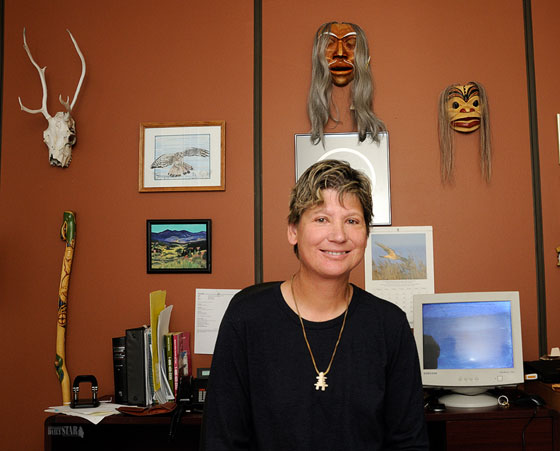
SOBERING ASSIGNMENTS – Laura Cabott and the four other lawyers in her Whitehorse law firm are dealing with residential school files across the Yukon, B.C., the N.W.T. and Nunavut.
Photo by Vince Fedoroff
SOBERING ASSIGNMENTS – Laura Cabott and the four other lawyers in her Whitehorse law firm are dealing with residential school files across the Yukon, B.C., the N.W.T. and Nunavut.
The Sept. 19 deadline to file claims related to abuse suffered at Indian residential school is concrete, says Whitehorse lawyer Laura Cabott.
The Sept. 19 deadline to file claims related to abuse suffered at Indian residential school is concrete, says Whitehorse lawyer Laura Cabott.
If former students miss the deadline, Cabott explained recently, the only way they'll be able to file after Sept. 19 is to go before a judge and convince him or her that they should be permitted to file late.
And even then, the reasons for missing the deadline would have to be of a very serious nature, she said.
According to Cabott, simply saying you didn't have time or couldn't have been bothered wouldn't cut it. Nor would an argument you weren't going to let anybody dictate a deadline to file a claim for the abuse you suffered.
Perhaps, she explained, a judge might accept an argument the abuse was so severe that you were still too emotionally unstable to deal with the matter, though there are no guarantees.
"So I would not rely on that,” she said. "If people have any questions, if they are not sure if they have a claim or not, phone a lawyer and get some free advice to see if you do.”
Cabott emphasized the Sept. 19 deadline was agreed to by all parties to the Sept. 19, 2007 Settlement Agreement. That pact established the process of reconciliation and compensation for former students of residential schools.
The initial deadline of Sept. 19, 2011 was to file a claim under the provisions of what is known as the Common Experience Payment.
Compensation under that provision was provided to all students who attended residential school – abused or not – with each student receiving $10,000 for the first year and $3,000 for each year after.
Students eligible for the Common Experience Payment but did not file a claim can still file up until this Sept. 19.
They too, however, would have to prove they were unable to file by last year's deadline, according to information provided by the federal government.
The pending Sept. 19 deadline is for students who suffered sexual or physical abuse causing severe injuries, whether the abuse was inflicted by a staff member of a residential school or another student, Cabott explained.
She said the compensation provision under what is known as the Independent Assessment Process ranges from zero to $290,000. It depends on the degree of abuse and the impact on the individual's life.
The Independent Assessment Process also provides an avenue to seek higher compensation in extreme cases, she said.
Cabott said she and the four other lawyers in her firm are dealing with residential school files across the Yukon, B.C., the N.W.T. and Nunavut.
New clients have been walking in the door daily, and its been busier than usual for the past three weeks. She expects it will stay that way until 11:59 p.m. Sept. 19.
Cabott pointed out victims do not have to retain a lawyer to file a claim, and the claim forms can be found online.
The forms, however, are 20 pages long, and while she personally would recommend using a lawyer, it's not essential, she said.
The important thing right now, she added, is to get the claim in. If there are any problems, such as more information required, there's still a period to handle those matters following the deadline.
Cabott said she's certain there will be victims of residential school abuse who will miss the deadline, either by choice or circumstance.
She believes, however, the Yukon is ahead of its sister territories in terms of the percentage of eligible claims filed.
Federal government statistics indicate settlements in the Common Experience Payment process have been reached with 98 per cent of the 80,000 or so former students eligible across Canada, with a total payout of $1.6 billion.
Federal spokeswoman Michelle Perron of Indian and Northern Affairs said last week a total of 1,455 former students in the Yukon have received a combined total of $33.6 million, or an average of $23,092 each.
Yukon statistics are not yet available for the Independent Assessment Process, she said.
Nationally, however, Ottawa is expecting close to 30,000 claims under the Independent Assessment Process, 16,097 of which have been settled, with $1.6 billion paid out so far, according to federal statistics.
On June 11, 2008, Prime Minister Stephen Harper apologized to the students and the nation for more than a century of Indian residential schools.
They were the cornerstone of the government's desire to erase aboriginal culture and assimilate First Nation citizens into the "dominate” culture, Harper said in his apology.
They were, conceded the prime minister, a horrendous mistake.
Under residential school policy, the federal government removed school-aged aboriginal children from their homes and forced them to live their formative years away from their parents, other family members and their communities.
The volume of stories of abuse and the loss of identity suffered by students are huge.
In order to encourage thoughtful and responsible discussion, website comments will not be visible until a moderator approves them. Please add comments judiciously and refrain from maligning any individual or institution. Read about our user comment and privacy policies.
Your name and email address are required before your comment is posted. Otherwise, your comment will not be posted.
Comments (1)
Up 0 Down 0
Happy Paws on Sep 14, 2012 at 9:05 am
Correct me if I'm wrong but... Didn't a lot of money already be paid to the victims years ago?