Photo by Photo Submitted
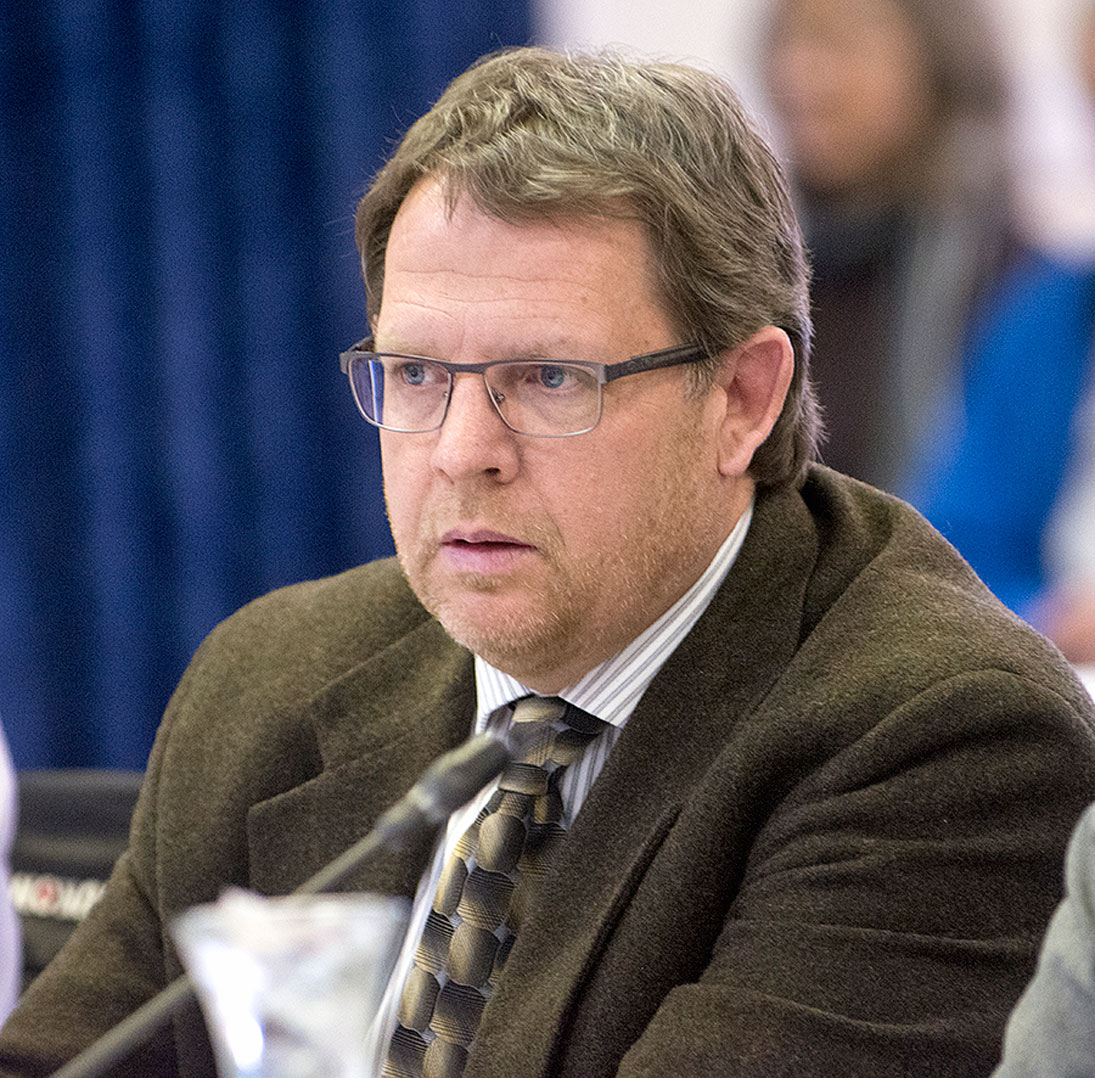
PARTNERSHIP CRITICAL – Alexco president Brad Thrall says having the Little Salmon-Carmacks First Nations’ involvement in the Mount Nansen reclamation project is crucial.
Photo by Photo Submitted
PARTNERSHIP CRITICAL – Alexco president Brad Thrall says having the Little Salmon-Carmacks First Nations’ involvement in the Mount Nansen reclamation project is crucial.
The Yukon Supreme Court has approved an agreement that will kick start the cleanup and remediation at the Mount Nansen gold mine.
The Yukon Supreme Court has approved an agreement that will kick start the cleanup and remediation at the Mount Nansen gold mine.
Justice Ron Veale on Monday approved the arrangement recommended by PricewaterhouseCoopers, the receiver in the bankruptcy proceedings involving B.Y.G. Natural Resources. B.Y.G. abandoned the mine site in 1999.
The team of Alexco Resource and JDS Energy and Mining has been selected to purchase B.Y.G.’s assets and conduct the reclamation of Mount Nansen, to be paid for by the federal government.
Ottawa currently estimates the cost of the work at $110 million over a period of 12 years.
The price Alexco and JDS are paying for the assets that include existing mineral claims is being kept confidential, as it is deemed to be private business information.
The arrangement has the support of the Yukon government and the Little Salmon-Carmacks First Nation, Jeff Mackey, a senior federal official, explained in an interview Tuesday.
Mackey explained the 12-year clock is likely to begin late this year or early in 2020, once the new water licence has been issued for ongoing care and maintenance of the site.
The Yukon government has secured a favourable recommendation for the care and maintenance plan from the Yukon Environmental and Socio-economic Assessment Board, he explained.
Mackey said the next step is to go forward with an application to the water board for an updated care and maintenance water licence, which they anticipate they’ll have by the end of the year or early next.
Once the water licence has been issued, Alexco/JDS will take over the site and the clock begins, he explained.
Mackey said the agreement anticipates it will take the Alexco/JDS team four years to develop a formal reclamation and closure plan, have it approved and permitted by the water board.
It’s expected the actual construction work of reclaiming the site and removing all the buildings will take three years, to be followed by five years of monitoring and tweaking if necessary, he explained.
Mackey said the objective at the end of the 12 years is to achieve a degree of reclamation that requires very little monitoring.
There is no expectation they’ll ever be able to walk away and wash their hands of Mount Nansen, though the objective is to get as close to that as possible, he explained.
Mackey said the federal government has already spent an estimated $40 million looking after Mount Nansen since it was declared abandoned in 1999, and advancing the reclamation discussion.
“The Alexco/JDS Proposal includes a variety of project opportunities for participation and benefits for LSCFN citizens and businesses, as well as, other Yukon citizens and businesses,” reads the receiver’s report to Justice Veale.
“LSCFN provided a strong letter of support for the Alexco/JDS Proposal.”
Alexco president Brad Thrall explained Tuesday they will have a benefit agreement in place with the First Nation.
“It’s critical they have meaningful participation and involvement all the way along,” he said.
Thrall said the partnership Alexco formed with governments and the First Nation of Nacho Nyak Dun to conduct the reclamation of the Keno Hill Silver District is a proven success, and continues to advance.
Over the last eight to 10 years, it has resulted in significant savings to the taxpayer because the company is incentivized to work smart, he said.
“It’s a great model.”
The remediation plan for the Keno Hill district is currently under review by the assessment board and is out for public input.
Thrall said comparatively speaking, the Mount Nansen project is much less involved than Keno Hill or the mammoth Faro cleanup.
During the construction phase, he expects employment will top out at between 25 and 35 seasonal jobs, including heavy equipment operators.
In addition to moving the tailings to the open pit and dismantling the tailings dam and moving the material to the open pit, there are a handful of buildings that need to be taken down, such as the old mill, he explained.
Thrall said there are also tasks such as reclaiming the valley below the dam.
Under the scope of work companies were to base their reclamation proposals on, it was estimated there is approximately 750,000 cubic metres of tailings, waste rock and other material to be relocated – equivalent to 75,000 loads of a regular tandem dump truck.
Mount Nansen is classified as a Type II mine site, as it was approved and permitted by the federal government and eventually abandoned, leaving Ottawa on the hook for the cost of reclaiming the site. United Keno, Faro, Clinton Creek and others are also classified as Type IIs.
Of all the Type II sites, United Keno and Mount Nansen are the only ones moving forward with an official reclamation target.
While tens of millions have been spent looking after the Faro lead-zinc site over the last 20 years, for instance, a reclamation plan has still not been developed, though efforts to care for and improve the site are ongoing.
In order to encourage thoughtful and responsible discussion, website comments will not be visible until a moderator approves them. Please add comments judiciously and refrain from maligning any individual or institution. Read about our user comment and privacy policies.
Your name and email address are required before your comment is posted. Otherwise, your comment will not be posted.
Comments (4)
Up 7 Down 1
Frank Michigan on May 10, 2019 at 7:59 pm
Mining is a tough business. You have to find funding and get government approval. You then have to pay skilled labour good money and you have to deal with world markets. When the markets are down or the ore is scarce it's cost effective to take the profits and run away. The Canadian taxpayers will then pay top dollar to clean up the mess. If mining companies has shadow cleanup companies they would make a fortune by mining and taking the profit then being paid to cleanup the mess they created.
Up 7 Down 2
Politico on May 9, 2019 at 1:05 pm
@My Opinion - That's a bit of false equivalency. Comparing a small oil spill to the Cyprus Anvil Mine or the Giant Mine is a big stretch. The contamination left by these projects actually affects the health of the land, animals and people the around them. After promising wealth and prosperity the companies run and leave the tax payer to clean up the site. Actually it's lots of wealth and prosperity to the outside companies that come in to clean the sites up.
Up 12 Down 5
My Opinion on May 8, 2019 at 9:48 pm
@ Politico
What this is all caused by is creating an industry to solve a perceived problem.
Have a bit of fuel spill at the fuel tank by your house and you will get to see how it works. You will be visited by Fire dept, Police, Dept of Environment, Fisheries if it gets in the storm sewer. Then comes the cleanup specialists, Engineers, Remediation. It's nuts. It is only a big deal because these guys have told us it is and they will fix it for us at our expense. In ten years we will have no industry or revenues. Everyone cannot exists without value added money in the economy. We are doomed.
Up 16 Down 23
Politico on May 8, 2019 at 4:09 pm
Another tax payer sink hole brought to you by the miners of the Yukon. Thank you Sampson and the Yukon Chamber of Mines.