Compost goes on sale for the season Saturday
Spring is in the air, especially if you visit the city's compost facility at the landfill.
By Stephanie Waddell on April 20, 2011
Spring is in the air, especially if you visit the city's compost facility at the landfill.
On Saturday, the city will begin selling compost for the season at $5 for a 25-lb. bag, essentially returning what residents threw away to now be planted in their gardens.
The city has 3,000 bags available for the summer.
"We've hit another milestone today (with composting),” Mayor Bev Buckway told reporters gathered at the facility Tuesday afternoon.
She pointed to the new building which will see city crews store and bag compost inside through the winter months.
"It allows us to focus on compost quality,” Buckway said, noting the $400,000 for the facility is coming out of the city's portion of the federal gas tax.
Inside, the building is still unfinished. As technologist Dan Jordan pointed out, however, the smaller space in the front will mean space for offices, washrooms and possibly eventually selling compost from.
The larger warehouse-type space beyond the entrance will serve as a space to store equipment with a containment area for compost and will allow staff to bag it through the colder months so it's ready to be sold next summer.
On Tuesday, staff were busy showing off the multi-purpose bagger which can bag up to 100 bags in an hour.
Last year marked the city's first year of compost sales with at least one lesson learned.
As public works manager Dave Muir pointed out, this year the city will be selling the compost in recycled plastic bags rather than the reusable burlap sacks used last year.
The burlap was found to break down a little too fast with some purchasers, including the mayor, having the bags break open on the way home from the landfill.
While staff get ready for their second season of selling compost, they are also starting to keep a closer eye on what residents are putting in their green bins to be collected for the compost heap.
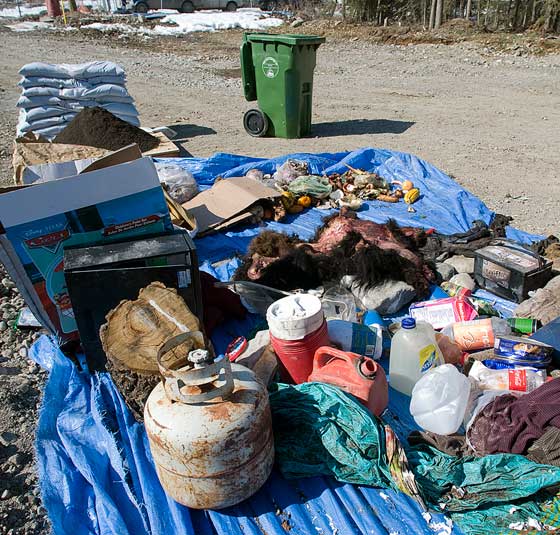
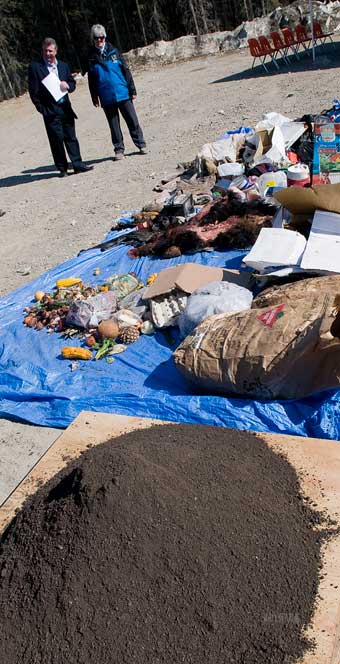
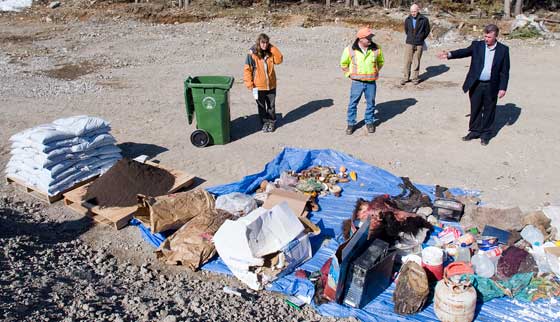
A propeller, propane tank, computer, plastic bottles and cardboard were among the non-compostable items crews have discovered in the compost and had on display Tuesday during the news conference.
Muir noted the city is attempting first to educate the public on what can go into the green bins, which are collected every two weeks.
As he pointed out, looking at some of the recyclables placed in the compost bins, some may be confused between the Blue Box programs of down south and the city's composting program.
For now, staff who drive the truck collecting the compost are keeping a close eye and taking notes when they see a bin dumping non-compost material into the truck.
Such material takes a toll on equipment – with the city having 18 tire replacements last year – and on staff who end up spending their time sorting through the material and further having to sort through the non-compostable goods, placing them in the right part of the landfill or sending them out for recycling.
The city has yet to send out any warnings, but environmental co-ordinator Sabine Schweiger noted the city is looking into how other jurisdictions handle such situations.
Information on what can go into the green bin is available on the city's website (www.whitehorse.ca) or through the compost/garbage collection schedule sent to residences on the city schedule.
Muir also noted if there are residents still wondering whether something should be thrown in the garbage or compost, they are also encouraged to call the city to find out.



Comments (2)
Up 0 Down 0
M. Peltier on Apr 20, 2011 at 6:22 pm
Lets hope that nobody is foolish enough to use that contaminated compost for growing food.
Up 0 Down 0
Bruce Fast on Apr 20, 2011 at 10:19 am
Before the green bins, people had to bag their compost in see-through bags. This allowed the garbage truck operators to see that they were doing it right. In the new bins there is no double-checks. People are shockingly bad at figuring out what rots and what doesn't.
I suggest that spot checks of the green bins be done during each delivery. If the bin is full of non-compostables, I propose that it be left with a note, and flagged as a problem bin. If the owner can't get it right, maybe a fine needs to be levied.
Without monitoring and enforcement, people will not get it right!