Best argument for sovereignty is northerners, senator says
Best argument for sovereignty is northerners, senator says
By Jason Unrau on June 9, 2008
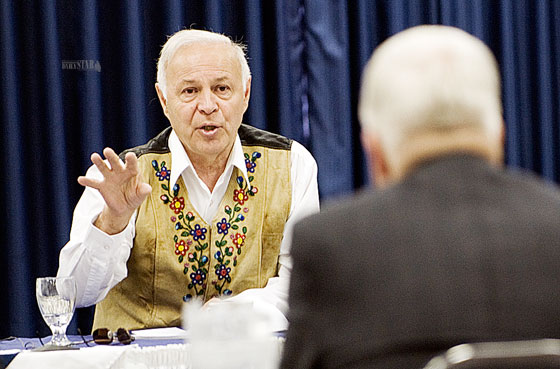
People living in the North are Canada's best argument for sovereignty, Northwest Territories Sen. Nick Sibbeston said Friday during a break in the Standing Senate Committee on Energy, the Environment and Natural Resources hearings in Whitehorse.
Hearings, which focused on future energy needs and the impacts of global warming on northern communities, began in Yellowknife June 1.
As shrinking polar ice could open international shipping lanes in the Far North, Canada's claim to the Arctic archipelago has been under attack from countries around the circumpolar region.
"Too often, government people from the South want to impose decisions on the North; they want to build ports and army bases and that's their perspective," said Sibbeston.
"As ice recedes, and control of the (Northwest) passage is questioned, they should recognize that people living in the North is the number one reason why these lands and waters are sovereign."
As melting permafrost continues to compromise road and building integrity across the North, and some coastal communities are under pressure from shoreline erosion, it is estimated that billions of dollars will have to be invested to mitigate impacts of climate change.
As one of two senators representing the northern territories (the Yukon's Senate seat remains vacant after Ione Christensen retired in December 2006), Sibbeston will have to make the case that these investments are crucial.
"Whatever (the government does), recognize that people live here, it's their home and they have aspirations and feelings just like other Canadians," said Sibbeston.
He criticized both Liberal Leader Stephane Dion and Prime Minister Stephen Harper for their promises to spend on ports, ice breakers and more search planes.
"Dion's promise of two more search planes for the North, really mean nothing for people here."
While energy demands and energy projects, like the competing and as-yet-unbuilt Alaska and Mackenzie Valley gas pipelines, were discussed, Sibbeston talked in broader terms about the importance of other resource developments.
A staunch critic of Nahanni National Park expansion, which could increase its size sevenfold, again Sibbeston blamed southern mentalities.
"Parks are for people in the South, they're not for people in the North... parks officials treat them like their own little fiefdoms and really discourage local people from going into the parks," he said.
"My uncle used to say you can look at a beautiful mountain for so long and then you become hungry so you need food, so you have to have access to resources and what parks do is take away land from people's use.
"As the people in the Deh Cho, the Dene people, as they (settle their land claim) and are more able to develop the resources, they will want to have access to the resources so they can use them for themselves, so they can make money ... kids (there) aren't being educated to go hunting and trapping anymore; kids are just like kids everywhere else; they're into computers, all the technology and people want to drive nice trucks.
"And how do you get that? You get that by development, by working at mines and (associated employment), so we foreclose the possibility
of having development in those areas when we make a park."
Sibbeston is frustrated that after aboriginal people fought so long for control of the land, that now they're just going "to give it away to Parks Canada.
"I don't think it's right, so before the park lines are made, let's know the resources that are there."
Be the first to comment