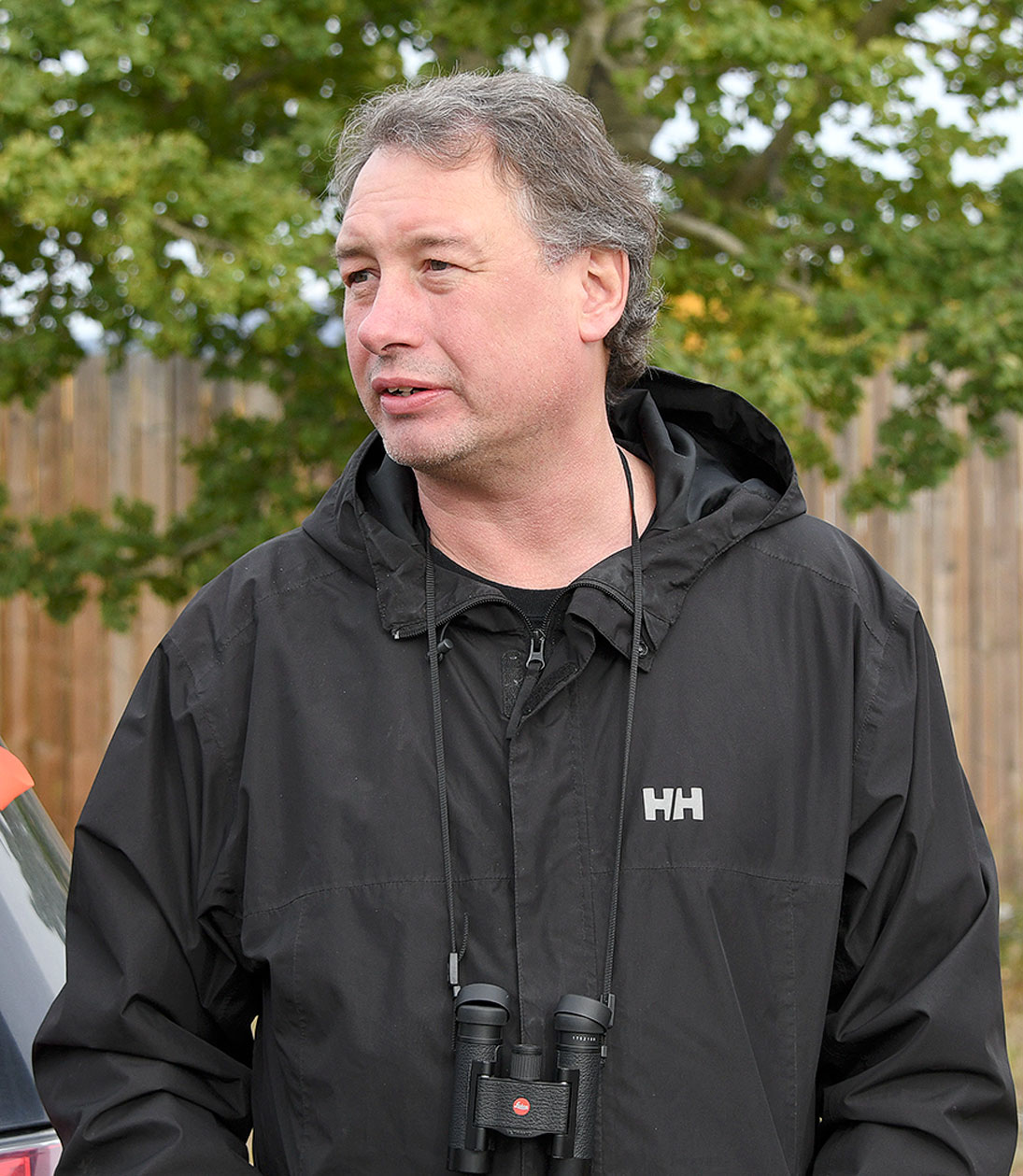
Photo by Whitehorse Star
Tom Jung
Photo by Whitehorse Star
Tom Jung
Growth of the Aishihik bison herd is down to a minimum or maybe nothing at all, says senior wildlife biologist Tom Jung.
Growth of the Aishihik bison herd is down to a minimum or maybe nothing at all, says senior wildlife biologist Tom Jung.
Jung said this morning the census conducted last July showed a minimum growth from the 2014 count.
With last winter’s record harvest, he suspects there was very little growth in the past year, he told the Star.
Jung said the number of adults counted in July 2016 was at 1,258, compared to 1,192 in July 2014.
Statistically, the estimate of 1,258 could vary to a low of 1,120 or to a high of 1,434, he explained.
Jung said they don’t include calves in the census because of the variability in the amount of mortality expected.
If the calves estimate for the summer of 2016 was included, the total population would be up around 1,566, he said.
The bison management plan adopted in 2012 calls for the herd to be managed at 1,000 adults, though the government had originally called for a ceiling of 500 in the 1990s.
But without any hunting allowed at the time, and with no natural predators, the population shot up beyond the 500 mark.
“My suspicions based on the data for the last few years is very little growth if any at all,” Jung said. “In fact, there may have been a slight reduction.”
Hunting opportunities have been liberalized in recent years to increase the harvest levels to try to keep growth in check and perhaps even bring down the population closer to the target established in the management plan.
Jung pointed out last season’s harvest was at a record high of 201 bison. It was not only the largest, but the ratio of cows taken was a hair below 50 per cent, which contributes substantially to the cap on growth, he said.
The recent practice was to count the population every two years, using a mark and re-sight method.
Jung explains the method involves marking the bison with paintballs from helicopters, and then having crews do two or three separate counts over the next few days of marked and unmarked animals to arrive at the mathematical estimate.
The work needs to be done in June or July, when the entire population congregates in two or three groups up high in the mountains, likely to escape the bugs and take advantage of cooler temperatures, he said.
Jung said last month, however, they were able to take advantage of an Alaskan initiative involving an aerial photo census.
The Alaskan team – the same team that does the aerial photo counts of the Porcupine caribou herd while its on the calving grounds along the North Slope – wanted to try out its new aerial photographic gear, he pointed out.
Jung said they also wanted to conduct aerial counts of the three bison herds in Alaska as well as the Aishihik herd.
It’s the first time he knows of that aerial photos have been used to census woodland bison, he said.
Jung said the information will be a while in coming, as they probably won’t even get the raw photos until later this fall.
But having the aerial photo count will provide a valuable comparison to the mark and re-sight method, he said.
“It will give us a sense of whether our methods are working or not.”
Jung said the aerial photo is also less stressful for the animals because the aircraft fly at higher altitudes and do not have to get low to the bison as you do with the paintballing method.
The bison management plan is up for review and renewal, he pointed out.
Jung said included in the work to be done by the bison technical team that involves representation from the Yukon government and First Nations is revisiting the management target of 1,000 adults.
The intent is to have a new management plan by the end of 2018, he said.
In order to encourage thoughtful and responsible discussion, website comments will not be visible until a moderator approves them. Please add comments judiciously and refrain from maligning any individual or institution. Read about our user comment and privacy policies.
Your name and email address are required before your comment is posted. Otherwise, your comment will not be posted.
Comments (2)
Up 1 Down 0
Mike Grieco on Jul 27, 2017 at 9:49 pm
D.O.E. has learned that killing female bison will keep the population from growing. And that folks is lesson 101....and from the lives' of bison, make work project(s) grow.
Up 8 Down 5
Kraka on Jul 24, 2017 at 4:47 pm
This just in, Jung and his group at Environment have no clue how many Bison are there. It is always a best guess and you know what that means "very little growth if any at all".