‘A place to rest and rehabilitate and be happy'
The Sled Dog Rescue Sanctuary is the first of its kind in Whitehorse;
By Max Leighton on September 2, 2011
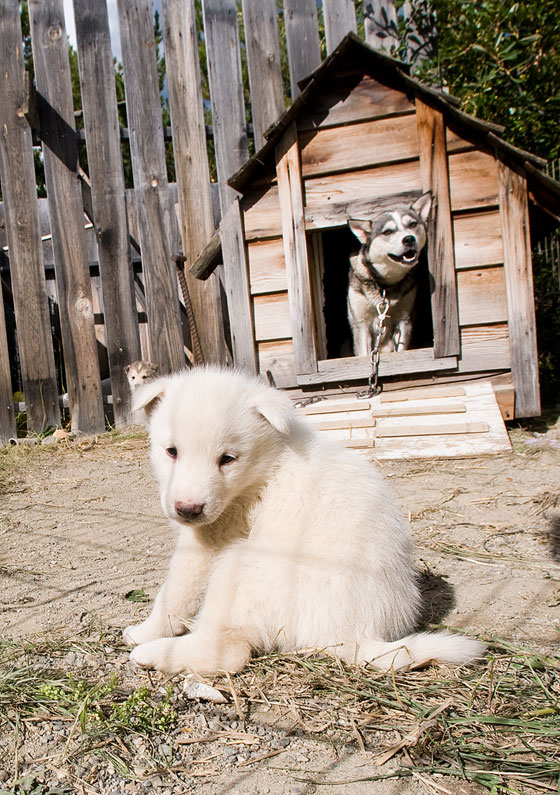
The Sled Dog Rescue Sanctuary is the first of its kind in Whitehorse; a facility where a group of rescued dogs with no other place to go can live, learn to interact and hopefully one day find a new owner who can offer them the care they have gone without their whole lives.
The facility is at the end of a winding gravel road in the Golden Horn subdivision, about fifteen minutes south of downtown Whitehorse.
The sanctuary, run by former competitive dog sled racer Cristy Willett, acts as a rehabilitation and adoption centre for former sled dogs, many of which have suffered abuse or abandonment.
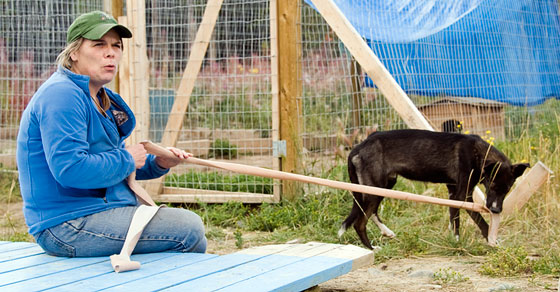
Willett has many roles at the facility, acting as executive director, manager, construction worker and adoption agent. Her only regular support comes from her seven-year-old daughter Clara-Marie, who helps to feed and work the dogs when she is not in school, as well as from her friend Kelly MaGill, another dog trainer who drops in periodically to work with some of the dogs.
The shelter opened officially in June and is now home to 35 dogs, 11 of which were rescued by Willett herself. She estimates that she has invested about $15,000 of her own money in the dog shelter.
"I wanted to do something for the dogs that other people were not doing,” said Willett. "It's called a sanctuary, it's a place to rest and rehabilitate and be happy. You look at them and they are all relaxed, they are doing well here.”
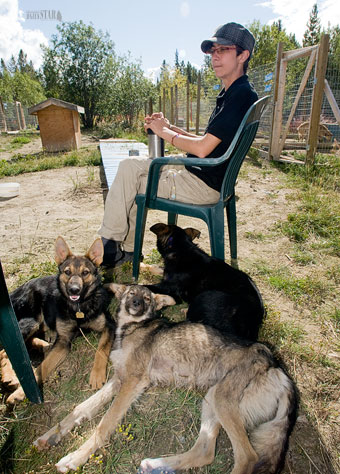
The facility lies on the far side of Willett's property, a fenced-in compound with 20, 500-square-foot pens, each with its own dog house and a little blue sign with names like Shiloh, Princess and Bella painted in white. The pens surround a large center area where dogs can run and play freely.
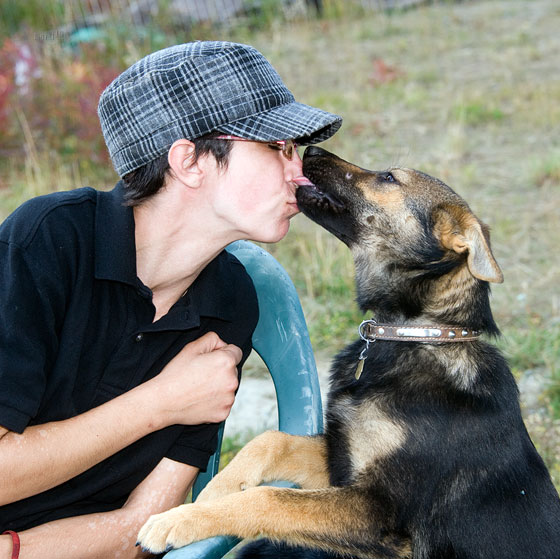
Entering the pen, two puppies named Lady and Teddy rush up to Willett, nipping at each other and circling her madly as she fumbles with the gate door behind her. Just a few months ago these two German Shepherds were found in a ditch in Whitehorse, abandoned and nearly starved.
It's a fairly common story here at the shelter. The dogs in the sanctuary come from across the North, mostly from the Northwest Territories, many rescued by the SPCA and an organization called Husky Emergency Adoption Rescue and Transport (HEART). They are flown to Whitehorse by Air North.
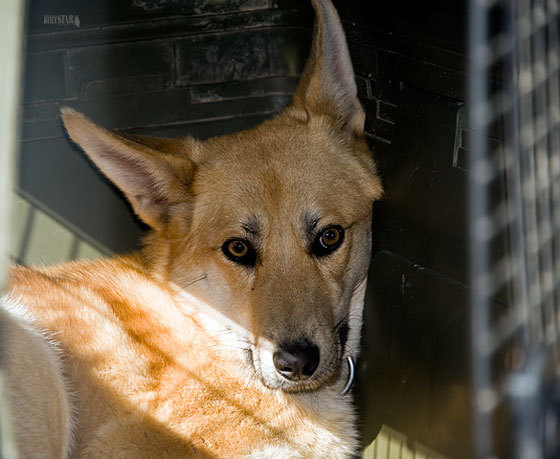
Most of the dogs need rehabilitation, either because of a lack of human contact and contact with other dogs or from abuse at the hands of their former owners.
The affects of that abuse are easy to spot. A dog named Sprocket sits in the back corner of her pen and shivers as you walk by, while Blue, the largest male dog, observes silently from the last cage on the right. He was left chained up for three years before he and his sister Thunder were finally rescued. Thunder now lives on the other side of the property with her litter of four-week-old puppies.
Willett has a unique system for rehabilitating dogs like these, a system she calls her three Rs: rescue, rehabilitation and rehousing.
"Every dog has its own unwritten rule book you have to figure out along the way,” says Willett.
She says abused dogs need to be exposed to human interaction and so she lets them run free with her while she works on the property. She also introduces new rescue dogs to the young puppies, which she says teaches the young dogs how to interact and the abused and neglected older animals how to play properly.
"If you put two of these dogs that are the same size in a pen together they are going to fight,” says Willett. "But when you bring the puppies in they don't see them as a threat, they learn to play, to interact in a healthy way.”
One technique they use is called the Tellington Touch. Tellington Touch is a massage therapy technique, which helps reduce stress and tension in animals, especially dogs.
MaGill is a practitioner and uses the treatment on injured animals in the shelter.
"When we touch the animals it relaxes them,” says MaGill. "We use a series of touches, massaging the dogs in various parts of their body and working our way to the source of pain and injury, which calms them and builds trust. We also use wacky things like (tensor) bandages, which help give the dogs a sense of themselves. When you wrap a little dog in the bandage they know their own dimensions and all of a sudden a little dog, who is acting like he's a lot bigger, realizes he's really just 15 pounds.”
Running a shelter is a big job and Willett says she needs all the help she can get. In addition to the pen facility, there is also an office building. It needs power and heating in order to accommodate a future health care facility for the dogs.
"If this was an ideal situation we'd have a fully functioning building. We also need volunteers to work and feed the animals,” says Willet.
Donations of firewood, dog and puppy food, freezer burned meat, lumber and building equipment are also needed, and in return, Willet says she would like to start teaching workshops on how to run a sled dog team and courses on raising abused and neglected dogs. She'll also host play sessions for children who have a fear of dogs and plans to construct sitting benches in the center pen where people can come and interact with the animals.
Adopting dogs will became a major part of the sanctuary's mission as the months go on.
In order to adopt from the sanctuary, applicants must first spend 12 hours with the dog, something Willett says helps build a bond with the animal and assures the new owner that they are making the right choice. Each adopted dog will come with a detailed booklet, which will include the dog's history, the training it has received and the progress it made while in the shelter.
Right now the new littler is up for adoption and after they have spent enough time with their mother, two of them will be taken home by a woman from Alberta.
Some of the grown up dogs will be available for adoption in the future but others will have to live out the rest of their lives at the shelter. These include Willett's former mushing team as well as some animals who have suffered too much abuse to be sent away from their new home.
"I brought some of them into the world, I rescued others,” says Willett. "That's a lifelong commitment that needs to be taken seriously. We're a crew, a team, a pack, a family.”
Leaving the property, past clusters of fireweed and a hand painted sign nailed to a pine tree, it's immediately evident just how much of a homegrown operation the sled dog shelter really is. It's a job no one else is doing, but for 35 former sled dogs, it's a chance at a new life.
By MAX LEIGHTON
Star Reporter
Comments (3)
Up 0 Down 0
Vanessa Willett on Sep 3, 2011 at 11:50 pm
There was another sled dog rescue in Yukon? What was the name of it?
Up 0 Down 0
Murray Lundberg on Sep 2, 2011 at 10:15 pm
It's a wonderful thing Cristy is doing but this is certainly not the first of its kind here. A woman about 4 miles from Cristy ran one for 15+ years.
Up 0 Down 0
bobby bitman on Sep 2, 2011 at 11:53 am
Cristy, you nut! I love it. Doing your part the way you see it needs to be done. It's amazing what one person can just get up and get done. I hope it is contagious and that you also get help with a neuter/spay program, as well as some interested parties for homes and help.
See ya later! I'll be visiting.