Photo by Whitehorse Star
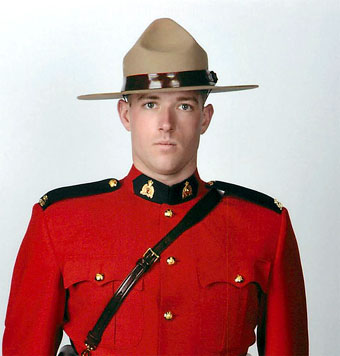
Const. Michael Potvin
Photo by Whitehorse Star
Const. Michael Potvin
The federal government says it has no problem with an inquest being held into the drowning of a Mayo RCMP officer but argues questions shouldn't focus too much on RCMP management and polices.
The federal government says it has no problem with an inquest being held into the drowning of a Mayo RCMP officer but argues questions shouldn't focus too much on RCMP management and polices.
Federal lawyers appeared at a hearing Thursday in Whitehorse to argue that the scope of an upcoming inquest into the death of Const. Michael Potvin should be limited.
The 26-year-old Mountie drowned July 13, 2010, when his boat capsized on the Stewart River. He was only several feet from the shore, according to witnesses, but was caught in the current.
Potvin, along with another officer identified at the hearing as "Cpl. Chapman,” were out performing maintenance on the boat when it capsized.
The other officer stayed with the boat and was later removed from the water by witnesses who paddled out to rescue him.
Potvin's body was not recovered from the river until a few weeks later.
Neither Potvin nor the other officer operating the boat were wearing life jackets, in contravention of RCMP policy.
Federal government lawyer Suzanne Duncan argued the inquest should be limited to factual questions about the cause of death, the boat and what happened that day — not the appropriateness of RCMP policy.
RCMP operations, administration and management fall under federal jurisdiction and should not be a part of the Yukon's inquest, Duncan said.
The jury can be told about the existence of an RCMP policy and other facts about equipment, she said. But why certain decisions were made by management is a federal matter.
Questions about management's decisions on how employees were trained and monitored as well as the decision to choose and later modify the boats, would also fall under federal jurisdiction, Duncan said.
An inquest into Potvin's death was originally scheduled to take place earlier this month but was put on hold when the government filed this application.
An inquest is a public hearing that can be called by the territory's coroner following a death.
The facts are heard by a jury, which is then asked to determine how and when a person died and given the option to make recommendations.
The recommendations are not legally binding.
Territorial judge Karen Ruddy will be acting as the coroner in this case and oversaw Thursday's hearing
During their arguments, both Duncan and lawyer Cindy Freedman, who represented the coroner's office, revealed details about multiple reports done following Potvin's death.
Duncan said seven reports were completed, including ones by Human Resources and Skills Canada, the Transportation Safety Board, Yukon RCMP and an independent review by the RCMP in British Columbia.
All investigations came back with similar findings, she said.
While Potvin's cause of death was drowning, the reports found indirect causes.
Those included mechanical difficulties with the boat, modifications done to the boat which added more weight, the lack of life-jackets being worn by the officers and issues with RCMP training surrounding watercraft, she said.
During her arguments, Freedman pointed to one report which she said called the boat Potvin was in "fundamentally unsafe” due to maintainance, modifications and training issues.
The lawyers also suggested there may have been a problem with the boat dating back to 1985 — a year after it and six others were built to RCMP specifications.
All those boats have since been removed from service, Duncan said.
The federal government's lawyer argued that questions about the RCMP's decision to choose the boats and why they later modified them would fall under federal jurisdiction.
Duncan said discussing 1985 was going too far back into history, adding that changes had been done to the boats since they were purchased.
Questions about the size of the boat's motor and what effect, if any, that had on the accident were also brought up.
None of the information spoken about in the hearing has been proven at this point.
Duncan argued any inquiries into internal communications after the incident are also not appropriate.
The federal government's lawyer insisted that the police have never had any intention of hiding anything about that day and are working on a press release which sets out specific findings of the many reports and how the RCMP have addressed them.
She argued that, in fact, the recommendations that would likely come out of an inquest have already been implemented by the RCMP.
The Yukon RCMP have created a "basic water transport co-ordinator” position, she said. This officer is responsible for ensuring that all boats meet correct safety standards and that officers receive training.
Guidelines have also been developed to assist RCMP divisions in conducting annual inspections of boats.
There is now an operators checklist and a vessel log book to be completed prior to voyage, Duncan said.
The RCMP have also already tested its life-jackets to ensure they are sufficient for officers with gear, she said.
As for a jury's eventual recommendations, Duncan pointed out that in the Yukon, there is no legal authority nor regulation which specifically allows jurors to make those recommendations.
Duncan conceded that it is common historical practice here for jurors to make recommendations and said she was not implying that recommendations were a bad thing.
During her argument, Freedman said a public airing of the facts in this case is important regardless of the number of reports done by outside sources.
An RCMP investigation into the death of one of its own may raise issues with the public, she said.
Freeman argued that lessons learned from Potvin's death could apply to all boat owners and should be discussed publicly.
She pointed out that recommendations made by the jury are not legally binding and therefore would not necessarily impact federal policies.
The inquest would not be focused primarily on RCMP policies and the consideration of one or two policies is not interference with management, she argued.
Freeman also pointed to the historical practice of the RCMP participating in other inquests such as when someone dies while in custody.
She argued that if the coroner's office was limited in this case, it could have an impact on cases across the country and suggest the RCMP get to choose when to participate.
If the federal government has a problem with a specific line of questioning during the inquest, it can be dealt with at that time, she said, rather than making a blanket statement about hypothetical questions this early in the process.
Ruddy told the lawyers and a member of Potvin's family who were listening over the phone, that she would need some time to consider the arguments.
Given her schedule, lawyers should not expect a response until the end of June, she said.
In order to encourage thoughtful and responsible discussion, website comments will not be visible until a moderator approves them. Please add comments judiciously and refrain from maligning any individual or institution. Read about our user comment and privacy policies.
Your name and email address are required before your comment is posted. Otherwise, your comment will not be posted.
Be the first to comment